- Animals
- ›Chordates
- ›Vertebrates
- ›Mammals
- ›Therians
- ›Placental Mammals
- ›Armadillos, Sloths, and Anteaters
- ›Armadillos
- ›Short-nosed Armadillos
- ›Chlamyphoridae
Glyptodonts
Glyptodontinae
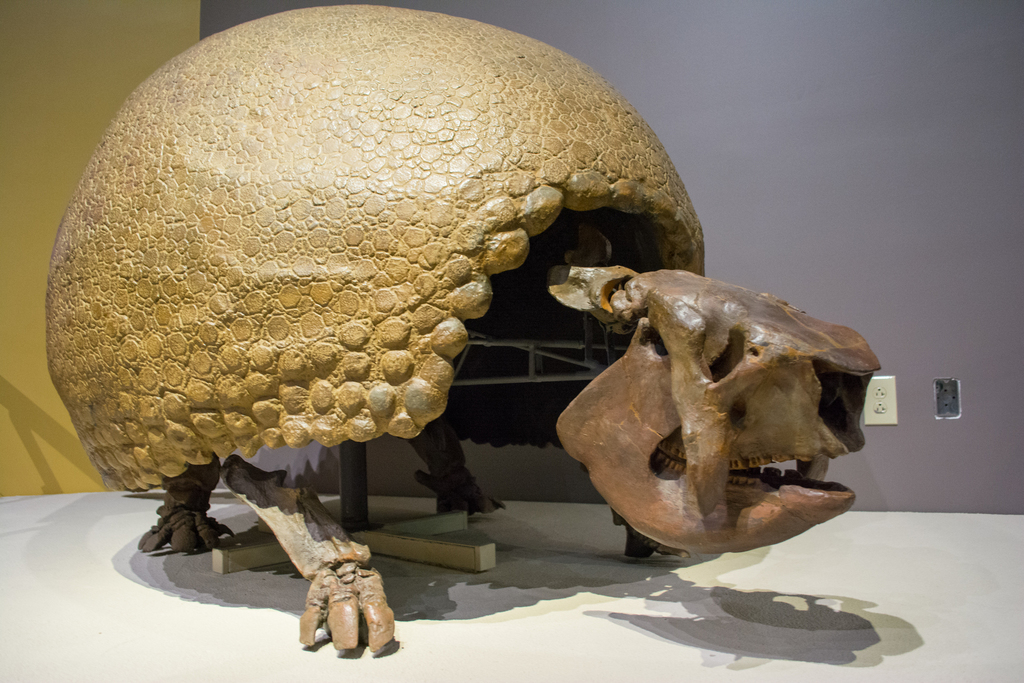
Glyptodonts are an extinct clade of large, heavily armored armadillos, reaching up to 1.5 metres (4.9 ft) in height, and maximum body masses of around 2 tonnes. They had short, deep skulls, a fused vertebral column, and a large bony carapace made up of hundreds of individual scutes. Some glyptodonts had clubbed tails, similar to ankylosaurid dinosaurs.
The earliest widely recognised fossils of glyptodonts in South America are known from the late Eocene, around 38 million years ago, and they spread to southern North America after the continents became connected around 2.7 million years ago. The best-known genus within the group is Glyptodon.
4 branches of this subfamily, most-observed first

Glyptodons
genusGlyptodon
Neosclerocalyptus
genusNeosclerocalyptus
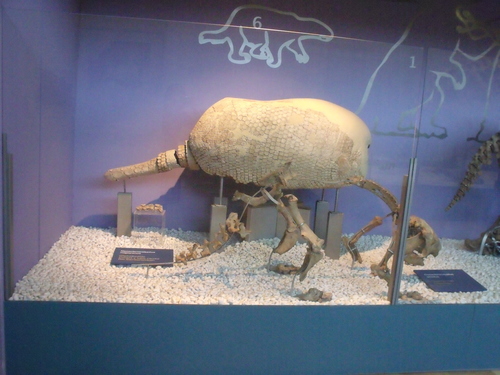
Panochthus
genusPanochthus
Plohophorus
genusPlohophorus
Where it lives
Recorded sightings
—
geo-referenced records in GBIF, from museums, herbaria and field observers.
Drag the globe to turn it. Dots are where records exist, not a range map; darker means more records.
In the stacks
Searching the stacks…
Every page naming Glyptodontinae in the Biodiversity Heritage Library →
This page is assembled live from iNaturalist, GBIF, Wikipedia, the Source Library and the Internet Archive. It is not yet part of the hand-edited codex. iNaturalist taxon 602598.