- Fungi Including Lichens
- ›Ascomycete Fungi
- ›Sac Fungi and Lichens
- ›Sordariomycetes
- ›Xylariomycetidae
- ›Xylariales
- ›Xylariaceae
- ›Xylaria
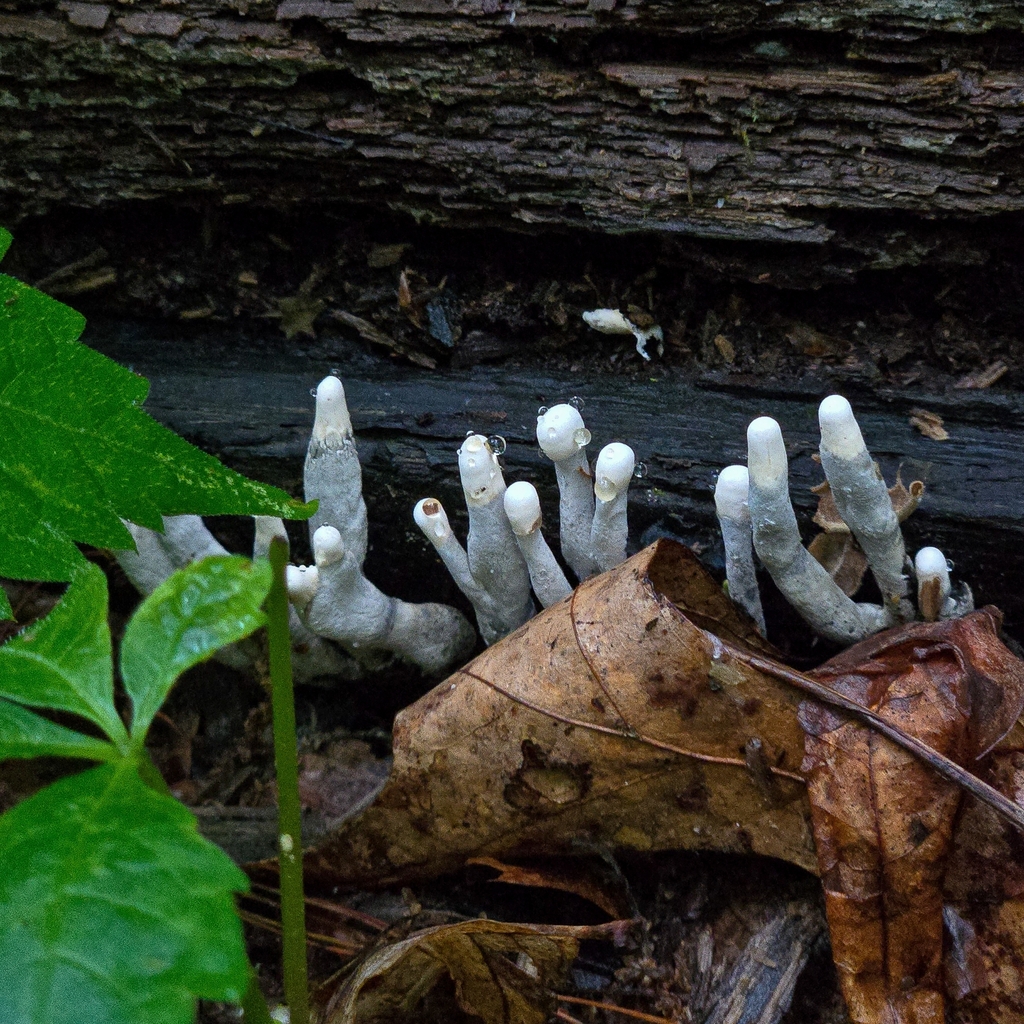
dead man's fingers
Xylaria polymorpha
Xylaria polymorpha, commonly known as dead man's fingers, is a saprobic fungus. It is a common inhabitant of forest and woodland areas, usually growing from the bases of rotting or injured tree stumps and decaying wood. It has also been known to colonize substrates like woody legume pods, petioles, and herbaceous stems. It is characterized by its elongated upright, clavate, or strap-like stromata poking up through the ground, much like fingers. The genus Xylaria contains about...
From the article Xylaria polymorpha on Wikipedia (CC BY-SA), quoted section by section
Description
Belonging to the phylum of fungus known as Ascomycetes (division Mycota) known as the sac fungi, they are characterized by a saclike structure, the ascus, which contains anything from four to eight ascospores in the sexual stage. The sac fungi are separated into subgroups based on whether asci arise singly or are borne in one of several types of fruiting structures, or ascocarps, and on the method of discharge of the ascospores. Unlike some species in this class, X. polymorpha is inedible. Often this fungus is found with a multitude of separate "digits", but at times the individual parts will be fused together. In maturity, the fruiting bodies can be 3–10 centimetres (1+1⁄4–4 inches) tall, externally colored black or brown, sometimes with shades of blue or green. It is white on the inside, with a blackened dotted area all around. This blackened surrounding area is made up of tiny structures called perithecia. The perithecia hold a layer of asci which contain the ascospores. The asci elongate into the ostiole, and discharge the ascospores outward. The spore distribution is a lengthy process, sometimes taking several months to complete. The spore print is black. In springtime this fungus often produces a layer of white or bluish asexual spores called conidia, which grow on its surface and surrounding area.
Range & habitat
X. polymorpha is geographically distributed across all six inhabited continents. It is a common inhabitant of forest and woodland areas, usually growing from the bases of rotting or injured tree stumps and decaying wood. It has also been known to colonize substrates like woody legume pods, petioles, and herbaceous stems.
Wikipedia: “Distribution and habitat”
Where it lives
Recorded sightings
—
geo-referenced records in GBIF, from museums, herbaria and field observers.
Drag the globe to turn it. Dots are where records exist, not a range map; darker means more records.
In the old herbals & bestiaries

In the stacks
Searching the stacks…
Every page naming Xylaria polymorpha in the Biodiversity Heritage Library →
This page is assembled live from iNaturalist, GBIF, Wikipedia, the Source Library and the Internet Archive. It is not yet part of the hand-edited codex. iNaturalist taxon 58698.