- Animals
- ›Chordates
- ›Vertebrates
- ›Ray-finned Fishes
- ›Spiny-rayed fishes
- ›Perches, Scorpionfishes, Sticklebacks, and Allies
- ›Scorpionfishes and Allies
- ›Searobins
- ›Spiny Searobins
- ›Prionotus
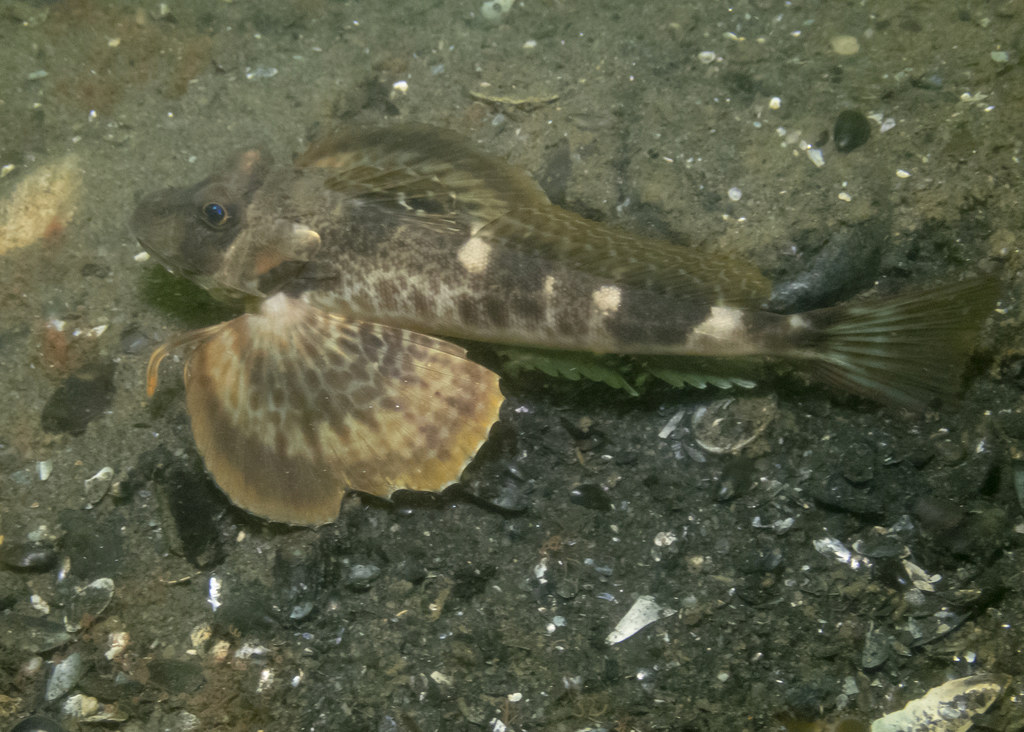
Northern Searobin
Prionotus carolinus
Prionotus carolinus, commonly known as the northern sea robin, common sea robin or gurnard, is a species of ray-finned fish found in shallow water on the east coast of the United States.
From the article Prionotus carolinus on Wikipedia (CC BY-SA), quoted section by section
Description
Prionotus carolinus can be identified by its broad spiny head, tapering body, blue eyes, and large, wing-like pectoral fins. The dorsal surface is reddish or grayish, the chin black, the belly pale and the fins reddish-brown with darker edges and paling to grayish-white at their bases. Three lower rays of the northern sea robin's pelvic fins are feelers used to "walk" along the bottom, so as to stir up bottom sediments to find food. Northern searobins grow to an average of 17 inches (43 cm) long.
Range & habitat
Prionotus carolinus is found in shallow seas of the western Atlantic where its range extends from Nova Scotia along the Atlantic coast of the United States into the Gulf of Mexico as far as the upper Florida Keys. They are found in estuaries to the edge of the continental shelf. They prefer the sandy bottoms of the waterbed, where they feed by kicking up sediment to find food, using their "legs". The legs of Prionotus carolinus are particularly specialised for digging, alongside having sensory papillae to detect prey under the sand. These sensory papillae are only known to be present among searobins in this species and the closely related Prionotus scitulus, as evidenced by other species being less able to detect prey under sand.
Wikipedia: “Distribution and habitat”
What it does
Prionotus carolinus feeds on a wide variety of invertebrates, including shrimp, crabs, amphipods, squid, bivalve mollusks, and segmented worms. It has also been known to bite readily on any bait, suggesting a fairly non-selective feeding habit.
Wikipedia: “Diet”
At the table
Prionotus carolinus are primarily fished for sport, as they put up a good fight when hooked. The spines make it difficult to clean them, but they have edible flesh that is comparable with kingcroaker or whiting and can be broiled and baked. Other uses for the northern sea robin are processing into fish meal, pet food or fertiliser. They are also used for baiting lobster pots and handlines for catching flatfish. Their eggs have been used as a substitute for caviar.
== References ==
Wikipedia: “Uses”
Where it lives
Recorded sightings
—
geo-referenced records in GBIF, from museums, herbaria and field observers.
Drag the globe to turn it. Dots are where records exist, not a range map; darker means more records.
In the stacks
Searching the stacks…
Every page naming Prionotus carolinus in the Biodiversity Heritage Library →
This page is assembled live from iNaturalist, GBIF, Wikipedia, the Source Library and the Internet Archive. It is not yet part of the hand-edited codex. iNaturalist taxon 56042.