- kelp, diatoms, and allies
- ›dinoflagellates and allies
- ›Myzozoa
- ›dinoflagellates
- ›Dinophyceae
- ›Gymnodiniales
- ›Kareniaceae
- ›Karenia
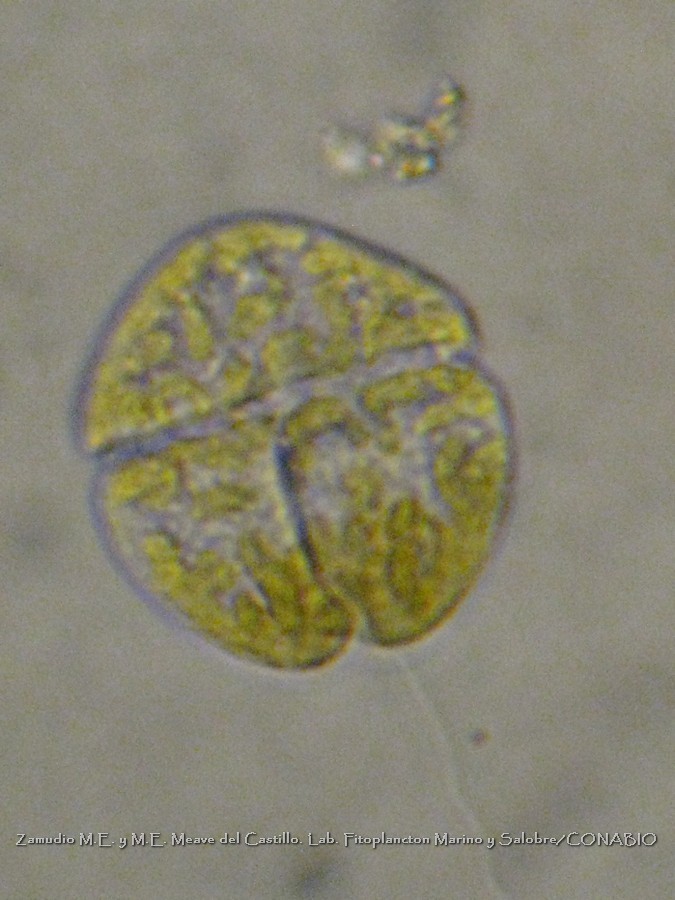
Karenia mikimotoi
Karenia mikimotoi is a dinoflagellate species from the genus Karenia that can cause a harmful algal bloom. Its first appearance was in Japan in 1935 and since then, it has appeared in other parts of the world such as the east coast of the United States, Norway, the English Channel, and southern Australia.
From the article Karenia mikimotoi on Wikipedia (CC BY-SA), quoted section by section
Description
Karenia mikimotoi has yellow-brown chloroplasts and, like other species in its genus, is able to activate photosynthetically. It lacks thecal plates, and is more ovular. Blooms usually form during warmer months. The toxicity of Karenia mikimotoi is not fully understood, whereas other species in Karenia have identified toxins that are shown to kill marine life. For example, Karenia brevis has brevetoxins. It is believed that its killing effects are due to a combination of the creation of an anoxic environment by the physical bloom itself in addition to some sort of toxin. New toxins called gymnocin A and B were discovered in 2005, but their low toxicity is inconsistent with the high number of deaths Karenia mikimotoi causes. It is believed that in red tides, Karenia mikimotoi fills in the fish's gills, thereby allowing direct contact with toxins. This is a more likely approach to the toxin's mechanisms.
Where it lives
Recorded sightings
—
geo-referenced records in GBIF, from museums, herbaria and field observers.
Drag the globe to turn it. Dots are where records exist, not a range map; darker means more records.
In the stacks
Searching the stacks…
Every page naming Karenia mikimotoi in the Biodiversity Heritage Library →
This page is assembled live from iNaturalist, GBIF, Wikipedia, the Source Library and the Internet Archive. It is not yet part of the hand-edited codex. iNaturalist taxon 549830.