- Animals
- ›Chordates
- ›Vertebrates
- ›Mammals
- ›Therians
- ›Placental Mammals
- ›Primates, Rodents, and Allies
- ›Primates
- ›Lemurs, Lorises, and Allies
- ›Lorises, Pottos, and Galagos
- ›Lorises and Pottos
- ›Pottos
- ›Perodicticus
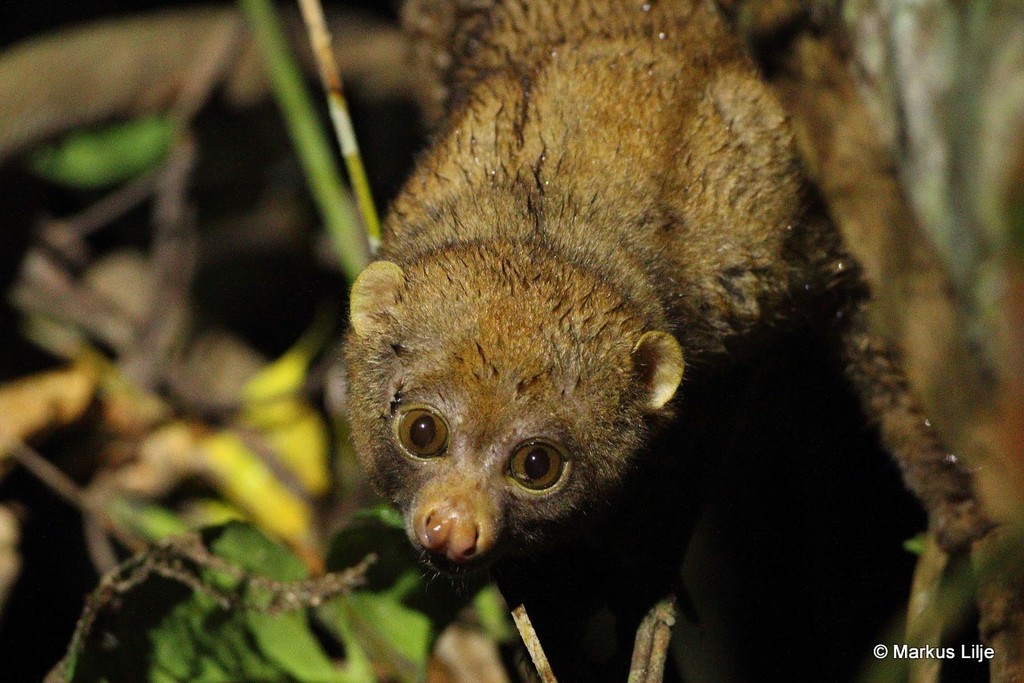
West African Potto
Perodicticus potto
The potto (Perodicticus potto) is a strepsirrhine primate of the family Lorisidae. It is the only species in the genus Perodicticus. It is also known as Bosman's potto, after Willem Bosman who described the species in 1704. In some English-speaking parts of Africa, it is called a "softly-softly".
From the article West African potto on Wikipedia (CC BY-SA), quoted section by section
Range & habitat
This species ranges from Guinea west to Nigeria, with an disjunct population in eastern Senegal. The Niger River serves as the eastern barrier to the species' range, separating it from the Central African potto (P. edwardsi).
Wikipedia: “Distribution”
What it does
One population of chimpanzees living in Mont Assirik, Senegal, was observed to eat West African pottos, taking them from their sleeping places during the day; however, this behaviour has not been observed in chimps elsewhere.
Wikipedia: “Ecology”
Listen
Looking for field recordings…
Where it lives
Recorded sightings
—
geo-referenced records in GBIF, from museums, herbaria and field observers.
Drag the globe to turn it. Dots are where records exist, not a range map; darker means more records.
In the stacks
Searching the stacks…
Every page naming Perodicticus potto in the Biodiversity Heritage Library →
This page is assembled live from iNaturalist, GBIF, Wikipedia, the Source Library and the Internet Archive. It is not yet part of the hand-edited codex. iNaturalist taxon 549032.