- Animals
- ›Arthropods
- ›Crustaceans
- ›Typical Crustaceans
- ›Barnacles and Copepods
- ›Copepods
- ›Neocopepoda
- ›Gymnoplea
- ›Calanoid Copepods
- ›Diaptomidae
- ›Leptodiaptomus
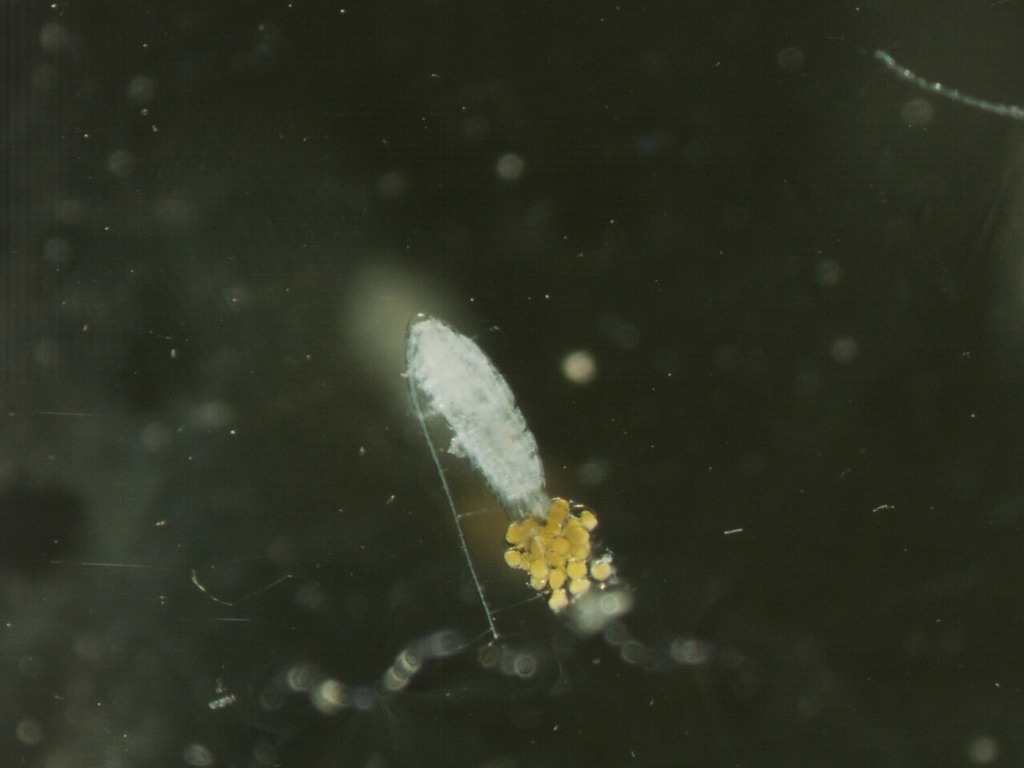
Leptodiaptomus minutus
Leptodiaptomus ashlandi is a calanoid copepod zooplankton.
From the article Leptodiaptomus minutus on Wikipedia (CC BY-SA), quoted section by section
Description
Leptodiaptomus minutus adult females are characterized by a two-segmented urosome, metasomal wings that are nearly symmetrical and rounded, and endopods of leg 5 are greatly reduced in size. In adult males, the small lateral spine on the terminal segment of leg 5 is located in the proximal third of the segment, and the right (geniculate) antennule has a slender process on the third to the last segment. This species is the smallest calanoid in the Great Lakes, only Leptodiaptomus ashlandi may overlap its size range. One might determine that the lateral spine on leg 5 of L. minutus is located more in the middle portion of the terminal segment. However, the size of the spine (less than half the width of the exopod terminal segment) would not allow its confusion with Onychodiaptomus sanguineus, Leptodiaptomus sicilis, or Leptodiaptomus siciloides, where the spine is at least as long as the width of the segment. These species are physically similar to other leptodiaptomids (Leptodiaptomus ashlandi, Leptodiaptomus sicilis and skistodiaptomids (Skistodiaptomus oregonensis).
Wikipedia: “Morphology”
Range & habitat
Leptodiaptomus minutus is found over most of North America north of the 40th parallel and in Greenland and Iceland. It may extend further south in mountainous areas of the East, but appears to be absent from the far western United States. It is found in all the Great Lakes and is particularly abundant in Lake Huron and Lake Michigan
Wikipedia: “Distribution”
What it does
Leptodiaptomus minutus are known prey items for a number of native and non-native Great Lakes fishes. They are also prey items for other invertebrate zooplankton. Remains have been found within gut-contents of Mysis diluviana and are trophically below Limnocalanus macrurus.
== References ==
Wikipedia: “Ecology”
Where it lives
Recorded sightings
—
geo-referenced records in GBIF, from museums, herbaria and field observers.
Drag the globe to turn it. Dots are where records exist, not a range map; darker means more records.
In the stacks
Searching the stacks…
Every page naming Leptodiaptomus minutus in the Biodiversity Heritage Library →
This page is assembled live from iNaturalist, GBIF, Wikipedia, the Source Library and the Internet Archive. It is not yet part of the hand-edited codex. iNaturalist taxon 548317.