- Animals
- ›Molluscs
- ›Bivalves
- ›Autobranchia
- ›Pteriomorphia
- ›Scallops and Allies
- ›Jingle and Windowpane Shells
- ›Windowpane Shells
- ›Placuna
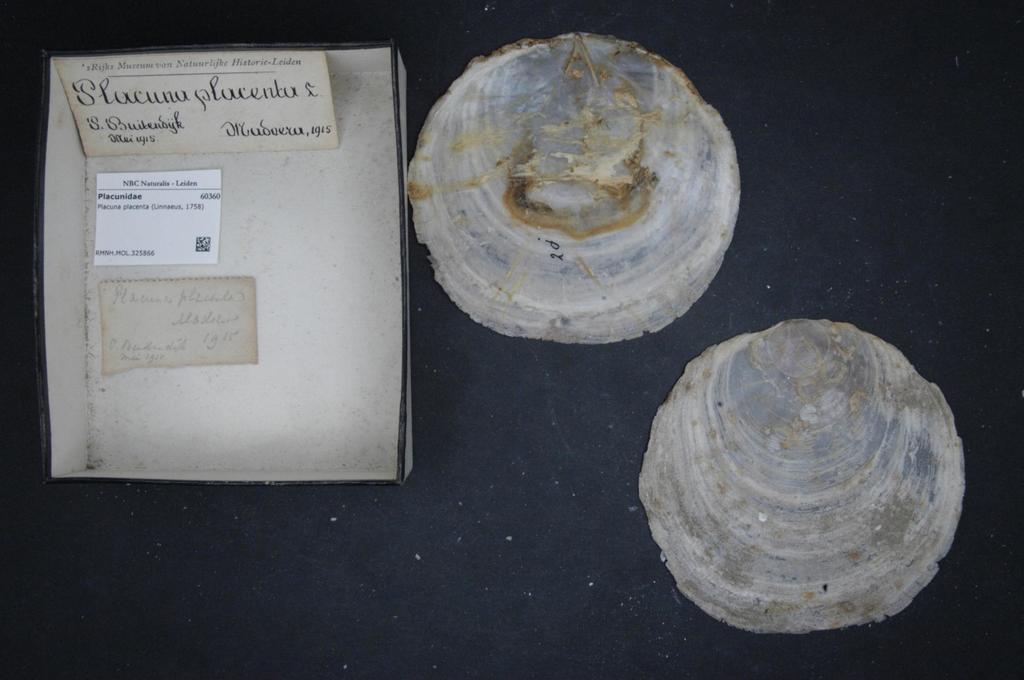
Windowpane Oyster
Placuna placenta
The windowpane oyster, window shell, or jingle shell (Placuna placenta) is a bivalve marine mollusk in the family of Placunidae. It is edible, but valued more for its shell (and its rather small pearls). The oyster's shells have been used for thousands of years as a glass substitute because of their durability and translucence. More recently, they have been used in the manufacture of decorative items such as chandeliers and lampshades. In the Philippines, the shell is known as the capiz shell (kapis). Capiz shells are also used as raw materials for glue, chalk and varnish.
Distribution extends from the shallows of the Gulf of Aden to around the Philippines (including the eponymous province of Capiz) north to Taiwan and south to Queensland, Australia. The mollusks are found in muddy or sandy shores, in bays, coves and lagoons to a depth of about 100 m (330 ft).
Where it lives
Recorded sightings
—
geo-referenced records in GBIF, from museums, herbaria and field observers.
Drag the globe to turn it. Dots are where records exist, not a range map; darker means more records.
In the stacks
Searching the stacks…
Every page naming Placuna placenta in the Biodiversity Heritage Library →
This page is assembled live from iNaturalist, GBIF, Wikipedia, the Source Library and the Internet Archive. It is not yet part of the hand-edited codex. iNaturalist taxon 540913.