- Animals
- ›Chordates
- ›Vertebrates
- ›Birds
- ›Hawks, Eagles, Kites, and Allies
- ›Hawks, Eagles, and Kites
- ›Honey-buzzards, Pernine Kites, and Allies
- ›Chondrohierax
On eBird ↗
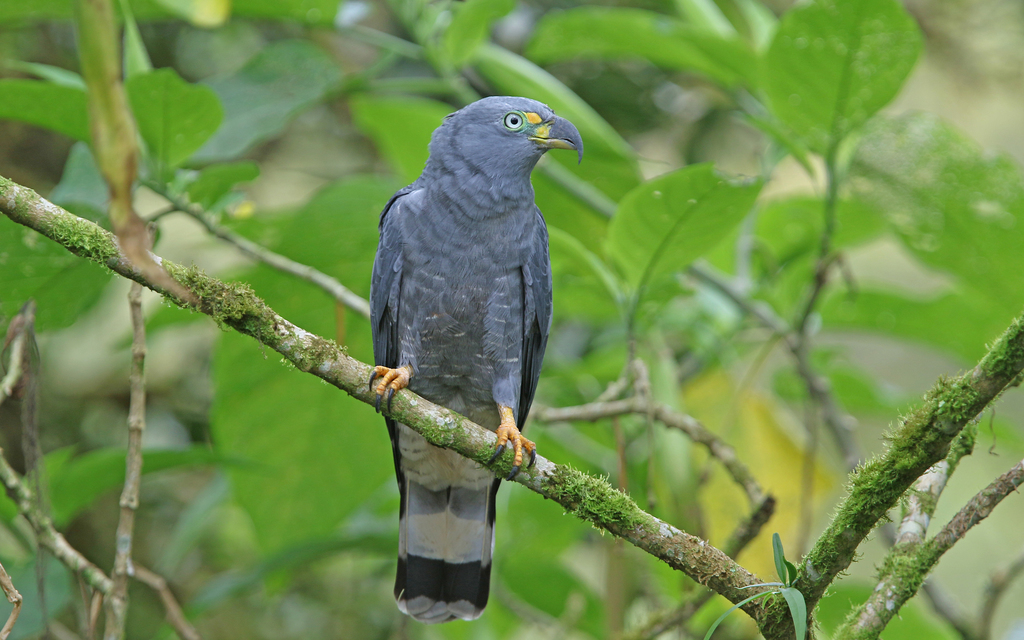
Hook-billed Kite
Live sightings near you, the range map, bar charts of when it is seen, and Macaulay Library photos and recordings.
Hook-billed Kite
Chondrohierax uncinatus
The hook-billed kite (Chondrohierax uncinatus), is a bird of prey in the family Accipitridae, which also includes many other diurnal raptors such as kites, eagles, and harriers. It occurs in the Americas, including the Rio Grande Valley of Texas in the United States, Mexico, the Caribbean, Central America, and tropical South America.
From the article Hook-billed kite on Wikipedia (CC BY-SA), quoted section by section
Description
It is a mid-sized, slender raptor with a large hooked bill. There is extreme variation in bill size and plumage. Birds from beneath can look blackish or gray (especially males) and brown or brick-red (females) variously. This renders species identification at times extremely difficult. The downcurved hook at the tip of the beak is apparent on perched and low-flying birds. Weight can range from 215 to 397 g (7.6 to 14.0 oz) and length is 38–42 cm (15–16.5 in).
What it does
Tree snails (e.g. Bulimulus, Homolanyx, and Polymita) are a vital component of the hook-billed kite's diet. The density of their population within a region is proportional to the presence of tree snails. It has also been observed that the beak of the hook-billed kite has adapted in size and shape between different regions of their territory in response to the species of tree snail available to them. However, terrestrial snails (e.g. Strophocheilus), aquatic snails (e.g. Pomacea), frogs, salamanders, lizards, small mammals, crabs, spiders, caterpillars, and insects are also taken. It supposedly also hunts other birds, but this seems unlikely. When it finds a tree snail it holds it with its talon and uses its beak to pry open the shell.
Wikipedia: “Ecology”
Listen
Looking for field recordings…
Where it lives
Recorded sightings
—
geo-referenced records in GBIF, from museums, herbaria and field observers.
Drag the globe to turn it. Dots are where records exist, not a range map; darker means more records.
In the stacks
Searching the stacks…
Every page naming Chondrohierax uncinatus in the Biodiversity Heritage Library →
This page is assembled live from iNaturalist, GBIF, Wikipedia, the Source Library and the Internet Archive. It is not yet part of the hand-edited codex. iNaturalist taxon 5329.