- Fungi Including Lichens
- ›Ascomycete Fungi
- ›Sac Fungi and Lichens
- ›Arthoniomycetes
- ›Arthoniales
- ›Christmas lichens, comma lichens, and allies
Inoderma
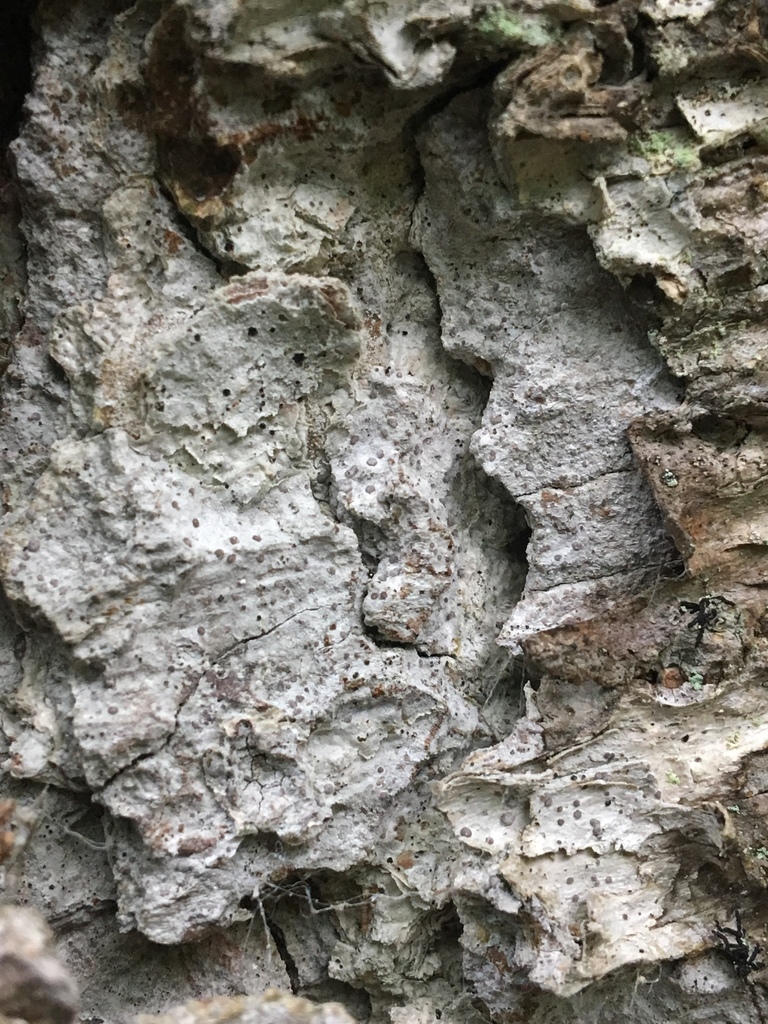
Inoderma is a genus of lichen-forming fungi in the family Arthoniaceae. First named by Erik Acharius in 1810 and formally published at genus rank by Samuel Frederick Gray in 1821, the genus was resurrected in 2015 for a small group of species characterised by elevated, white frost-like pycnidia (asexual fruiting bodies) and white-dusted apothecia (sexual fruiting bodies). These lichens typically form broad, pale whitish to light olive-grey patches on bark or other substrates, partnering with the orange-pigmented green alga Trentepohlia as their photosynthetic partner. The genus comprises seven described species, most of which are bark-dwelling lichens of long-undisturbed, old-tree woodland, including old-growth temperate forests. It has a mainly temperate distribution across the Northern Hemisphere and Australasia, with one species known from afromontane rainforest in East Africa.
2 branches of this genus, most-observed first
See this branch on the Wheel of Life →
Where it lives
Recorded sightings
—
geo-referenced records in GBIF, from museums, herbaria and field observers.
Drag the globe to turn it. Dots are where records exist, not a range map; darker means more records.
In the stacks
Searching the stacks…
Every page naming Inoderma in the Biodiversity Heritage Library →
This page is assembled live from iNaturalist, GBIF, Wikipedia, the Source Library and the Internet Archive. It is not yet part of the hand-edited codex. iNaturalist taxon 532104.