- Animals
- ›Chordates
- ›Vertebrates
- ›Ray-finned Fishes
- ›Spiny-rayed fishes
- ›Perches, Scorpionfishes, Sticklebacks, and Allies
- ›Scorpionfishes and Allies
- ›Barehead Scorpionfishes
- ›Normanichthys
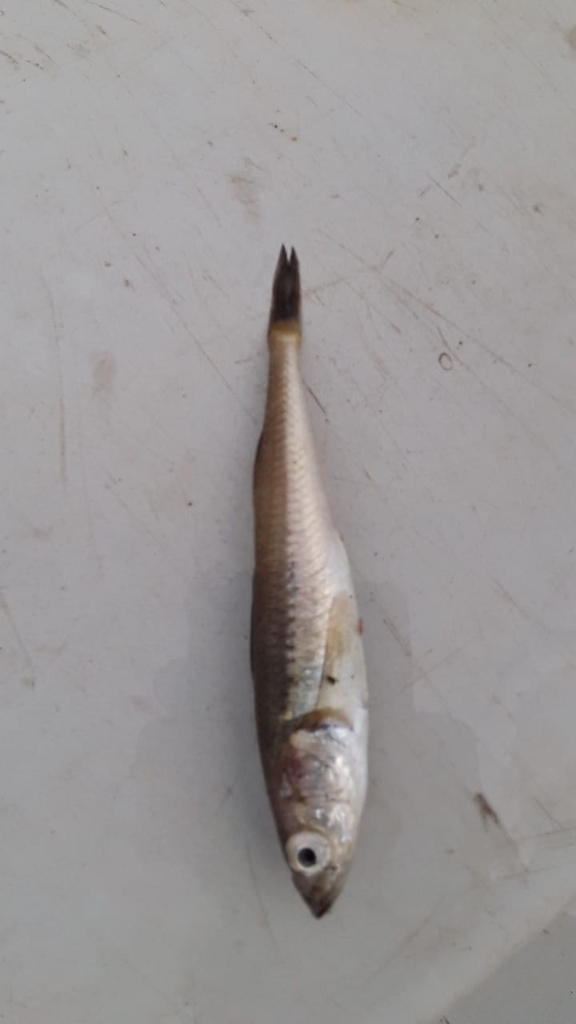
Mote Sculpin
Normanichthys crockeri
Normanichthys crockeri, the mote sculpin, is a ray-finned fish, the only member of the family Normanichthyidae. It is found in tropical South Pacific waters, from Chimbote, Peru, to Isla Mocha, Chile, where it is found at depths from 37 to 200 m (121 to 656 ft). This fish reaches a length of up to 11 cm (4.3 in). Common names for the species in Spanish include camotillo (in Peru) and bacaladillo (in Chile).
From the article Mote sculpin on Wikipedia (CC BY-SA), quoted section by section
Description
The mote sculpin is a fairly slender fish with a maximum length of about 11 cm (4.3 in), with the anus approximately halfway along the body. It has 1 spine and 5 pelvic fin rays, and 7 and 6 principal rays in the caudal fin. Internally, it has 36 to 37 myomeres (blocks of muscle). The body is covered with ctenoid scales, the head is unarmoured and there is a single spine and 5 fin rays in the pelvic fins. There are no ribs. This fish reaches a maximum published total length of 11 cm (4.3 in).
Range & habitat
The mote sculpin is found in tropical South Pacific waters, from Chimbote, Peru, to Isla Mocha, Chile, where it is found at depths from 37 to 200 m (121 to 656 ft).
Wikipedia: “Distribution and habitat”
Where it lives
Recorded sightings
—
geo-referenced records in GBIF, from museums, herbaria and field observers.
Drag the globe to turn it. Dots are where records exist, not a range map; darker means more records.
In the stacks
Searching the stacks…
Every page naming Normanichthys crockeri in the Biodiversity Heritage Library →
This page is assembled live from iNaturalist, GBIF, Wikipedia, the Source Library and the Internet Archive. It is not yet part of the hand-edited codex. iNaturalist taxon 515224.