
Ribbon Worms
Nemertea
Nemertea is a phylum of animals also known as ribbon worms or proboscis worms, consisting of about 1300 known species. Most ribbon worms are very slim, usually only a few millimeters wide, although a few have relatively short but wide bodies. Many have patterns of yellow, orange, red and green coloration.
The foregut, stomach and intestine run a little below the midline of the body, the anus is at the tip of the tail, and the mouth is under the front. A little above the gut is the rhynchocoel, a cavity which mostly runs above the midline and ends a little short of the rear of the body. All species have a proboscis which lies in the rhynchocoel when inactive but everts to emerge just above the mouth to capture the animal's prey with venom. A highly extensible muscle in the back of the rhynchocoel pulls the proboscis in when an attack ends. A few species with stubby bodies filter feed and have suckers at the front and back ends, with which they attach to a host.
5 branches of this phylum, most-observed first

Hoplonemertea
classHoplonemertea
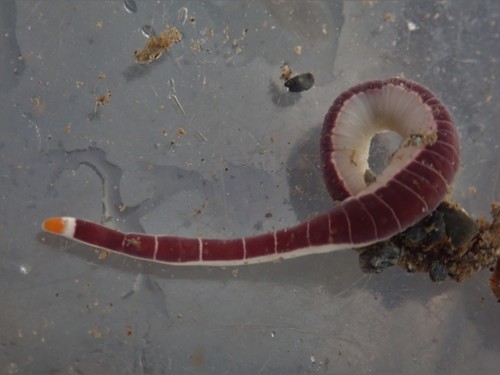
Pilidiophora
classPilidiophora
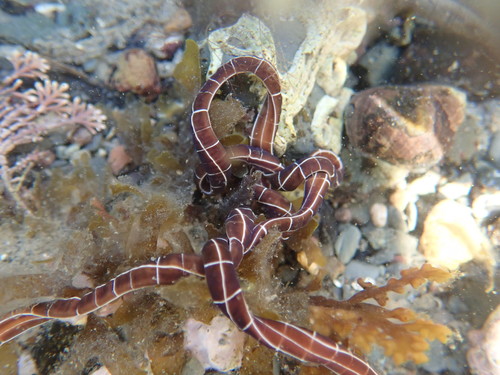
Palaeonemertea
classPalaeonemertea
Nemertes
genusNemertes
Arhynchocoela
classArhynchocoela
Where it lives
Recorded sightings
—
geo-referenced records in GBIF, from museums, herbaria and field observers.
Drag the globe to turn it. Dots are where records exist, not a range map; darker means more records.
In the stacks
Searching the stacks…
Every page naming Nemertea in the Biodiversity Heritage Library →
This page is assembled live from iNaturalist, GBIF, Wikipedia, the Source Library and the Internet Archive. It is not yet part of the hand-edited codex. iNaturalist taxon 51280.