Bivalved Gastropods
Juliidae
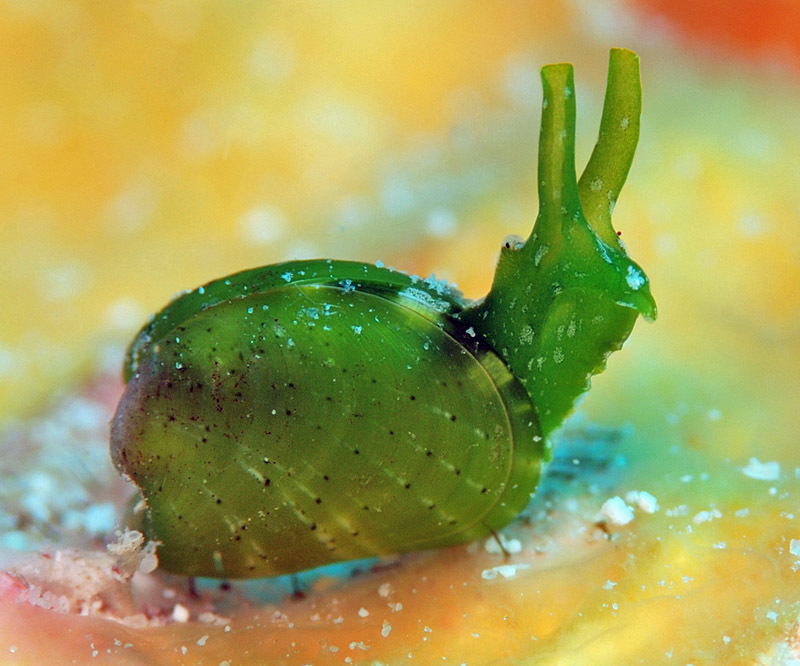
Juliidae, common name the bivalved gastropods, is a family of small sea snails, marine gastropod mollusks or micromollusks in the superfamily Oxynooidea, an opisthobranch group. These are sacoglossan (sap-sucking) sea snails, and many of them are green in color. These snails are extremely unusual in that their shells consist of two separate hinged pieces or valves. The valves are joined by a ligament, and look nothing like a normal snail shell; instead the valves look almost exactly like the two hinged valves of a clam, a bivalve mollusk, which is a related but distinct class of mollusks.
Up until the mid-20th century, the Juliidae were known only from fossil shells that were interpreted as being the shells of bivalves. Julia, which is the type genus of the family, was named in 1862 by Augustus Addison Gould, who described it as a bivalve genus. Juliidae are known from the Eocene period to the Recent, but they probably first appeared during the Paleocene.
2 branches of this family, most-observed first
See this branch on the Wheel of Life →
Where it lives
Recorded sightings
—
geo-referenced records in GBIF, from museums, herbaria and field observers.
Drag the globe to turn it. Dots are where records exist, not a range map; darker means more records.
In the stacks
Searching the stacks…
Every page naming Juliidae in the Biodiversity Heritage Library →
This page is assembled live from iNaturalist, GBIF, Wikipedia, the Source Library and the Internet Archive. It is not yet part of the hand-edited codex. iNaturalist taxon 50549.