- Fungi Including Lichens
- ›Basidiomycete Fungi
- ›Higher Basidiomycetes
- ›Mushrooms, Bracket Fungi, Puffballs, and Allies
- ›Russulales
- ›Tooth Fungi
- ›Hericium
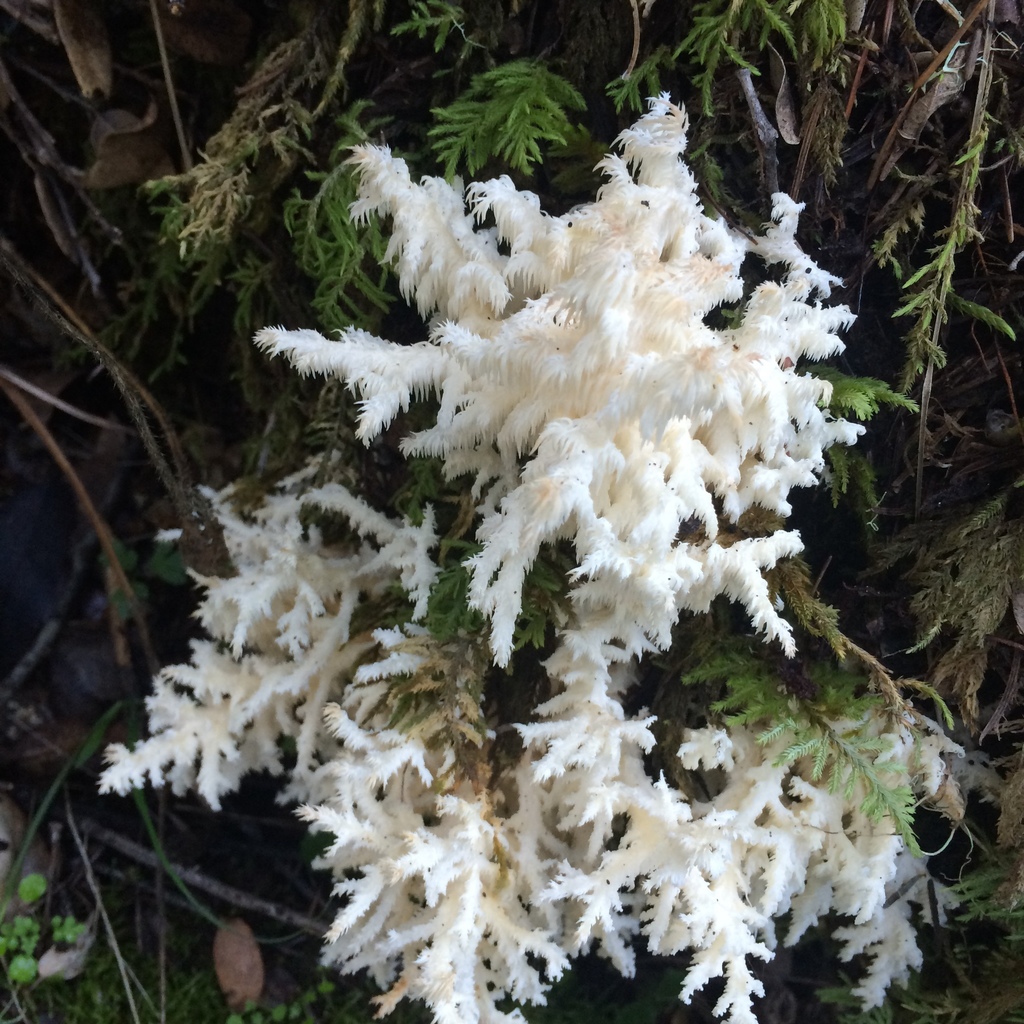
Coral tooth fungus
Hericium coralloides
Hericium novae-zealandiae (formerly Hericium coralloides) is a saprotrophic fungus, commonly known as the coral tooth fungus. It grows on dead hardwood trees. The species is edible and good when young, but as it ages the branches and hanging spines become brittle and turn a light shade of yellowish brown. The Māori name for this species is pekepekekiore.
From the article Hericium coralloides on Wikipedia (CC BY-SA), quoted section by section
Description
The fruiting body is 4–18 centimetres (1+1⁄2–7 in) across, whitish, and heavily branched and toothed. Both the flesh and the spore print are white.
Range & habitat
It is found throughout North America, Eurasia and Australia, growing on dead hardwood trees. It can be found from July to October in the east and November to March in the west.
Wikipedia: “Distribution and habitat”
At the table
The species is edible and good when young, but as it ages the branches and hanging spines become brittle and turn a light shade of yellowish brown.It is medicinal mushroom too.
== References ==
Wikipedia: “Uses”
Where it lives
Recorded sightings
—
geo-referenced records in GBIF, from museums, herbaria and field observers.
Drag the globe to turn it. Dots are where records exist, not a range map; darker means more records.
In the stacks
Searching the stacks…
Every page naming Hericium coralloides in the Biodiversity Heritage Library →
This page is assembled live from iNaturalist, GBIF, Wikipedia, the Source Library and the Internet Archive. It is not yet part of the hand-edited codex. iNaturalist taxon 49162.