Athecate Hydroids
Anthoathecata
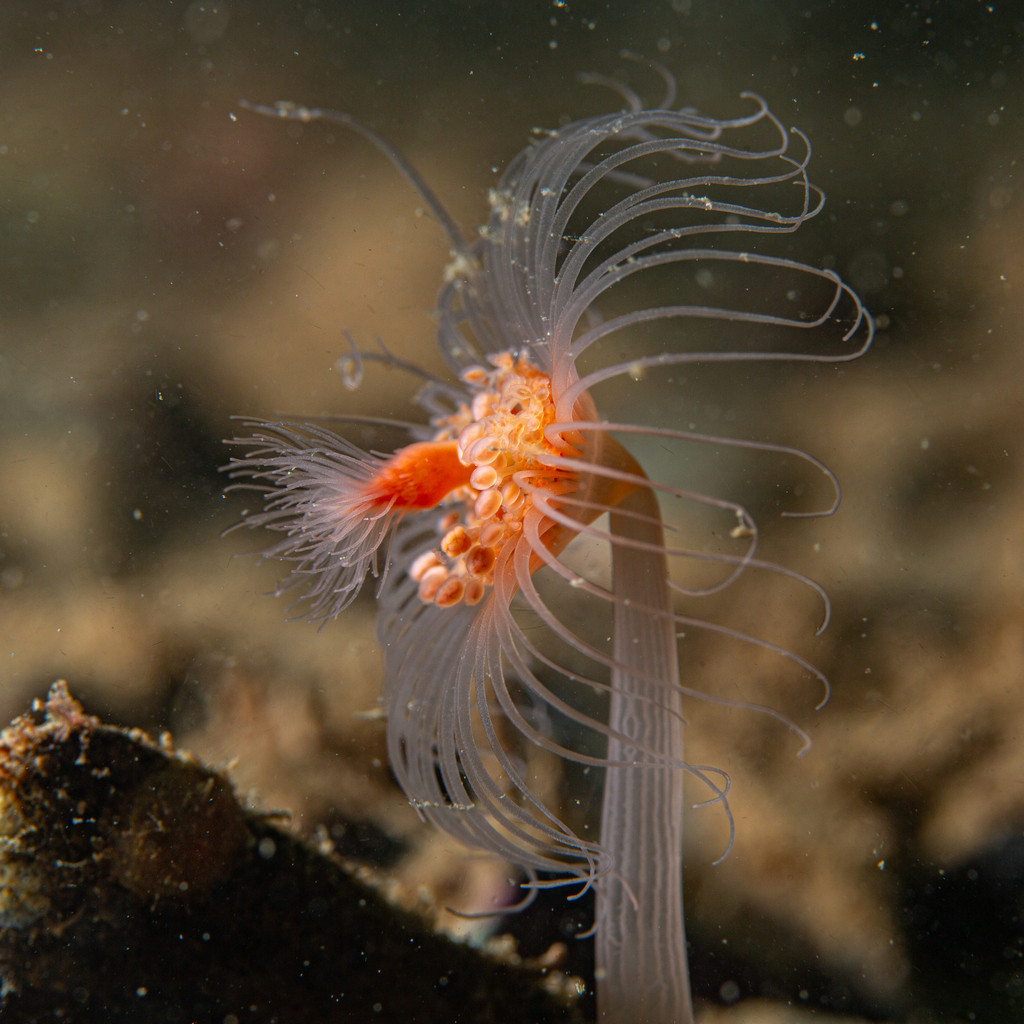
Anthoathecata, or the athecate hydroids, are an order of hydrozoans belonging to the phylum Cnidaria. A profusion of alternate scientific names exists for this long-known and heavily discussed group. It has also been called Gymnoblastea and (with or without an emended ending -ae), Anthomedusa, Athecata, Hydromedusa, and Stylasterina. There are about 1,200 species worldwide.
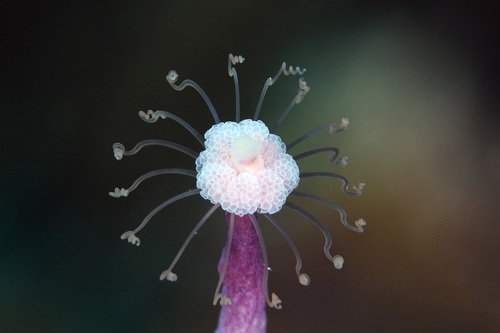
These hydrozoans always have a polyp stage. Their hydranths grow either solitary or in colonies. There is no firm perisarc around the polyp body. The medusae, or jellyfish, are solitary animals, with tentacles arising from the bell margin, lacking statocysts but possessing radial canals. Their gonads are on the manubrium ("handle").
3 branches of this order, most-observed first
See this branch on the Wheel of Life →

Where it lives
Recorded sightings
—
geo-referenced records in GBIF, from museums, herbaria and field observers.
Drag the globe to turn it. Dots are where records exist, not a range map; darker means more records.
In the stacks
Searching the stacks…
Every page naming Anthoathecata in the Biodiversity Heritage Library →
This page is assembled live from iNaturalist, GBIF, Wikipedia, the Source Library and the Internet Archive. It is not yet part of the hand-edited codex. iNaturalist taxon 48922.