- Animals
- ›Arthropods
- ›Crustaceans
- ›Typical Crustaceans
- ›Malacostracans
- ›Decapods, Isopods, and allies
- ›Decapods and Krill
- ›Decapods
- ›Crabs, Lobsters, Shrimps, and Allies
- ›Anomurans
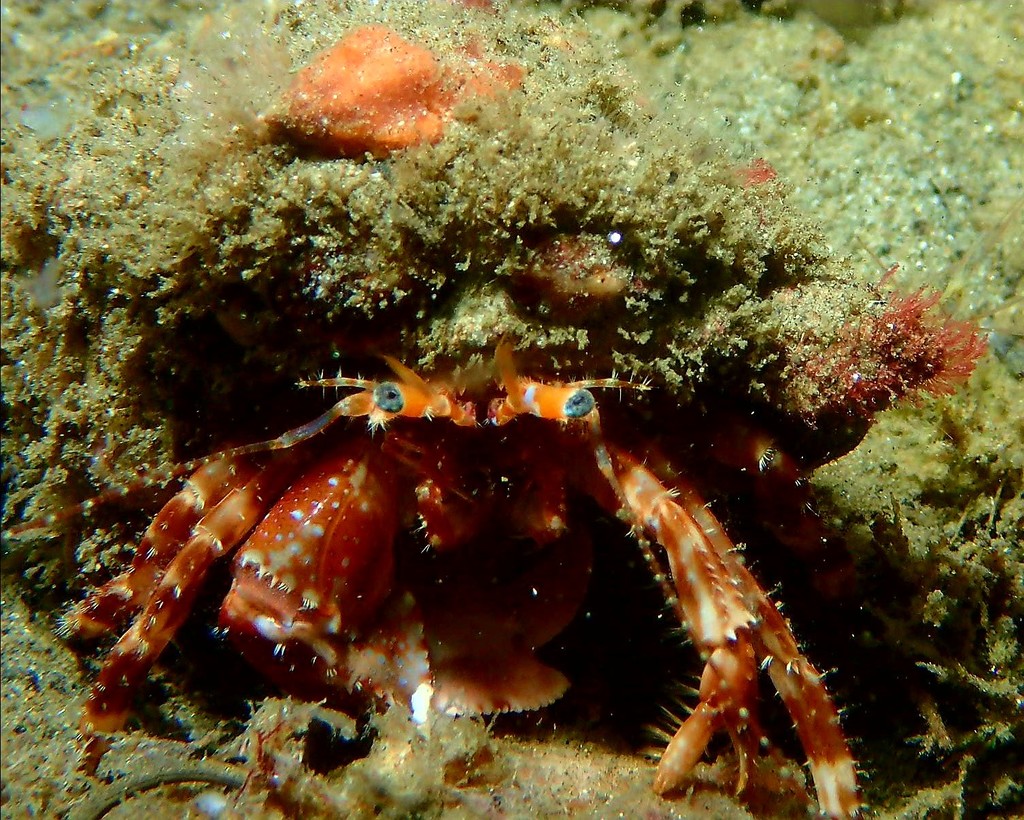
Hermit Crabs
Paguroidea
Hermit crabs are anomuran decapod crustaceans of the superfamily Paguroidea that have adapted to occupy empty scavenged gastropod shells to protect their fragile abdomens. There are over 800 species of hermit crab, most of which possess an asymmetric abdomen concealed by a snug-fitting shell. Hermit crabs' soft (non-calcified) abdominal exoskeleton means they must occupy shelter produced by other organisms or risk being defenseless.
The strong association between hermit crabs and their shelters has significantly influenced their biology. Almost 800 species carry mobile shelters (most often calcified snail shells); this protective mobility contributes to the diversity and multitude of these crustaceans, which are found in almost all marine environments. In most species, development involves metamorphosis from symmetric, free-swimming larvae to morphologically asymmetric, benthic-dwelling, shell-seeking crabs. Such physiological and behavioral extremes facilitate a transition to a sheltered lifestyle, revealing the extensive evolutionary lengths that led to the superfamily's success.
8 branches of this superfamily, most-observed first

Pagurid Hermit Crabs
familyPaguridae

Left-handed Hermit Crabs
familyDiogenidae

Land Hermit Crabs
familyCoenobitidae

King Crabs
familyLithodidae
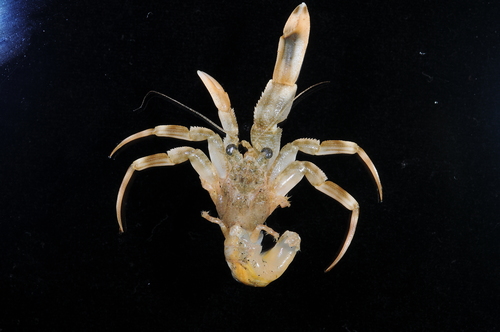
deepwater hermit crabs
familyParapaguridae

Symmetrical Hermit Crabs
familyPylochelidae
Toothy Hermit Crabs
familyPylojacquesidae
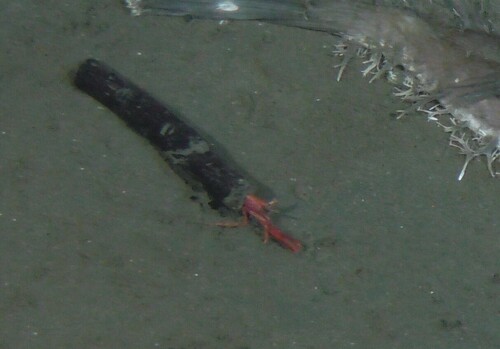
Xylopaguridae
familyXylopaguridae
Where it lives
Recorded sightings
—
geo-referenced records in GBIF, from museums, herbaria and field observers.
Drag the globe to turn it. Dots are where records exist, not a range map; darker means more records.
In the stacks
Searching the stacks…
Every page naming Paguroidea in the Biodiversity Heritage Library →
This page is assembled live from iNaturalist, GBIF, Wikipedia, the Source Library and the Internet Archive. It is not yet part of the hand-edited codex. iNaturalist taxon 47398.