 NL·0745
Herbarium of the Nature Library
- Name
- Latrodectus mactans
- Family
- Theridiidae
- Native to
- South-eastern United States, from Florida north to about New York and west to Texas and Oklahoma
- Habitat
- Woodland, Scrub, Buildings, Farmland
Southern black widow
Latrodectus mactans
Also calledViuda negra (Spanish) · Veuve noire (French) · Shoe-button spider (old American English)
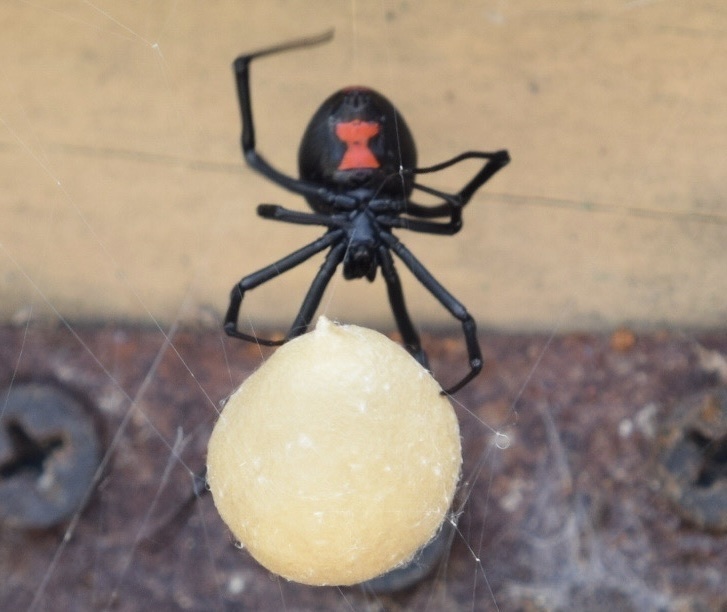
A glossy black spider with a red hourglass on its belly, carrying one of the most potent spider venoms in North America. Its neurotoxin, α-latrotoxin, causes intense muscle pain and cramps, although deaths are now very rare.
Latrodectus mactans, known as southern black widow or simply black widow, and the shoe-button spider, is a venomous species of spider in the genus Latrodectus. The females are well known for their distinctive black and red coloring and for the fact that they will occasionally eat their mates after reproduction. The species is native to North America. The venom can cause pain and other symptoms, but is rarely fatal to healthy humans. Wikipedia
What it can do
- iVenom contains α-latrotoxin, which makes nerve endings release neurotransmitter in a flood
- iiBuilds strong, irregular cobwebs with sticky gumfoot lines that snare walking prey
- iiiSilk is exceptionally strong and fine
In the field
Field marks
- aFemale shiny jet-black with a round abdomen
- bComplete red hourglass on the underside of the abdomen
- cOften a red spot just above the spinnerets on the back
- dMessy, tangled web near the ground
- Not to be confused with
- Northern black widow (Latrodectus variolus) has its hourglass split into two separate marks and a row of red spots on the back. Western black widow (L. hesperus) lives further west. False widows (Steatoda) are brownish and lack the red hourglass.
- Where to see it
- Woodpiles, stone walls and outbuildings in the south-eastern US; look with a torch at night, but never touch or handle.
- When
- Year-round in the south; most noticed late summer and autumn
Life & habits
- Diet
- Insects and other arthropods such as beetles, crickets and other spiders
- Habitat
- Dark, sheltered spots: woodpiles, rock walls, sheds, outhouses and under ledges
- Size
- Female body about 8–13 mm; male much smaller
- Lifespan
- Females 1–3 years; males a few months
Females hang upside down in their webs and display the red hourglass; cannibalism of males after mating happens but is less common in the wild than its reputation suggests.
Where it lives
Recorded sightings
—
geo-referenced records in GBIF, from museums, herbaria and field observers.
Native range
South-eastern United States, from Florida north to about New York and west to Texas and Oklahoma
Drag the globe to turn it. Dots are where records exist, not a range map; darker means more records.
In the old herbals & bestiaries
No plate in the Source Library names this exact species, so these show its closest relatives as the old naturalists drew them: same genus, or the same kind of animal. Click a plate to read the page it came from, with translation.

In the stacks
Searching the stacks…
Every page naming Latrodectus mactans in the Biodiversity Heritage Library →
Marginalia
The genus name Latrodectus means roughly 'robber-biter' and mactans 'murderous'. During the Second World War, black widow silk was used for the crosshairs of gun and bomb sights.
Curiosity
Bites cause latrodectism: severe cramping abdominal pain that has been mistaken for appendicitis; an antivenom exists for serious cases.
Kinship


Fact-checked: 1 correction made to this sheet. Photographs: iNaturalist contributors under the licences shown. Records: GBIF.org. Historical plates: Source Library (CC BY-SA 4.0; originals public domain). Summary text: Nature Library editors and Wikipedia (CC BY-SA). Medicinal and edibility notes are historical and educational, not advice. iNaturalist taxon 47381.