- Animals
- ›Chordates
- ›Vertebrates
- ›Mammals
- ›Therians
- ›Placental Mammals
- ›Armadillos, Sloths, and Anteaters
- ›Armadillos
- ›Long-nosed Armadillos
- ›Long-nosed Armadillos

Long-nosed Armadillos
Dasypus
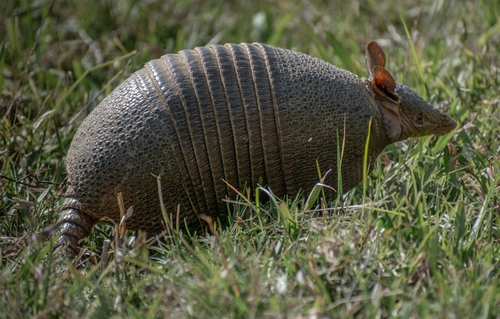
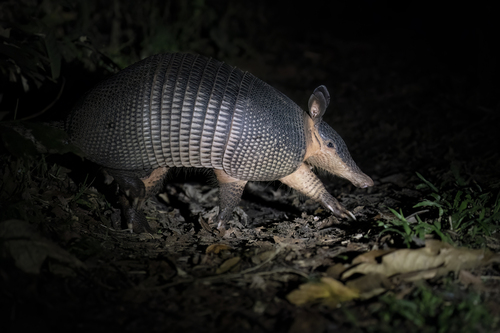
Dasypus is the only extant genus in the family Dasypodidae. Its species are known as long-nosed or naked-tailed armadillos. They are found in South, Central, and North America, as well as on the Caribbean islands of Grenada, Trinidad and Tobago. Members of Dasypus are solitary and primarily nocturnal to avoid temperature extremes and predation. They exist in numerous habitats ranging from brush to grassland areas and are mainly insectivorous. The name is derived from the Ancient Greek words δασύς (dasús), meaning "hair", and πούς (poús), meaning "foot".
The most common and widespread of the Dasypus species is the nine-banded armadillo (Dasypus novemcintus), which is commonly used in the study of leprosy due to its unique ability to contract the disease.
3 branches of this genus, most-observed first · about 11 known species

Nine-banded Armadillos and Allies
subgenusDasypus
Muletia
subgenusMuletia
Greater Long-nosed Armadillos
subgenusHyperoambon
Where it lives
Recorded sightings
—
geo-referenced records in GBIF, from museums, herbaria and field observers.
Drag the globe to turn it. Dots are where records exist, not a range map; darker means more records.
In the stacks
Searching the stacks…
Every page naming Dasypus in the Biodiversity Heritage Library →
This page is assembled live from iNaturalist, GBIF, Wikipedia, the Source Library and the Internet Archive. It is not yet part of the hand-edited codex. iNaturalist taxon 47070.