- Plants
- ›Vascular Plants
- ›Ferns
- ›Leptosporangiate Ferns
- ›Polypod Ferns
- ›eupolypods II
- ›Chain Fern Family
- ›Woodwardia
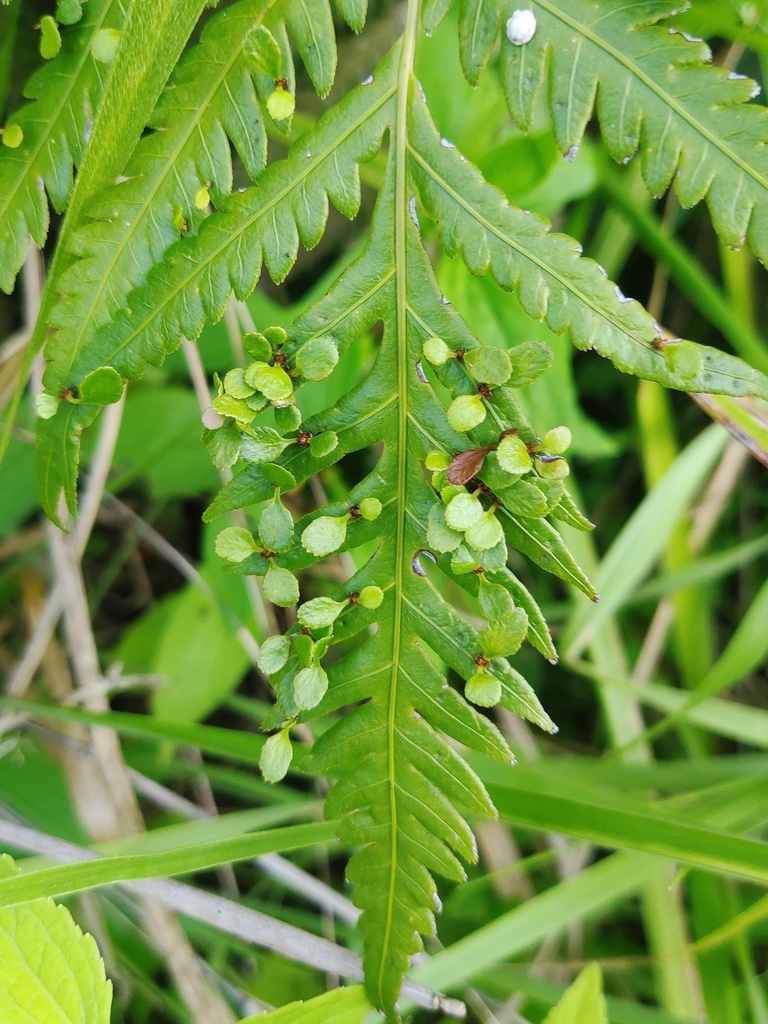
prolific chain fern
Woodwardia prolifera
Woodwardia prolifera (Chinese: 珠芽狗脊) is a species of fern in the family Blechnaceae found in China, Japan and the Himalayas. It was first described by Sir William Jackson Hooker and George Arnott Walker Arnott in 1838.
From the article Woodwardia prolifera on Wikipedia (CC BY-SA), quoted section by section
Description
Their fronds are between 1.5 – 3m in length and can vary in colour from green to orange. They have pink-orange plantlets. These evergreen plants usually grow in chalky, acidic soil under light shade. They are also a diploid species. Their spores are between 75 – 78 microns long and their guard cells are between 35 – 51 microns long.
Range & habitat
This species can be found growing around coastal locations, mountain slopes and near streams. They usually occur in wet conditions at elevations between 100 – 1,100m.
Wikipedia: “Distribution”
How it is grown
This species is a popular plant in horticulture. It has gained the Award of Garden Merit from the Royal Horticultural Society. They can be propagated by pegging down their fronds and then letting the plantlets or bulbils create roots before removing them from the frond. The bulbils or plantlets can also be planted separately although high humidity is required. They can also be easily propagated with spores.
Wikipedia: “Cultivation”
Where it lives
Recorded sightings
—
geo-referenced records in GBIF, from museums, herbaria and field observers.
Drag the globe to turn it. Dots are where records exist, not a range map; darker means more records.
In the stacks
Searching the stacks…
Every page naming Woodwardia prolifera in the Biodiversity Heritage Library →
This page is assembled live from iNaturalist, GBIF, Wikipedia, the Source Library and the Internet Archive. It is not yet part of the hand-edited codex. iNaturalist taxon 460369.