- Animals
- ›Chordates
- ›Vertebrates
- ›Mammals
- ›Therians
- ›Placental Mammals
- ›Primates, Rodents, and Allies
- ›Rodents
- ›Mice, Rats, and Hamsters
- ›Muroids
- ›Hamsters, Voles, Lemmings, and Allies
- ›South American Mice and Rats
- ›Akodonts
- ›Blarinomys
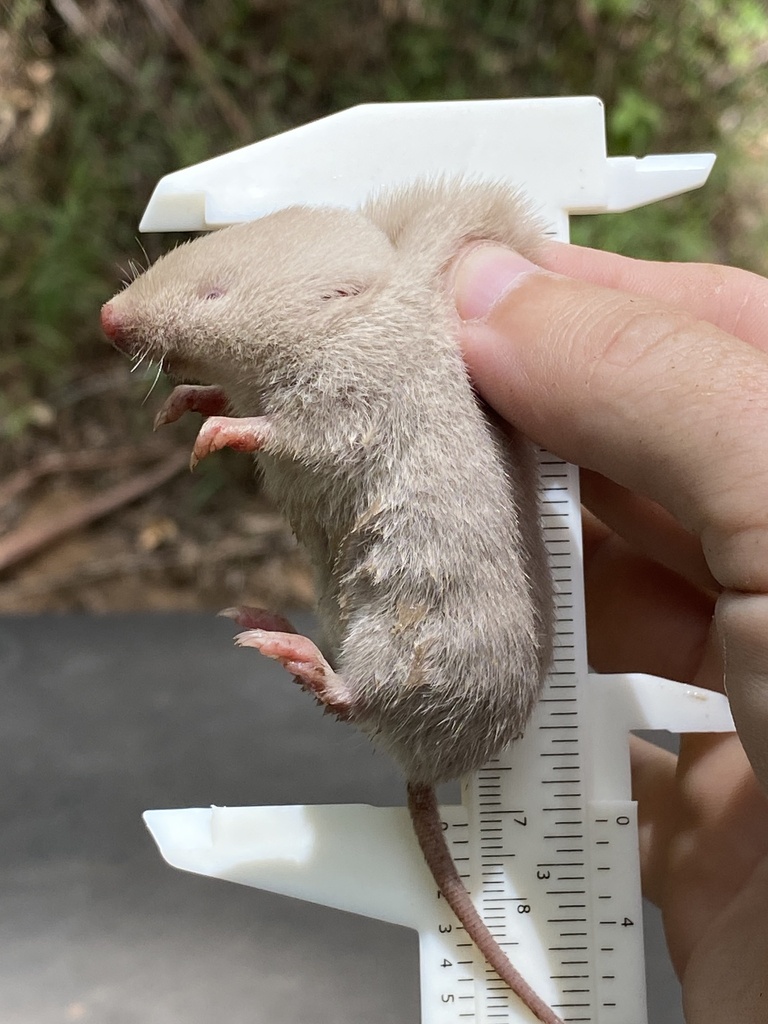
Brazilian Shrew-mouse
Blarinomys breviceps
The Brazilian shrew mouse (Blarinomys breviceps), also known as the blarinine akodont, is a rodent in the tribe Akodontini from the Atlantic Forest of eastern and southeastern Brazil. It is the only species in the genus Blarinomys. Phylogenetic analysis suggest that there are two clear geographical clades, a northeastern and southeastern.
From the article Brazilian shrew mouse on Wikipedia (CC BY-SA), quoted section by section
Description
The appearance of the Brazilian shrew mouse is often compared to that of small insectivorous shrews or moles with small, reduced eyes, short ears and tail, and short, soft fur. Its mole-like appearance contributes to its ability to be differentiated from other rodents in its Neotropical habitat. Overall, its specialized body structure lends itself to the animal's subterranean life, with broad forefeet and large claws for digging. It has a long snout that is used to find insects in the ground and highly developed jaw muscles that help to close the mouth quickly, as to avoid swallowing dirt. The species has demonstrated sexual dimorphism in that females are usually slightly larger than males.
Wikipedia: “Morphology”
What it does
Very little is known about the diet of B. breviceps, however it is assumed to be primarily insectivorous. When studied in captivity, many specimens refuse food and die within a few days. However, some captive organisms have been shown to eat a variety of insects including crickets, moths and butterflies, and roaches. Overall, they tend to refuse other food sources such as fruits or seeds.
Wikipedia: “Diet”
Listen
Looking for field recordings…
Where it lives
Recorded sightings
—
geo-referenced records in GBIF, from museums, herbaria and field observers.
Drag the globe to turn it. Dots are where records exist, not a range map; darker means more records.
In the stacks
Searching the stacks…
Every page naming Blarinomys breviceps in the Biodiversity Heritage Library →
This page is assembled live from iNaturalist, GBIF, Wikipedia, the Source Library and the Internet Archive. It is not yet part of the hand-edited codex. iNaturalist taxon 45822.