- Animals
- ›Chordates
- ›Vertebrates
- ›Mammals
- ›Therians
- ›Placental Mammals
- ›Primates, Rodents, and Allies
- ›Rodents
- ›Mice, Rats, and Hamsters
- ›Muroids
- ›Hamsters, Voles, Lemmings, and Allies
- ›South American Mice and Rats
- ›Euneomyines
- ›Irenomys
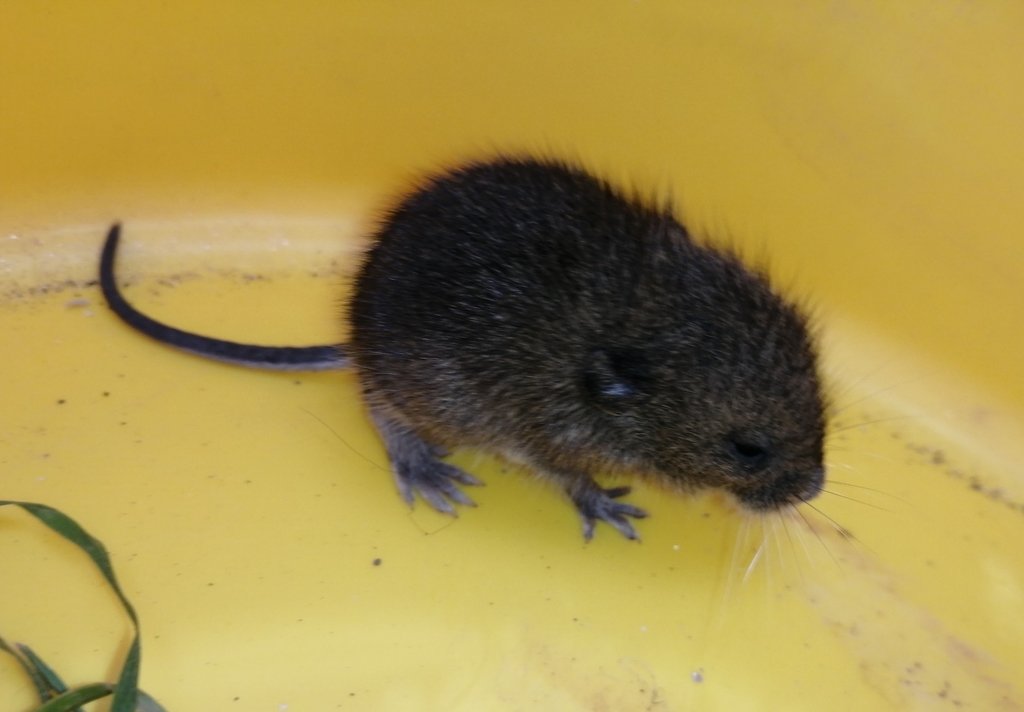
Chilean climbing mouse
Irenomys tarsalis
Irenomys tarsalis, also known as the Chilean climbing mouse, Chilean tree mouse, or long-footed irenomys, is a rodent found in Chile, from about 36° to 46°S, and in adjacent Argentina, mainly in forests. It is a large, long-tailed, soft-furred mouse characterized by grooved upper incisors and specialized molars with transverse ridges, divided by deep valleys, which are connected by a transverse ridge along the midline of the molars.
Irenomys tarsalis is a docile, herbivorous animal that lives in trees. It is so distinct from other species that it was placed in its own genus, Irenomys, in 1919. The name comes from the Ancient Greek word εἰρήνη (iren) meaning "peace", in reference to the end of World War I. Although it has been generally placed in the tribe Phyllotini, genetic evidence does not support any close relationships with other genera, so that it is now classified as a member of the subfamily Sigmodontinae incertae sedis (of uncertain position).
From the article Irenomys on Wikipedia (CC BY-SA), quoted section by section
Description
Irenomys is a large mouse with a long, hairy tail, large eyes, and long and soft fur. The upperparts are rufous with fine dark lines and the underparts are buff, with the exact color varying by subspecies. The densely haired ears are medium-sized and blackish in color. The feet, which are large and broad, are nearly white. The tail, which ends in a slight pencil, is dark brown, with a somewhat lighter area present on the ventral side in some individuals. The total length is 270 to 326 millimetres (10.63 to 12.83 in), averaging 280 millimetres (11.02 in), the tail length is 162 to 196 millimetres (6.38 to 7.72 in), averaging 165 millimetres (6.50 in), the hindfoot length is 28 to 32 millimetres (1.10 to 1.26 in), averaging 30 millimetres (1.18 in), the ear length is 20 to 25 millimetres (0.79 to 0.98 in), averaging 22 millimetres (0.87 in), and weight is 40 to 59 grams (1.4 to 2.1 oz), averaging 42 grams (1.5 oz). The karyotype includes 64 chromosomes, with a fundamental number (FN) of 98. The skull resembles that of some Rhipidomys species. The interorbital region is narrow and the incisive foramina are long, extending between the first molars. The upper incisors are deeply grooved. …
Range & habitat
Irenomys tarsalis is restricted to forested habitats in Chile and western Argentina. In the northern part of its range, its distribution falls into two segments, one in coastal Chile and one further east in Chile and in adjacent Argentina, both of which extend north to about 36°S. Further south, it also occurs in Chile and adjacent Argentina, and also on numerous Chilean islands, including Chiloé. The southernmost records are at about 46°S. No fossils are known. It generally occurs in humid and densely forested habitats, often with bamboo vegetations, but a specimen has been reported from riparian vegetation at a small stream near the southern limit of its distribution and it is also found in unforested steppe habitat with scattered Austrocedrus chilensis trees. It does not occur on high elevations. It was a common species during a population peak of small rodents evidently caused by the flowering of quila (Chusquea quila) bamboo. It is found in association with other rodents such as Abrothrix olivaceus, Abrothrix longipilis, Oligoryzomys longicaudatus, Geoxus valdivianus, and Auliscomys pictus, as well as the marsupials Rhyncholestes raphanurus and Dromiciops gliroides. …
Wikipedia: “Distribution and ecology”
What it does
Irenomys lives mainly in trees, but has also been caught on the ground. It climbs by moving both forefeet and both hindfeet alternately. It is docile, but will not readily enter a trap. The breeding season is in the Southern Hemisphere spring, extending into late summer. Litter size is three to six. The animal mostly eats seeds and fruits, but its diet also includes various other plant and fungal materials.
Wikipedia: “Natural history and behavior”
Listen
Looking for field recordings…
Where it lives
Recorded sightings
—
geo-referenced records in GBIF, from museums, herbaria and field observers.
Drag the globe to turn it. Dots are where records exist, not a range map; darker means more records.
In the stacks
Searching the stacks…
Every page naming Irenomys tarsalis in the Biodiversity Heritage Library →
This page is assembled live from iNaturalist, GBIF, Wikipedia, the Source Library and the Internet Archive. It is not yet part of the hand-edited codex. iNaturalist taxon 45014.