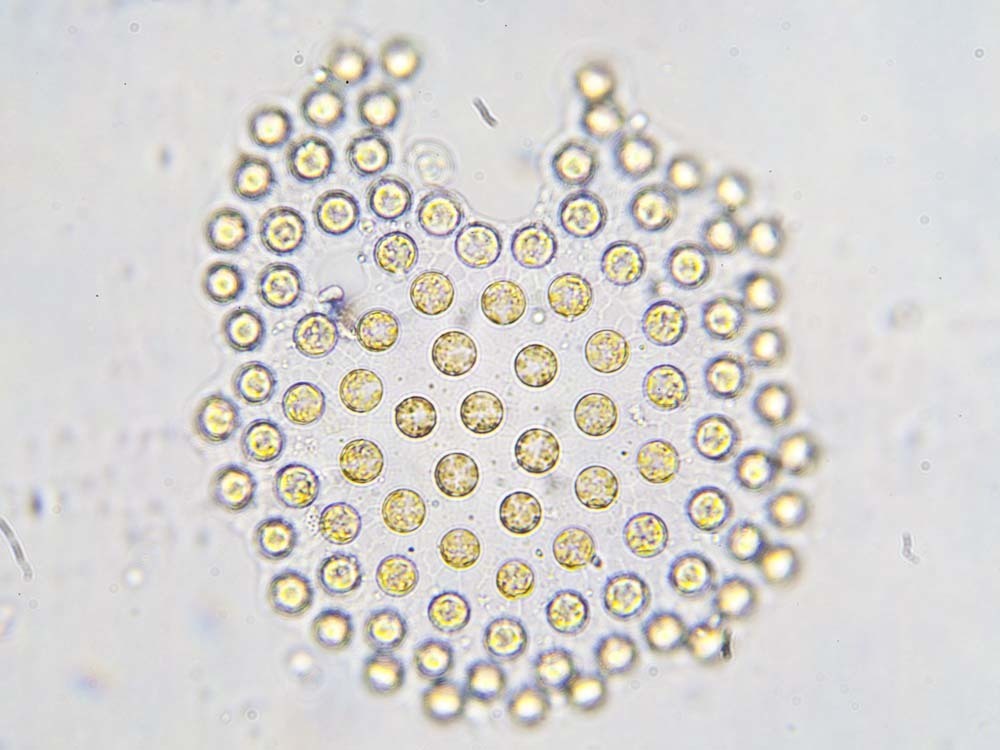
Phaeocystaceae
Phaeocystis is a genus of algae belonging to the Prymnesiophyte class and to the larger division of Haptophyta. It is a widespread marine phytoplankton and can function at a wide range of temperatures (eurythermal) and salinities (euryhaline). Members of this genus live in the open ocean, as well as in sea ice. It has a polymorphic life cycle, ranging from free-living cells to large colonies.
The ability to form a floating colony is one of the unique attributes of Phaeocystis – hundreds of cells are embedded in a polysaccharide gel matrix, which can increase massively in size during blooms. The largest Phaeocystis blooms form in the polar seas: P. pouchetii in the north and P. antarctica in the south. This intense Phaeocystis productivity generally persists for about a three-month period, spanning most of the summer in the Southern Hemisphere. Phaeocystis-abundant ecosystems are generally associated with commercially important stocks of crustaceans, molluscs, fish and mammals. Phaeocystis may have negative effects on higher trophic levels in the marine ecosystem, and consequent impacts on human activities (such as fish farming and coastal tourism), by forming odorous foams on beaches during the wane of a bloom.
1 branches of this family, most-observed first
See this branch on the Wheel of Life →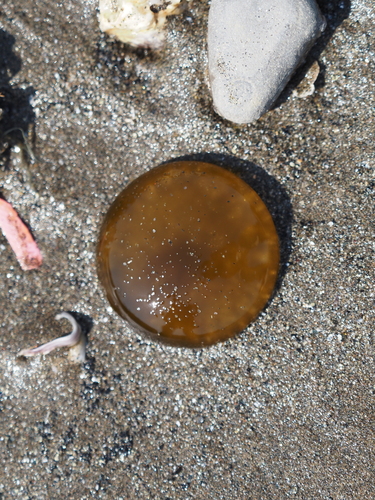
Where it lives
Recorded sightings
—
geo-referenced records in GBIF, from museums, herbaria and field observers.
Drag the globe to turn it. Dots are where records exist, not a range map; darker means more records.
In the stacks
Searching the stacks…
Every page naming Phaeocystaceae in the Biodiversity Heritage Library →
This page is assembled live from iNaturalist, GBIF, Wikipedia, the Source Library and the Internet Archive. It is not yet part of the hand-edited codex. iNaturalist taxon 448293.