- Animals
- ›Chordates
- ›Vertebrates
- ›Mammals
- ›Therians
- ›Placental Mammals
- ›Ungulates, Carnivorans, and Allies
- ›Even-toed Ungulates and Cetaceans
- ›Ruminants
- ›Bovids
- ›Antelopes, Goats, and Sheep
- ›Goats and Sheep
- ›Naemorhedus
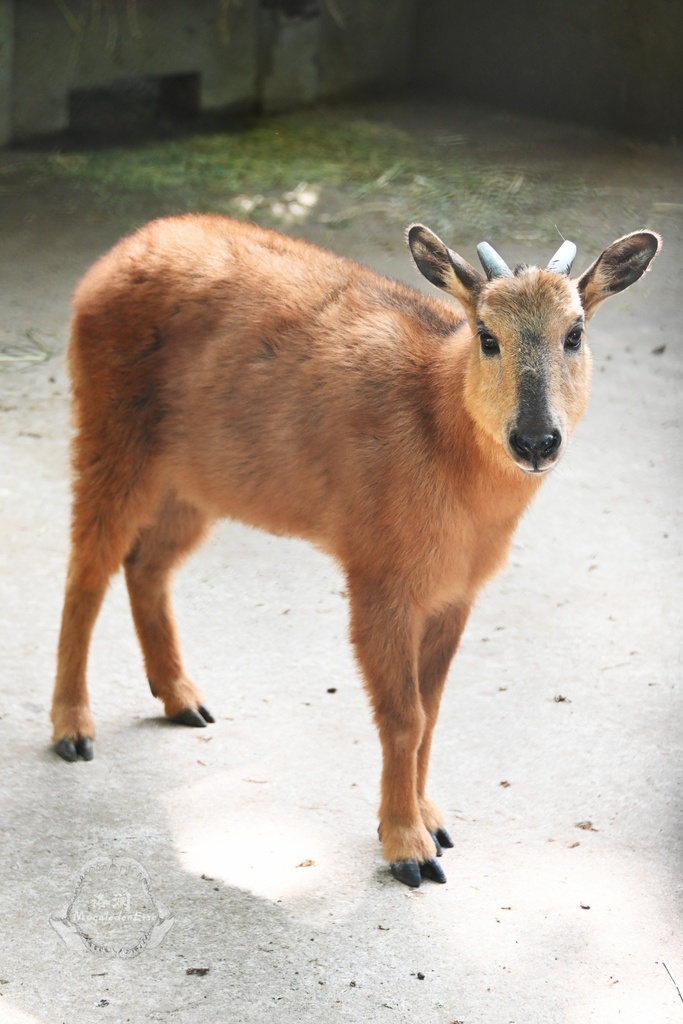
Red Goral
Naemorhedus baileyi
The red goral (Naemorhedus baileyi) is a species of even-toed ungulate in the subfamily Caprinae in the family Bovidae. It is found in India, China (Tibet) and Myanmar. Its natural habitats are seasonal mountainous areas 1,000 to 2,000 meters (3,300 to 6,600 ft) above sea level. It is threatened by habitat loss and hunting.
From the article Red goral on Wikipedia (CC BY-SA), quoted section by section
Description
The red goral is a bright foxy-red animal with long, soft, shaggy hair. A thin, dark stripe runs along the back from the head to the tip of the tail. The legs are the same rich red as the body, while the undersides are a lighter buff color. The black-colored tail is very short for a goral, but a long tuft of dark hair at the end may double its apparent length. The red goral is easily distinguished from other members of the genus Naemorhedus by its reddish coat - all other gorals are greyish-brown with grizzled hairs. The red goral is also the smallest goral, and has a greater curvature to its horns. Both males and females have a pair of short, arcing horns. The horns of males tend to be longer and thicker than those of females, but lengths of 7.5–16 cm (3.0–6.3 in) are typical for both sexes. Body weight of the red goral typically ranges from 20 to 30 kilograms (44 to 66 lb). The red goral's body length can reach lengths of 100 cm (39 in). There is evidence showing that the females can reach body sizes larger than that of male red gorals, but size difference between the sexes is too small to be significant.
Wikipedia: “Appearance and morphology”
Range & habitat
The red gorals are found in mountainous regions in Nepal, China, Tibet, and Burma about 1,000 to 2,000 meters (3,300 to 6,600 ft) above sea level. Vegetation and habitats are currently being destroyed due to climate change, and excessive hunting. Traditionally the climate has been very seasonal with wet periods interspersed with dry periods, but a historically unusual dry spell has interfered with the red gorals' ideal climate, making it harder for red gorals to reproduce. Fragmentation and forest loss have also contributed to a decrease in the red goral population.
Wikipedia: “Habitat loss”
What it does
Red gorals are most active during the day, and tend to retreat to inaccessible cliffs at night, where they sleep on sheltered ledges. They are strong climbers and jumpers, and seek safety from predators by fleeing up cliffs. The predators of the red goral are jackals and leopards. They are also very vulnerable and can easily contract Ixodes which is a tick that attacks the tissue and then sucks the goral's blood. They can clear obstacles over 1.8 m (5 ft 11 in) high from a standing start. Red gorals live in mountainous regions and woodlands in The People's Republic of China and other countries near China. The goral is an animal that migrates vertically according to the season. During the summer seasons they stay in the upper area of the forest while during the winters they migrate down to the low areas in the forest. Although generally quiet, males make a call which sounds like "zer - zer" during the breeding season; female red gorals also whistle as males approach. Red gorals typically inhabit a home range of around 40 hectares. Males are territorial during the breeding season. Their diets consist of lichens, grasses, stems, and leaves. Their most common food source is Usnea which is a type of lichen. N. baileyi is primarily diurnal, with most activity occurring in the early morning and evening. …
Wikipedia: “Behavior”
Listen
Looking for field recordings…
Where it lives
Recorded sightings
—
geo-referenced records in GBIF, from museums, herbaria and field observers.
Drag the globe to turn it. Dots are where records exist, not a range map; darker means more records.
In the stacks
Searching the stacks…
Every page naming Naemorhedus baileyi in the Biodiversity Heritage Library →
This page is assembled live from iNaturalist, GBIF, Wikipedia, the Source Library and the Internet Archive. It is not yet part of the hand-edited codex. iNaturalist taxon 42316.