- Animals
- ›Chordates
- ›Vertebrates
- ›Mammals
- ›Therians
- ›Placental Mammals
- ›Ungulates, Carnivorans, and Allies
- ›Even-toed Ungulates and Cetaceans
- ›Suids and Peccaries
- ›Suids
- ›Suines
- ›Typical Pigs
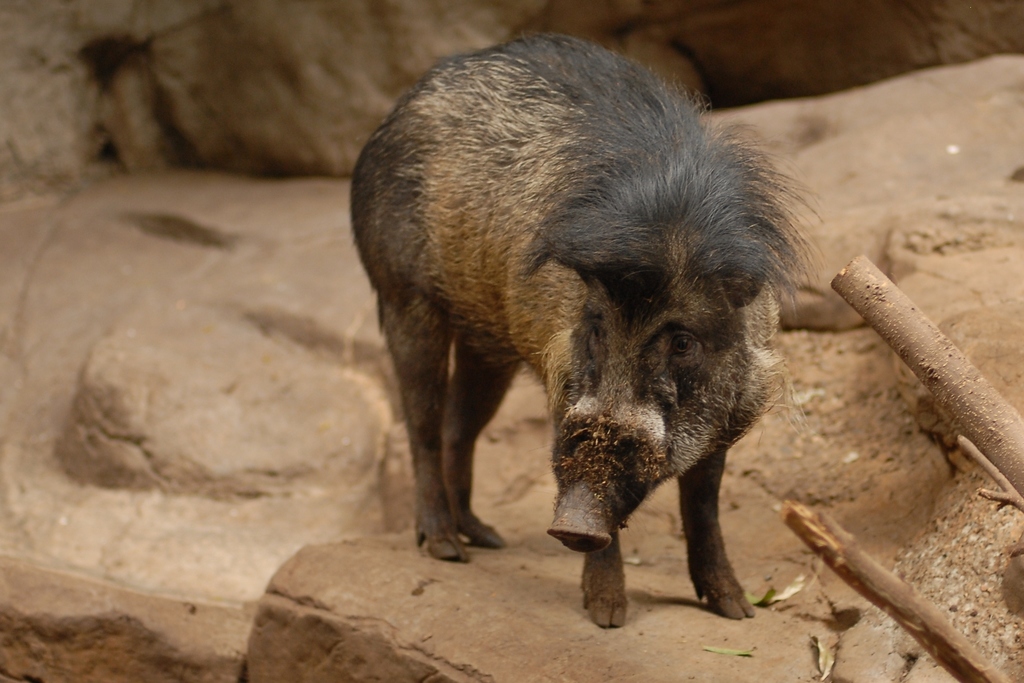
Boars and Warty Pigs
Sus
The pig (Sus domesticus), also called swine (pl.: swine) or hog, is an omnivorous, domesticated, even-toed, hoofed mammal. It is named the domestic pig when distinguishing it from other members of the genus Sus. Some authorities consider it a subspecies of Sus scrofa (the wild boar or Eurasian boar); other authorities consider it a distinct species. Pigs were domesticated independently twice during the Neolithic, in the Near East around the Tigris Basin, and in China. When domesticated pigs arrived in Europe from the Near East, they extensively interbred with wild boar in Europe but retained their domesticated features.
Pigs are farmed primarily for meat, called pork. The animal's skin or hide is used for leather. China is the world's largest pork producer, followed by the European Union and then the United States. Around 1.5 billion pigs are raised each year, producing some 120 million tonnes of meat, often cured as bacon. Some are kept as pets.
8 branches of this genus, most-observed first · about 8 known species
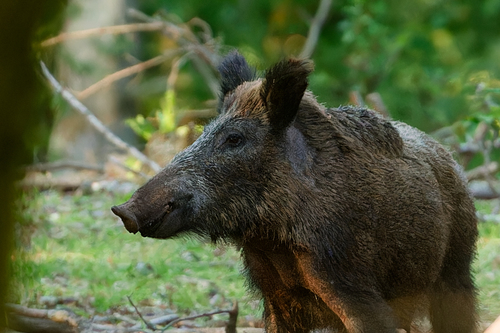
Wild Boar
speciesSus scrofa
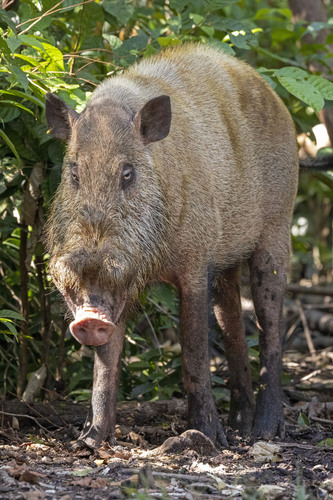
Western Bearded Pig
speciesSus barbatus
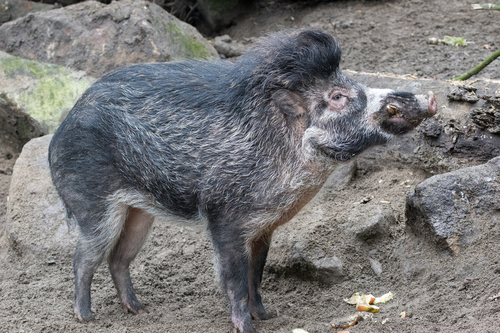
Visayan Warty Pig
speciesSus cebifrons

Sulawesi Warty Pig
speciesSus celebensis
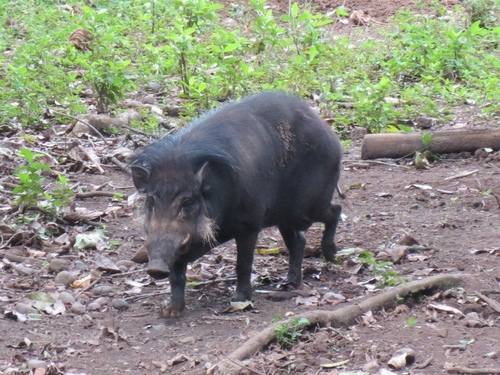
Philippine Warty Pig
speciesSus philippensis
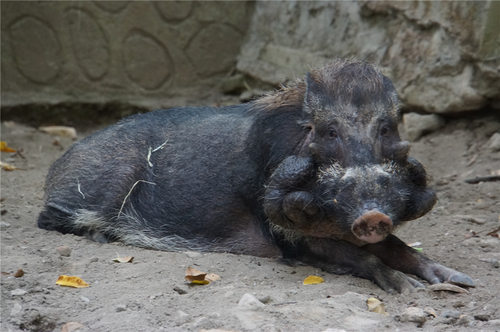
Javan Warty Pig
speciesSus verrucosus
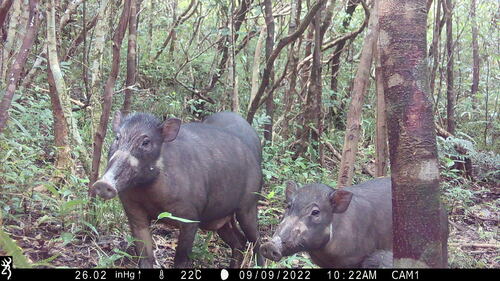
Oliver's Warty Pig
speciesSus oliveri
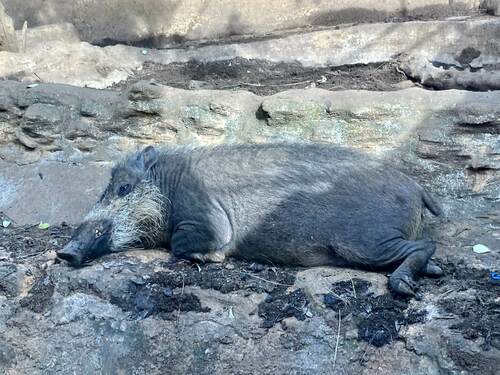
Palawan Bearded Pig
speciesSus ahoenobarbus
Where it lives
Recorded sightings
—
geo-referenced records in GBIF, from museums, herbaria and field observers.
Drag the globe to turn it. Dots are where records exist, not a range map; darker means more records.
In the stacks
Searching the stacks…
Every page naming Sus in the Biodiversity Heritage Library →
This page is assembled live from iNaturalist, GBIF, Wikipedia, the Source Library and the Internet Archive. It is not yet part of the hand-edited codex. iNaturalist taxon 42126.