- Fungi Including Lichens
- ›Basidiomycete Fungi
- ›Higher Basidiomycetes
- ›Mushrooms, Bracket Fungi, Puffballs, and Allies
- ›Phallomycetidae
- ›Gomphales
- ›Gomphaceae
- ›Phaeoclavulina
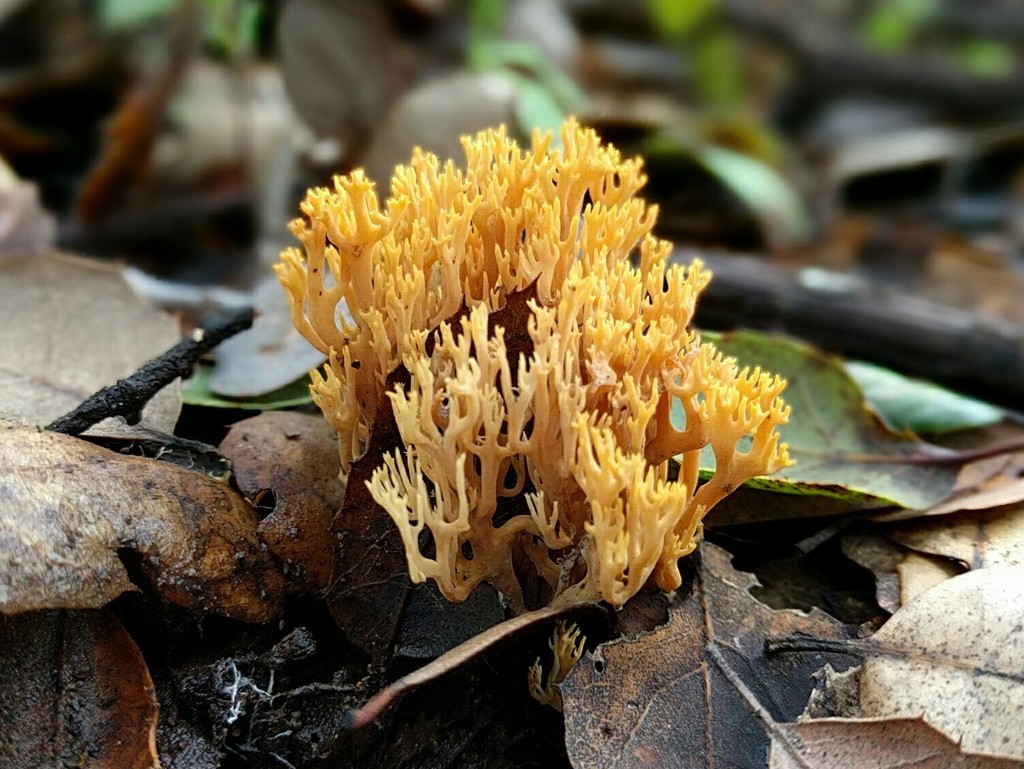
Phaeoclavulina myceliosa
Ramaria myceliosa is a species of coral fungus in the family Gomphaceae. Found in North America, it was originally described by Charles Horton Peck in 1904 with the name Clavaria myceliosa. The type was collected by botanist Edwin Bingham Copeland in the mountains near Stanford University in California. E. J. H. Corner transferred it to the genus Ramaria in 1950. Giachini and colleagues proposed that R. myceliosa is the same species as the European Phaeoclavulina curta, but did not provide molecular evidence to support their suggested synonymy. In a recent (2014) publication on California fungi, the authors propose the transfer of R. myceliosa to the genus Phaeoclavulina, but as of January 2016, this transfer has not been accepted by either MycoBank or Index Fungorum.
The fruiting body is usually about 3–6 cm tall and wide, yellowish to tan, with tips branching into two to four points, whitish flesh, mild odor, and bitter taste. The stalks are about 2 cm tall. The spores are yellowish.
Where it lives
Recorded sightings
—
geo-referenced records in GBIF, from museums, herbaria and field observers.
Drag the globe to turn it. Dots are where records exist, not a range map; darker means more records.
In the stacks
Searching the stacks…
Every page naming Phaeoclavulina myceliosa in the Biodiversity Heritage Library →
This page is assembled live from iNaturalist, GBIF, Wikipedia, the Source Library and the Internet Archive. It is not yet part of the hand-edited codex. iNaturalist taxon 417351.