- Animals
- ›Chordates
- ›Vertebrates
- ›Mammals
- ›Therians
- ›Placental Mammals
- ›Ungulates, Carnivorans, and Allies
- ›Even-toed Ungulates and Cetaceans
- ›Cetaceans and Hippopotamuses
- ›Cetaceans
- ›Baleen Whales
- ›Bowhead and Right Whales
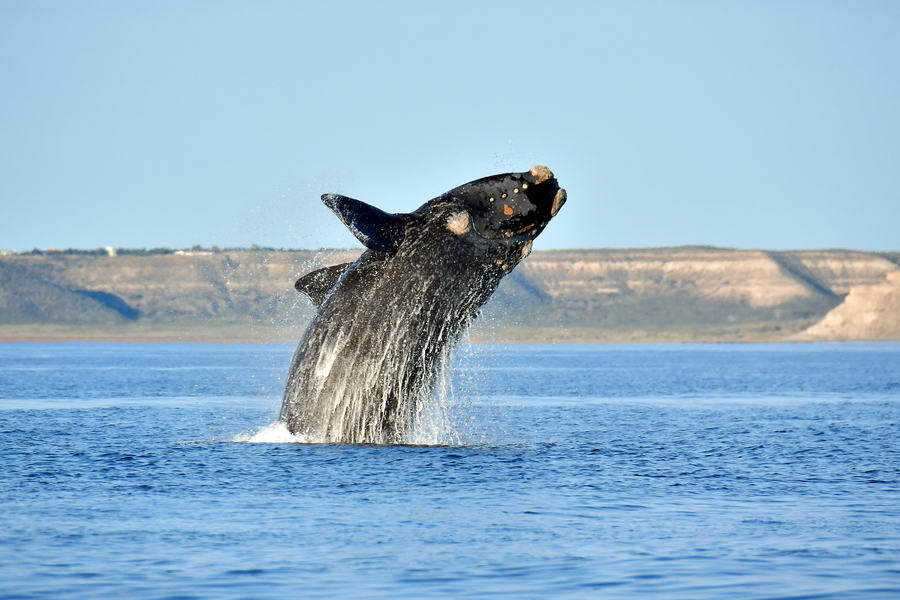
Right Whales
Eubalaena
Right whales are three species of large baleen whales of the genus Eubalaena: the North Atlantic right whale (E. glacialis), the North Pacific right whale (E. japonica) and the southern right whale (E. australis). They are classified in the family Balaenidae with the bowhead whale. Right whales have rotund bodies with arching rostrums, V-shaped blowholes and dark gray or black skin. The most distinguishing feature of a right whale is the rough patches of skin on its head, which appear white due to parasitism by whale lice. Right whales are typically 13–17 m (43–56 ft) long and weigh up to 100 short tons (91 t; 89 long tons) or more.
All three species are migratory, moving seasonally to feed or give birth. The warm equatorial waters form a barrier that isolates the northern and southern species from one another although the southern species, at least, has been known to cross the equator. In the Northern Hemisphere, right whales tend to avoid open waters and stay close to peninsulas and bays and on continental shelves, as these areas offer greater shelter and an abundance of their preferred foods. In the Southern Hemisphere, right whales feed far offshore in summer, but a large portion of the population occur in near-shore waters in winter. Right whales feed mainly on copepods but also consume krill and pteropods. They may forage the surface, underwater or even the ocean bottom. During courtship, males gather into large groups to compete for a single female, suggesting that sperm competition is an important factor in mating behavior.
3 branches of this genus, most-observed first · about 3 known species
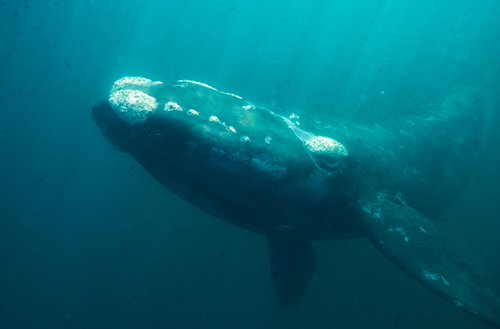
Southern Right Whale
speciesEubalaena australis
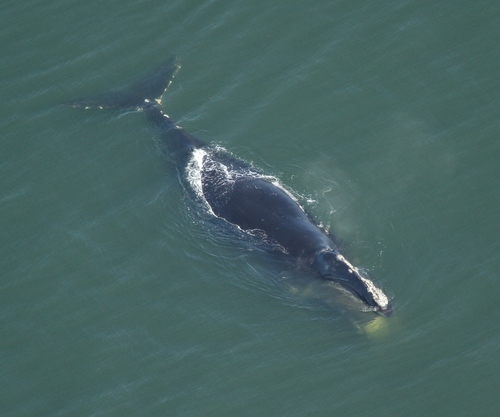
North Atlantic Right Whale
speciesEubalaena glacialis
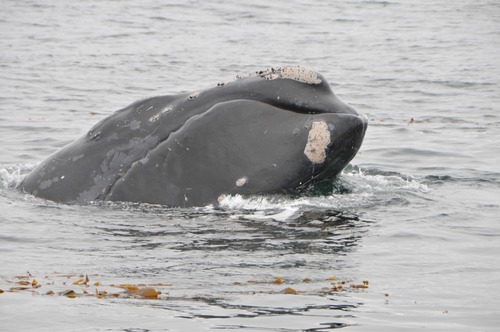
North Pacific Right Whale
speciesEubalaena japonica
Where it lives
Recorded sightings
—
geo-referenced records in GBIF, from museums, herbaria and field observers.
Drag the globe to turn it. Dots are where records exist, not a range map; darker means more records.
In the stacks
Searching the stacks…
Every page naming Eubalaena in the Biodiversity Heritage Library →
This page is assembled live from iNaturalist, GBIF, Wikipedia, the Source Library and the Internet Archive. It is not yet part of the hand-edited codex. iNaturalist taxon 41568.