- Animals
- ›Chordates
- ›Vertebrates
- ›Mammals
- ›Therians
- ›Placental Mammals
- ›Ungulates, Carnivorans, and Allies
- ›Even-toed Ungulates and Cetaceans
- ›Cetaceans and Hippopotamuses
- ›Cetaceans
- ›Toothed Whales
- ›Oceanic Dolphins and Porpoises
- ›Oceanic Dolphins
- ›Long-nosed Dolphins
- ›Delphinus
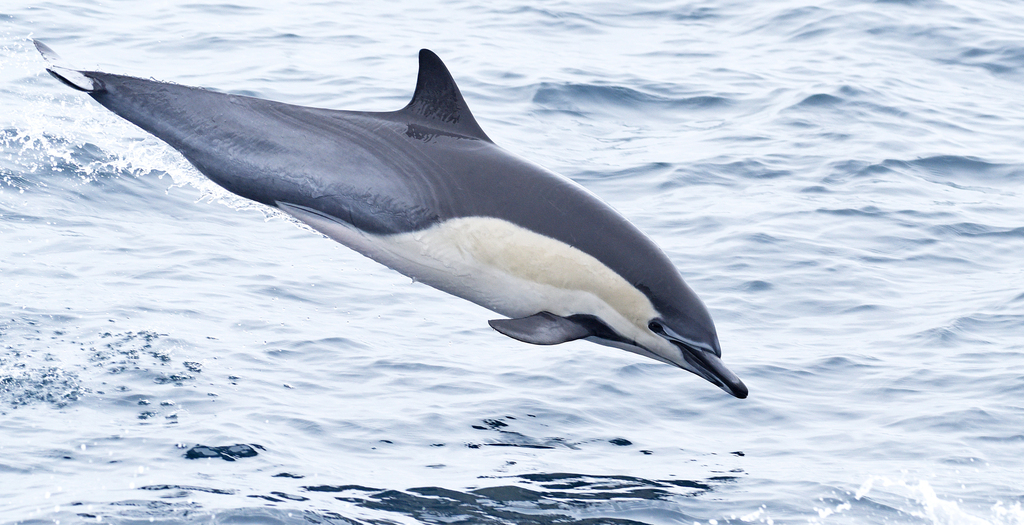
Common Dolphin
Delphinus delphis
The common dolphin (Delphinus delphis) is the most abundant cetacean in the world, with an estimated global population of about six million. It is currently the only member of the genus Delphinus, the type genus of the subfamily Delphininae. This places it as a close relative of the bottlenose dolphin, humpback dolphin, striped dolphin, spinner dolphin, Clymene dolphin, spotted dolphin, Fraser's dolphin, the tucuxi, and the Guiana dolphin.
The common dolphin was once divided into two different species, the short-beaked common dolphin and the long-beaked common dolphin. These are now generally regarded as ecotypes. Recent research shows that many long-beaked populations worldwide are not closely related to one another, often originating from short-beaked ancestors, and they do not consistently share the same derived traits. For this reason, these forms are no longer classified as separate species.
From the article Common dolphin on Wikipedia (CC BY-SA), quoted section by section
What it does
The short-beaked common dolphin has a gestation period of 10 to 11 months. The newborn calf has a length of 70 to 100 centimetres (2.3 to 3.3 ft) and weighs about 10 kilograms (22 lb). For the Black Sea population, weaning occurs at between five and six months, but occurs later (up to about 19 months) in other areas. Typical interbirth interval ranges from one year for the Black Sea population to three years for eastern Pacific Ocean populations. Age of sexual maturity also varies by location, but can range between 2 and 7 years for females and 3 and 12 years for males. No evidence exists of any major reproductive differences between the two forms.
Wikipedia: “Reproduction”
Listen
Looking for field recordings…
Where it lives
Recorded sightings
—
geo-referenced records in GBIF, from museums, herbaria and field observers.
Drag the globe to turn it. Dots are where records exist, not a range map; darker means more records.
In the stacks
Searching the stacks…
Every page naming Delphinus delphis in the Biodiversity Heritage Library →
This page is assembled live from iNaturalist, GBIF, Wikipedia, the Source Library and the Internet Archive. It is not yet part of the hand-edited codex. iNaturalist taxon 41526.