- Animals
- ›Chordates
- ›Vertebrates
- ›Mammals
- ›Therians
- ›Placental Mammals
- ›Ungulates, Carnivorans, and Allies
- ›Even-toed Ungulates and Cetaceans
- ›Cetaceans and Hippopotamuses
- ›Cetaceans
- ›Toothed Whales
- ›Oceanic Dolphins and Porpoises
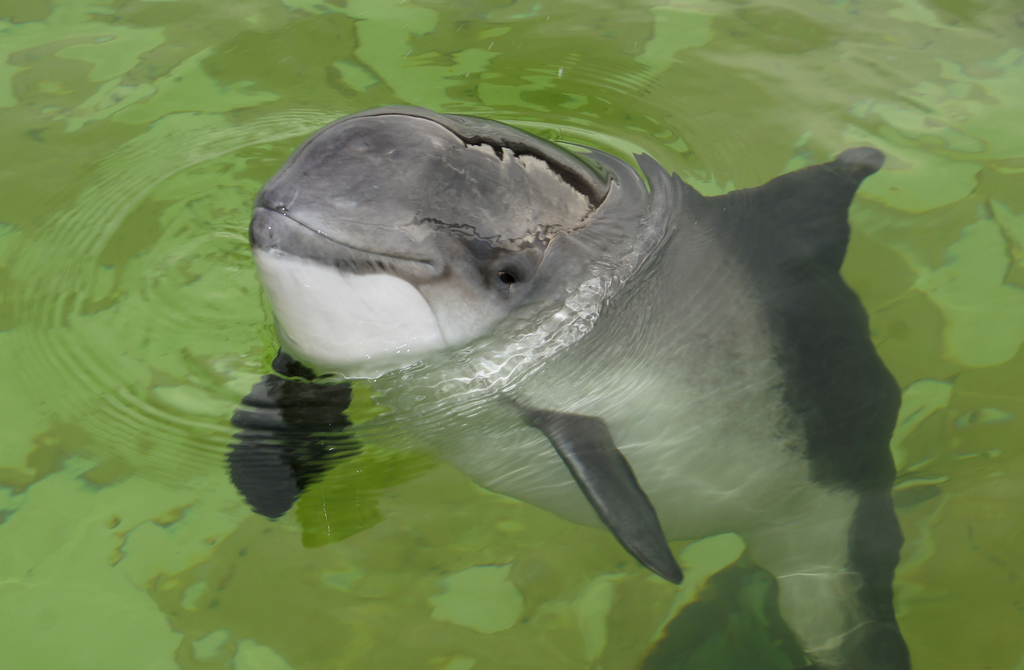
Porpoises
Phocoenidae
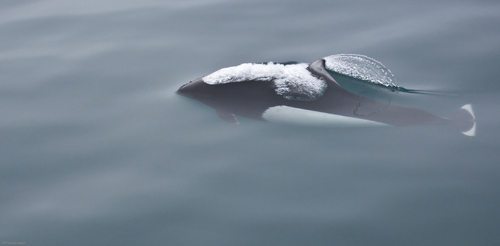
Porpoises () are small dolphin-like cetaceans classified under the family Phocoenidae. Although similar in appearance to dolphins, they are more closely related to narwhals and belugas. There are eight extant species of porpoise, all among the smallest of the toothed whales. Porpoises are distinguished from dolphins by their flattened, spade-shaped teeth distinct from the conical teeth of dolphins, and lack of a pronounced beak, although some dolphins (e.g. Hector's dolphin) also lack a pronounced beak. Porpoises, and other cetaceans, belong to the clade Cetartiodactyla with even-toed ungulates.
Porpoises range in size from the vaquita, at 1.4 metres (4 feet 7 inches) in length and 54 kilograms (119 pounds) in weight, to the Dall's porpoise, at 2.3 m (7 ft 7 in) and 220 kg (490 lb). Several species exhibit sexual dimorphism in that the females are larger than males. They have streamlined bodies and two limbs that are modified into flippers. Porpoises use echolocation as their primary sensory system. Some species are well adapted for diving to great depths. As all cetaceans, they have a layer of fat, or blubber, under the skin to keep them warm in cold water.
3 branches of this family, most-observed first · about 8 known species
See this branch on the Wheel of Life →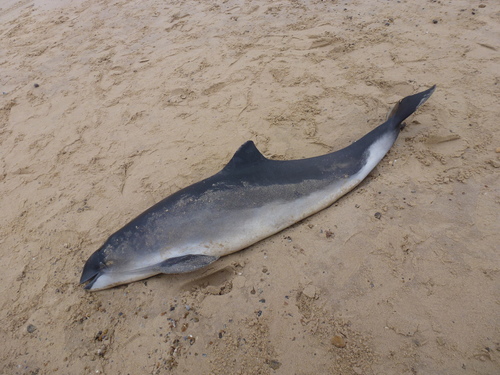

Where it lives
Recorded sightings
—
geo-referenced records in GBIF, from museums, herbaria and field observers.
Drag the globe to turn it. Dots are where records exist, not a range map; darker means more records.
In the stacks
Searching the stacks…
Every page naming Phocoenidae in the Biodiversity Heritage Library →
This page is assembled live from iNaturalist, GBIF, Wikipedia, the Source Library and the Internet Archive. It is not yet part of the hand-edited codex. iNaturalist taxon 41437.