- Animals
- ›Chordates
- ›Vertebrates
- ›Mammals
- ›Therians
- ›Placental Mammals
- ›Ungulates, Carnivorans, and Allies
- ›Bats
- ›Yinpterochiroptera
- ›Rhinolophoid Bats
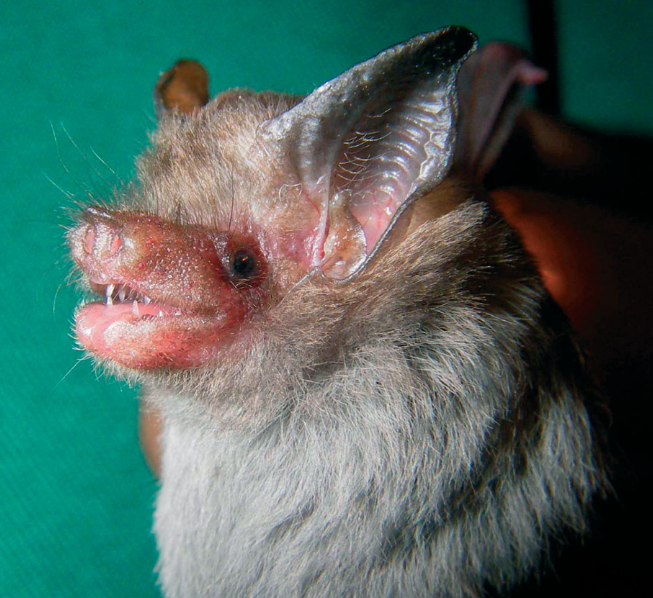
Hog-nosed Bats
Craseonycteridae
Kitti's hog-nosed bat (Craseonycteris thonglongyai), also known as the bumblebee bat or hog-nosed bat, is a near-threatened species of bat and the only extant member of the family Craseonycteridae. It occurs in western Thailand and southeast Myanmar, where it occupies limestone caves along rivers.
Kitti's hog-nosed bat is the smallest species of bat and arguably the world's smallest mammal by body length (the Etruscan shrew is regarded as the smallest by body mass). It has a reddish-brown or grey coat, with a distinctive pig-like snout. Colonies range greatly in size, with an average of 100 individuals per cave. The bat feeds during short activity periods in the evening and dawn, foraging around nearby forest areas for insects. Females give birth annually to a single offspring.
1 branches of this family, most-observed first · about 1 known species
See this branch on the Wheel of Life →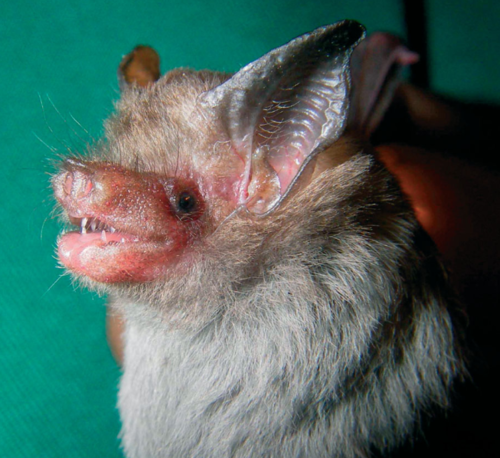
Where it lives
Recorded sightings
—
geo-referenced records in GBIF, from museums, herbaria and field observers.
Drag the globe to turn it. Dots are where records exist, not a range map; darker means more records.
In the stacks
Searching the stacks…
Every page naming Craseonycteridae in the Biodiversity Heritage Library →
This page is assembled live from iNaturalist, GBIF, Wikipedia, the Source Library and the Internet Archive. It is not yet part of the hand-edited codex. iNaturalist taxon 41397.