- Animals
- ›Chordates
- ›Vertebrates
- ›Mammals
- ›Therians
- ›Placental Mammals
- ›Ungulates, Carnivorans, and Allies
- ›Bats
- ›Yangochiroptera
- ›Sheath-tailed and Slit-faced Bats
- ›Sheath-tailed Bats
- ›Typical Sheath-winged Bats
- ›Emballonurini
- ›Coleura
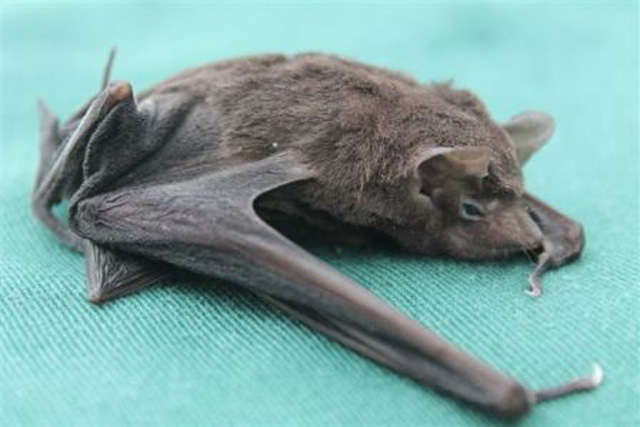
Seychelles Sheath-tailed Bat
Coleura seychellensis
The Seychelles sheath-tailed bat (Coleura seychellensis) is a sac-winged bat found in the central granitic islands of the Seychelles. They are nocturnal insectivores that roost communally in caves. The species was previously abundant across much of the archipelago, but has since seen a substantial loss of habitat. The International Union for Conservation of Nature has listed the species as being critically endangered, due to population decline. This is mainly due to an increase in land development and the introduction of invasive species.
From the article Seychelles sheath-tailed bat on Wikipedia (CC BY-SA), quoted section by section
What it does
The weight of Seychelles sheath-tailed bats averages about 10–11 grams (0.35–0.39 oz). Bats in this genus generally roost in caves and houses, in crevices and cracks. In the 1860s, the Seychelles sheath-tailed bat was reported to fly around clumps of bamboo towards twilight, and in the daytime to be found roosting in the clefts of the mountainside facing the sea and with a more or less northern aspect. These hiding places were generally covered over with the large fronds of endemic palms. The Seychelles sheath-tailed bat is insectivorous. It feeds predominantly on marsh-associated Ceratopogonidae, in contrast to Curlionidae in palm woodland. Its colonies are apparently divided into harem groups. It has been the focus of recent intensive research, which has determined that it is a species associated with small clearings in forests where it feeds on a wide variety of insect species. Observations of coastal or marsh feeding are thought to be bats that have been forced into feeding in unusual situations due to habitat deterioration. Although the species is not a specialist and has a high reproductive potential, it is very vulnerable to disturbance and requires several roost sites within healthy habitat.
Wikipedia: “Ecology”
Listen
Looking for field recordings…
Where it lives
Recorded sightings
—
geo-referenced records in GBIF, from museums, herbaria and field observers.
Drag the globe to turn it. Dots are where records exist, not a range map; darker means more records.
In the stacks
Searching the stacks…
Every page naming Coleura seychellensis in the Biodiversity Heritage Library →
This page is assembled live from iNaturalist, GBIF, Wikipedia, the Source Library and the Internet Archive. It is not yet part of the hand-edited codex. iNaturalist taxon 41392.