- Animals
- ›Chordates
- ›Vertebrates
- ›Mammals
- ›Therians
- ›Placental Mammals
- ›Ungulates, Carnivorans, and Allies
- ›Bats
- ›Yangochiroptera
- ›Noctilionoid Bats
- ›New World Leaf-nosed Bats
- ›Flower Bats
- ›Erophylla
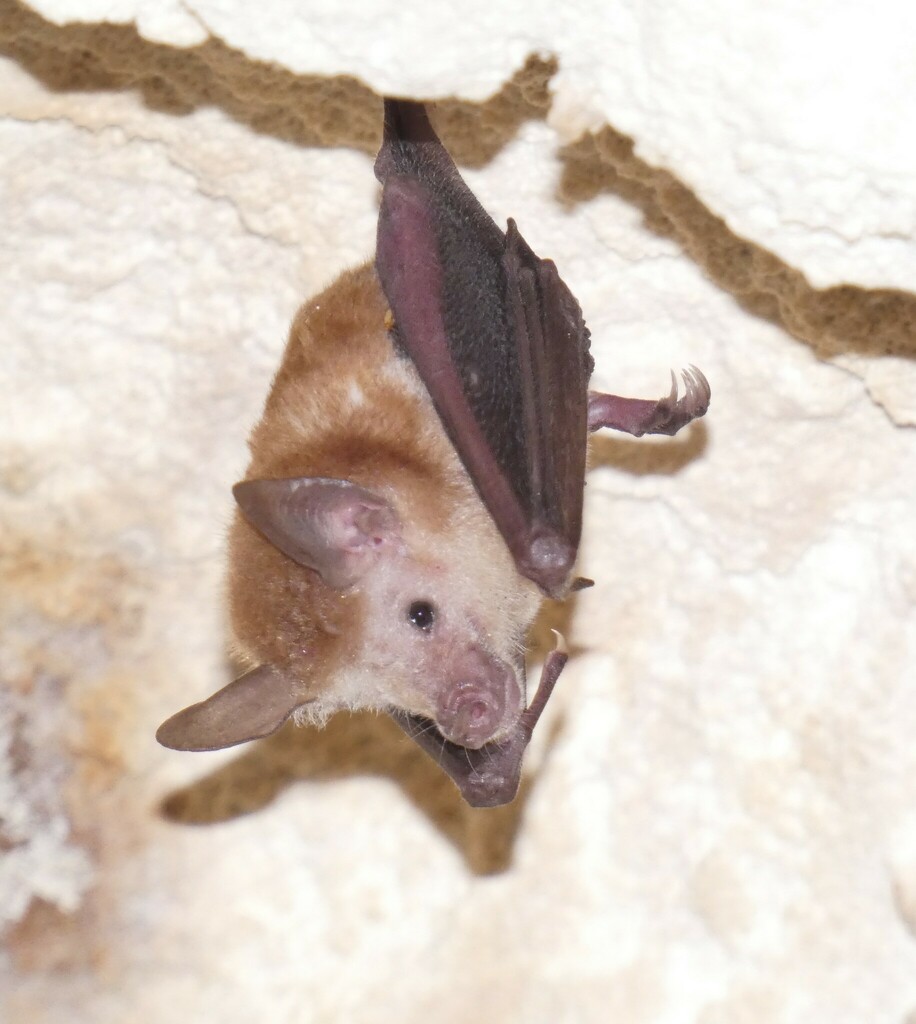
Buffy Flower Bat
Erophylla sezekorni
The buffy flower bat (Erophylla sezekorni) is a species of bat in the leaf-nosed bat family, Phyllostomidae. It is found in the Bahamas, the Cayman Islands, Cuba, and Jamaica.
From the article Buffy flower bat on Wikipedia (CC BY-SA), quoted section by section
Description
The buffy flower bat is considered a medium-sized bat, however, compared to those in its genus, it is a generally larger bat. Its hair has two colors on its body; the hairs closer to the body are white, while the distal hairs are brown. The head and face are covered in short, white hairs. Compared to other bats, it has a long snout which sharply rises into its forehead. The buffy flower bat is named after its flowery shaped nose.
What it does
The bats eat a combination of nectar, fruit, and insects, though fruit dominates their diet. Based on fecal droppings, it was found that 50% of the bats tested had eaten all three in a single night while the remaining ate only two of the three types of food. The insects eaten are primarily beetles, but also eat flies, bees and moths. Buffy flower bats are likely eaten by nocturnal owls and climbing snakes.
Wikipedia: “Diet”
Listen
Looking for field recordings…
Where it lives
Recorded sightings
—
geo-referenced records in GBIF, from museums, herbaria and field observers.
Drag the globe to turn it. Dots are where records exist, not a range map; darker means more records.
In the stacks
Searching the stacks…
Every page naming Erophylla sezekorni in the Biodiversity Heritage Library →
This page is assembled live from iNaturalist, GBIF, Wikipedia, the Source Library and the Internet Archive. It is not yet part of the hand-edited codex. iNaturalist taxon 41178.