- Animals
- ›Chordates
- ›Vertebrates
- ›Mammals
- ›Therians
- ›Placental Mammals
- ›Ungulates, Carnivorans, and Allies
- ›Bats
- ›Yangochiroptera
- ›Noctilionoid Bats
- ›New World Leaf-nosed Bats
- ›Stenodermatine Bats
- ›Stenodermatini
- ›Artibeus
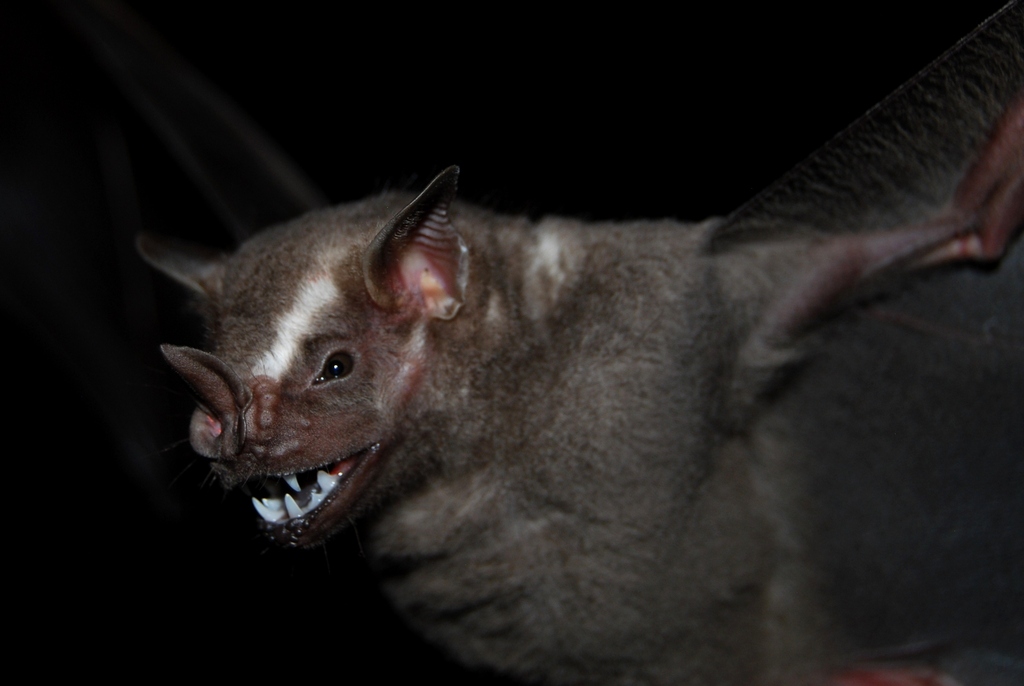
Great Fruit-eating Bat
Artibeus lituratus
The great fruit-eating bat (Artibeus lituratus) is a bat species in the family Phyllostomidae from South and Central America. It is found from Mexico to Brazil and Argentina, as well as in Antigua and Barbuda, Barbados, Grenada, Martinique, Saint Lucia, Saint Vincent and the Grenadines and Trinidad and Tobago.
From the article Great fruit-eating bat on Wikipedia (CC BY-SA), quoted section by section
Description
They weigh 10.5 grams (0.37 oz) at birth and grow to 65 grams (2.3 oz) as adults. The heart of A. lituratus contains unique membranous structures not seen in any other mammal. The functions of these differences are still being studied, but may possibly aid in keeping the heart in the correct position while upside down, flight assistance, and energy reservation. In Panama, it has been found that some Artibeus lituratus fly with 18-23g fruits of Dipteryx panamensis (Fabaceae), which is a third of the animal's body weight, up to hundreds of meters from the parent tree.
Listen
Looking for field recordings…
Where it lives
Recorded sightings
—
geo-referenced records in GBIF, from museums, herbaria and field observers.
Drag the globe to turn it. Dots are where records exist, not a range map; darker means more records.
In the stacks
Searching the stacks…
Every page naming Artibeus lituratus in the Biodiversity Heritage Library →
This page is assembled live from iNaturalist, GBIF, Wikipedia, the Source Library and the Internet Archive. It is not yet part of the hand-edited codex. iNaturalist taxon 41006.