- Animals
- ›Chordates
- ›Vertebrates
- ›Mammals
- ›Therians
- ›Placental Mammals
- ›Ungulates, Carnivorans, and Allies
- ›Bats
- ›Yinpterochiroptera
- ›Pteropodoidea
- ›Old World Fruit Bats
- ›Flying-foxes, Monkey-faced Bats and allies
- ›Flying-foxes and allies
- ›Pteropus
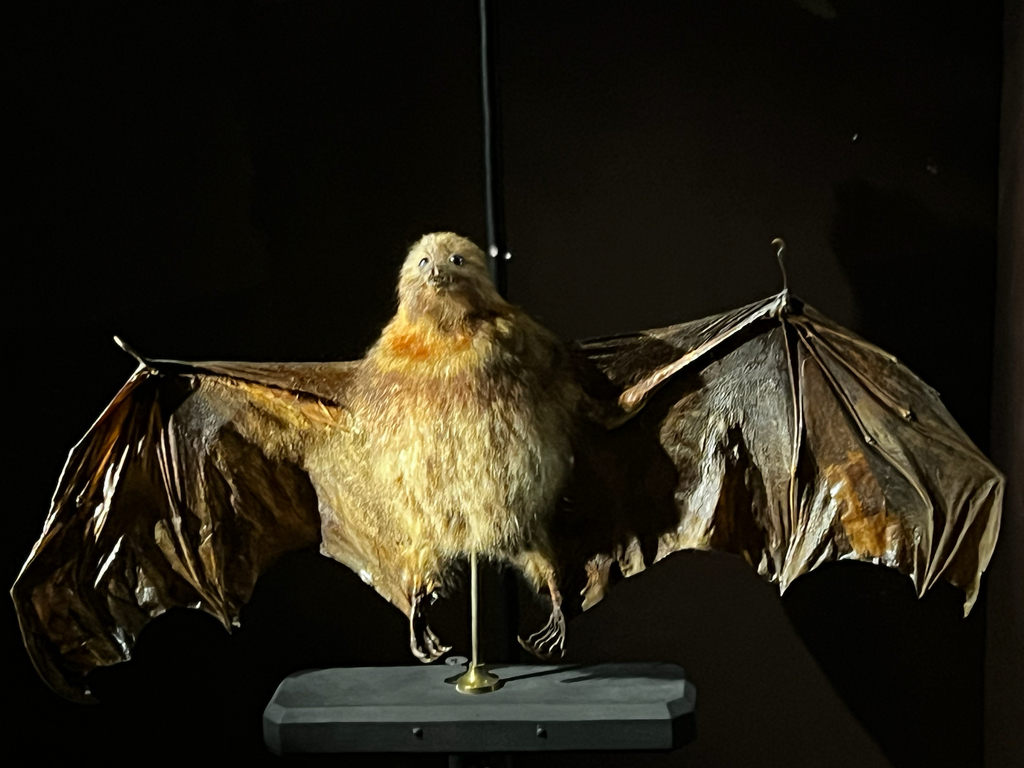
Dark flying fox
Pteropus subniger
The small Mauritian flying fox or dark flying fox (Pteropus subniger, known as rougettes to early French travelers) is an extinct species of megabat. It lived on the islands of Réunion and Mauritius in the Mascarene Islands of the Indian Ocean. It was abundant, with up to 400 sometimes crowding together at a single roost in a cave or in an ancient, hollow tree, while most other fruit bats prefer to roost in the branches of...
From the article Small Mauritian flying fox on Wikipedia (CC BY-SA), quoted section by section
What it does
It was abundant, with up to 400 sometimes crowding together at a single roost in a cave or in an ancient, hollow tree, while most other fruit bats prefer to roost in the branches of large trees. Local people believed there was only one male per roost, which may indicate the sexes roosted separately and the large roosts were maternity colonies. This flying fox was nocturnal and had delicate teeth, so it probably fed on nectar and possibly soft fruit.
A description from 1772 states:
When I arrived these animals were as common, even in the settled areas, as they are rare today. They are hunted for their meat, for their fat, for young individuals, throughout all the summer, all the autumn and part of the winter, by whites with a gun, by negros with nets. The species must continue to decline, and in a short time. In abandoning populated areas to retreat to those that are yet to be so, and into the interior of the island, fugitive negros do not spare them when they can get them .... I ought to put in here what little I know about rougettes. One never sees them flying by day. They live communally in the large hollows of rotten trees, in numbers sometimes exceeding four hundred. They only leave in the evening as darkness falls and return before dawn. …
Wikipedia: “Behaviour and ecology”
Listen
Looking for field recordings…
Where it lives
Recorded sightings
—
geo-referenced records in GBIF, from museums, herbaria and field observers.
Drag the globe to turn it. Dots are where records exist, not a range map; darker means more records.
In the stacks
Searching the stacks…
Every page naming Pteropus subniger in the Biodiversity Heritage Library →
This page is assembled live from iNaturalist, GBIF, Wikipedia, the Source Library and the Internet Archive. It is not yet part of the hand-edited codex. iNaturalist taxon 40921.