- Animals
- ›Chordates
- ›Vertebrates
- ›Mammals
- ›Therians
- ›Placental Mammals
- ›Ungulates, Carnivorans, and Allies
- ›Bats
- ›Yinpterochiroptera
- ›Rhinolophoid Bats
- ›Horseshoe Bats
- ›Rhinolophus
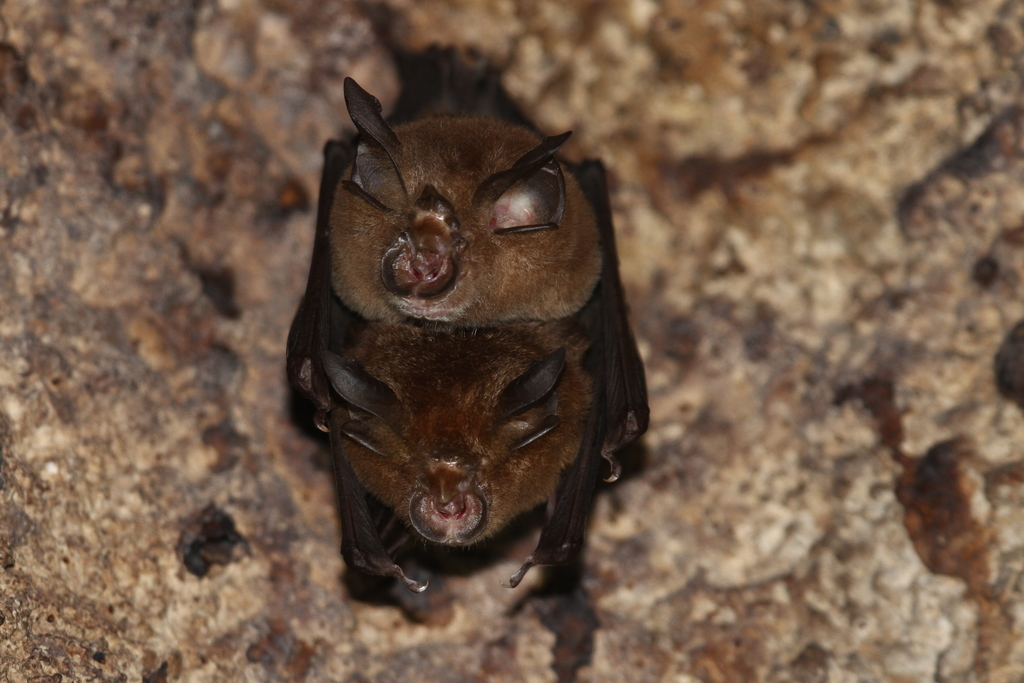
Canut's horseshoe bat
Rhinolophus canuti
Canut's horseshoe bat (Rhinolophus canuti) is a species of bat in the family Rhinolophidae. It is endemic to Indonesia.
From the article Canut's horseshoe bat on Wikipedia (CC BY-SA), quoted section by section
Description
Its skull has a rostral projection; the projection is on the top of the skull, with its leading edge aligned over the fourth premolar. Its head and body is 65 mm (2.6 in) long. Its tail is 22 mm (0.87 in); its ears are 24 mm (0.94 in). It has a very narrow connecting process between the sella and the posterior lancet.
In human culture
It was described as a new species in 1909 by Oldfield Thomas and Robert Charles Wroughton. They chose the species name "canuti" to honor Danish mammalogist Knud Andersen. "Canute" is an anglicization of the Danish name "Knud." Thomas and Wroughton chose to honor Andersen when naming the species "in recognition of the exhaustive work he has done on this complicated and difficult group."
Wikipedia: “Taxonomy and etymology”
Listen
Looking for field recordings…
Where it lives
Recorded sightings
—
geo-referenced records in GBIF, from museums, herbaria and field observers.
Drag the globe to turn it. Dots are where records exist, not a range map; darker means more records.
In the stacks
Searching the stacks…
Every page naming Rhinolophus canuti in the Biodiversity Heritage Library →
This page is assembled live from iNaturalist, GBIF, Wikipedia, the Source Library and the Internet Archive. It is not yet part of the hand-edited codex. iNaturalist taxon 40697.