- Animals
- ›Chordates
- ›Vertebrates
- ›Mammals
- ›Therians
- ›Placental Mammals
- ›Ungulates, Carnivorans, and Allies
- ›Bats
- ›Yangochiroptera
- ›Vespertilionoid Bats
- ›Evening Bats
- ›Woolly and Trumpet-eared Bats
- ›Kerivoula
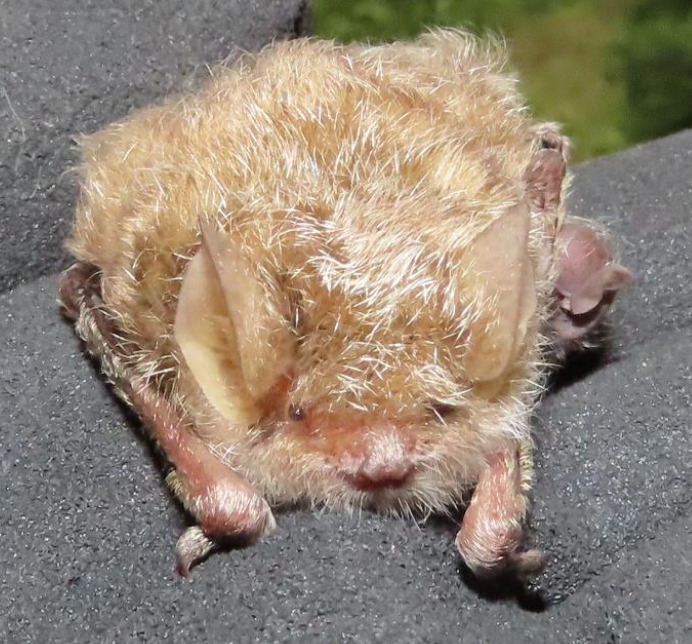
Lesser woolly bat
Kerivoula lanosa
The lesser woolly bat (Kerivoula lanosa) is a species of vesper bat in the family Vespertilionidae. It is found in Botswana, Central African Republic, Democratic Republic of the Congo, Ivory Coast, Ethiopia, Gabon, Ghana, Guinea, Kenya, Liberia, Malawi, Nigeria, South Africa, Tanzania, Zambia, Zimbabwe and rarely Ethiopia. Its natural habitats are subtropical or tropical moist lowland forests, dry savanna, and moist savanna. Members of this species typically have a dark greyish brown fur with whitish tips...
From the article Lesser woolly bat on Wikipedia (CC BY-SA), quoted section by section
What it does
The habitats that this bat lives are typically near water. Aquatic environments are generally inhabited, and when found in dryer climates such as forests or the savannah, they are generally near streams or in well watered areas. Roosting sites are often important in the ecology of bats, as the bats are subject to the conditions of their roosting sites. The nests constructed by birds, such as speckle-fronted weaver, provide protection from predators and the elements. likely as a result of the benefits gained from roosting in these nests, the lesser woolly bats have been known to roost in abandoned nests previously inhabited by speckled weavers, scarlet-chested sunbirds, and several others. The average number of bats per nest is usually between 1 and 3. However, the property and survival advantages remain unstudied.
== References ==
Wikipedia: “Ecology”
Listen
Looking for field recordings…
Where it lives
Recorded sightings
—
geo-referenced records in GBIF, from museums, herbaria and field observers.
Drag the globe to turn it. Dots are where records exist, not a range map; darker means more records.
In the stacks
Searching the stacks…
Every page naming Kerivoula lanosa in the Biodiversity Heritage Library →
This page is assembled live from iNaturalist, GBIF, Wikipedia, the Source Library and the Internet Archive. It is not yet part of the hand-edited codex. iNaturalist taxon 40468.