- Animals
- ›Chordates
- ›Vertebrates
- ›Reptiles
- ›Turtles and Tortoises
- ›Pond and Box Turtles
- ›Deirochelyine Turtles
- ›Trachemys
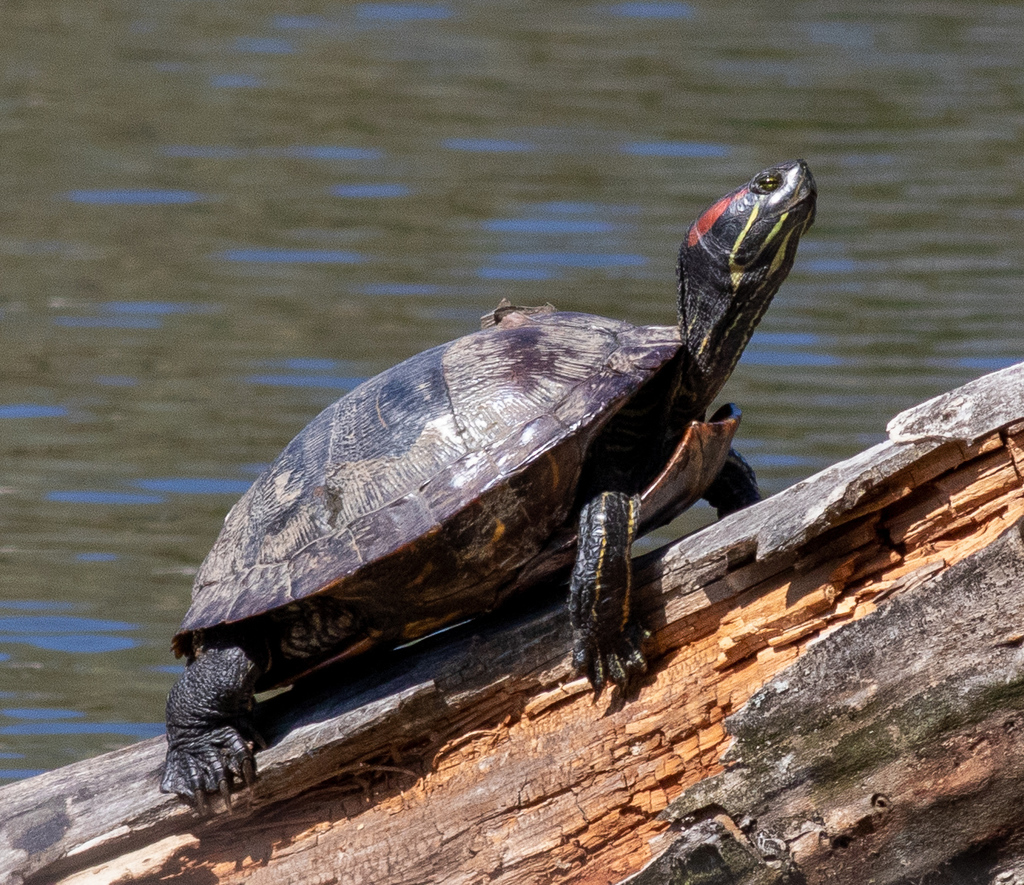
Pond Slider
Trachemys scripta
The pond slider (Trachemys scripta) is a species of common, medium-sized, semiaquatic turtle. Three subspecies are described, the most recognizable of which is the red-eared slider (T. s. elegans), which is popular in the pet trade and has been introduced to other parts of the world by people releasing it to the wild. Hatchling and juvenile pond sliders have a green upper shell (carapace), yellow bottom shell (plastron), and green and yellow stripes and markings on their skin. These patterns and colors in the skin and shell fade with age until the carapace is a muted olive green to brown and the plastron is a dull yellow or darker. Some sliders become almost black with few visible markings.
The carapace is oval with a bit of rounding and a central crest with knobs, but these features soften and fade with age, adults being smoother and flatter. For determining an adult slider's sex, males typically have much longer front claws than adult females, while females usually have shorter, more slender tails than males. Their lifespans range from 20 to 50 years.
From the article Pond slider on Wikipedia (CC BY-SA), quoted section by section
Range & habitat
Pond sliders are native to the south-central and southeastern United States and northern Mexico.
Wikipedia: “Distribution”
In human culture
The origin of the name slider stems from the behavior of these turtles when startled. Groups of sliders, sometimes quite large, as well as many other types of less abundant freshwater turtles, are often seen basking and sunning on logs, branches, and vegetation at or even well above the water's surface, but they readily and quickly scramble if they sense danger, shooting back in and darting away to safety underwater.
Wikipedia: “Etymology”
Where it lives
Recorded sightings
—
geo-referenced records in GBIF, from museums, herbaria and field observers.
Drag the globe to turn it. Dots are where records exist, not a range map; darker means more records.
In the stacks
Searching the stacks…
Every page naming Trachemys scripta in the Biodiversity Heritage Library →
This page is assembled live from iNaturalist, GBIF, Wikipedia, the Source Library and the Internet Archive. It is not yet part of the hand-edited codex. iNaturalist taxon 39782.