- Animals
- ›Chordates
- ›Vertebrates
- ›Reptiles
- ›Turtles and Tortoises
- ›American Mud and Musk Turtles
- ›Kinosternine Turtles
- ›Kinosternon
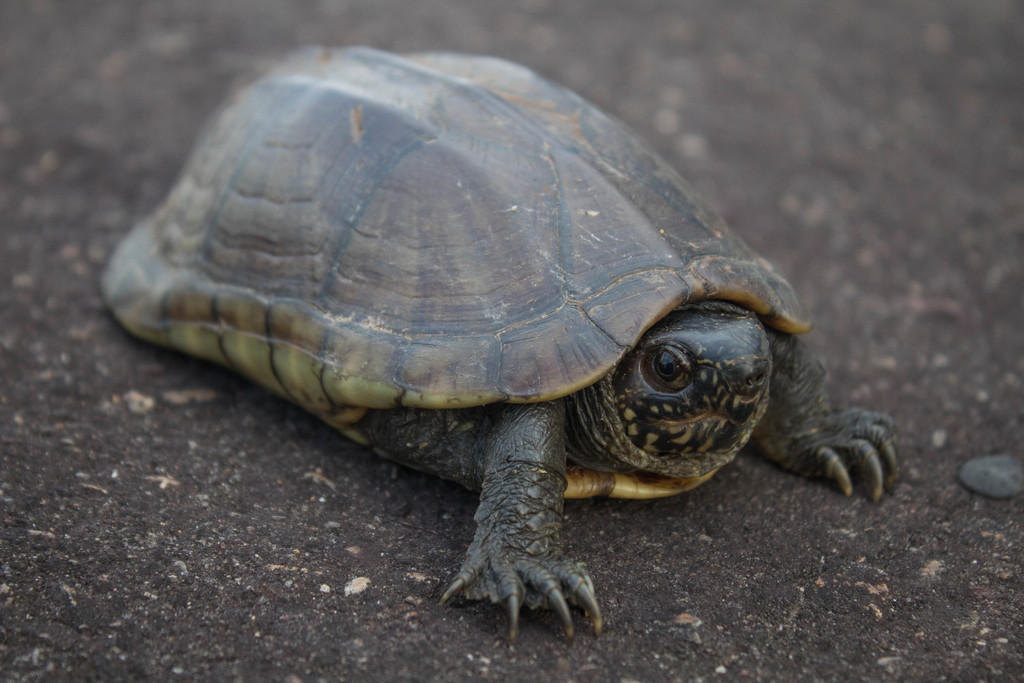
Scorpion Mud Turtle
Kinosternon scorpioides
The scorpion mud turtle (Kinosternon scorpioides) is a species of mud turtle in the family Kinosternidae. It is found in Mexico, Central and South America. It is a medium to large kinosternid (mud turtle) with a domed, oval upper shell 92–270 mm (3.6–10.6 in) long. Males regularly exceed 200 mm. The scorpion mud turtle is a highly aquatic, adaptable kinosternid that will live in almost any body of water. It is primarily omnicarnivorous, a glutton, and feeds on a...
From the article Scorpion mud turtle on Wikipedia (CC BY-SA), quoted section by section
Description
The scorpion mud turtle is a medium to large kinosternid (mud turtle) with a domed, oval upper shell 92–270 mm (3.6–10.6 in) long. Males regularly exceed 200 mm. The scorpion mud turtle is a highly aquatic, adaptable kinosternid that will live in almost any body of water.
Range & habitat
Females probably lay 1 to 6 hard-shelled eggs. Like many kinosternids, they probably construct a shallow terrestrial nest with little cover.
Wikipedia: “Reproduction and habitat”
What it does
It is primarily omnicarnivorous, a glutton, and feeds on a wide variety of aquatic invertebrates (such as insects and their larvae, spiders, shrimp, crabs, snails and worms) and vertebrates (such as fish and frogs), as well as carrion and bird eggshells. It also feeds on plant material such as algae, fruits, flowers, nuts, seeds and aquatic plants. In captivity, poorly fed K. scorpioides can be cannibalistic, biting off the toes and limbs of conspecifics.
Wikipedia: “Diet”
Where it lives
Recorded sightings
—
geo-referenced records in GBIF, from museums, herbaria and field observers.
Drag the globe to turn it. Dots are where records exist, not a range map; darker means more records.
In the stacks
Searching the stacks…
Every page naming Kinosternon scorpioides in the Biodiversity Heritage Library →
This page is assembled live from iNaturalist, GBIF, Wikipedia, the Source Library and the Internet Archive. It is not yet part of the hand-edited codex. iNaturalist taxon 39721.