- Animals
- ›Chordates
- ›Vertebrates
- ›Reptiles
- ›Turtles and Tortoises
- ›Side‑necked turtles
- ›Austro-American Side-necked Turtles
- ›Australasian Side-necked Turtles
- ›Elseya
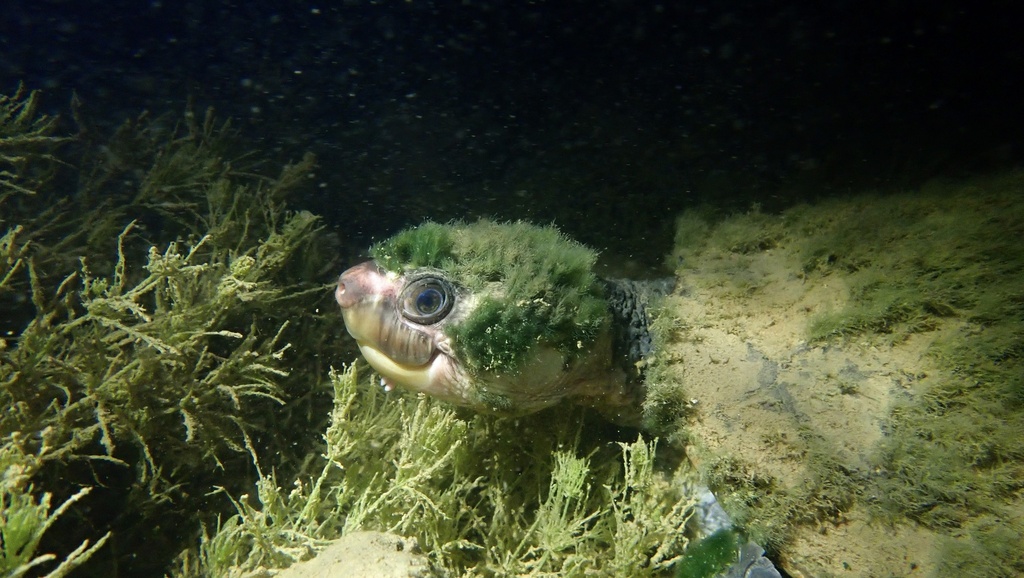
Gulf Snapping Turtle
Elseya lavarackorum
The Gulf snapping turtle or Lavaracks' turtle (Elseya lavarackorum) is a large species of freshwater turtle in the sidenecked family Chelidae. The species is specific to northern Australia in northwest Queensland and northeast Northern Territory. The species, similar to other members of the Australian snapping turtles in genus Elseya, only comes ashore to lay eggs and bask. The Gulf snapping turtle is a herbivore and primarily consumes pandanus and figs.
From the article Gulf snapping turtle on Wikipedia (CC BY-SA), quoted section by section
Description
The Gulf snapping turtle is a large, brown to dark brown, short-necked turtle. Its carapace, or upper shell, reaches 35 centimetres (14 in) in straight carapace length; it has an undulating suture between the humeral and pectoral shields in the white plastron, or under shell. The undulating (rather than straight) suture in the plastron distinguishes it from the northern snapping turtle (Elseya dentata).
Range & habitat
The Gulf snapping turtle is restricted to rivers draining into the Gulf of Carpentaria in the Northern Territory and Queensland. These rivers range from the Nicholson to Calvert River systems in the Northern Territory to the Gregory River in Queensland.
Wikipedia: “Geographic range and habitat”
What it does
The Gulf snapping turtle is primarily herbivorous and eat fruits, flowers, leaves, bark and Pandanus roots, and the juveniles also eat insect larvae. Figs are also an important food for the turtle. Despite its usually herbivorous diet, Lavaracks' turtle is readily trapped using meat as bait.
Wikipedia: “Behaviour”
In human culture
The specific name, lavarackorum (genitive plural), is in honor of Australian paleontologists Jim Lavarack and Sue Lavarack who discovered the fossil remains of this species.
Wikipedia: “Etymology”
Where it lives
Recorded sightings
—
geo-referenced records in GBIF, from museums, herbaria and field observers.
Drag the globe to turn it. Dots are where records exist, not a range map; darker means more records.
In the stacks
Searching the stacks…
Every page naming Elseya lavarackorum in the Biodiversity Heritage Library →
This page is assembled live from iNaturalist, GBIF, Wikipedia, the Source Library and the Internet Archive. It is not yet part of the hand-edited codex. iNaturalist taxon 39650.