- Animals
- ›Chordates
- ›Vertebrates
- ›Reptiles
- ›Turtles and Tortoises
- ›Side‑necked turtles
- ›Austro-American Side-necked Turtles
- ›Pseudemydurinae
- ›Pseudemydura
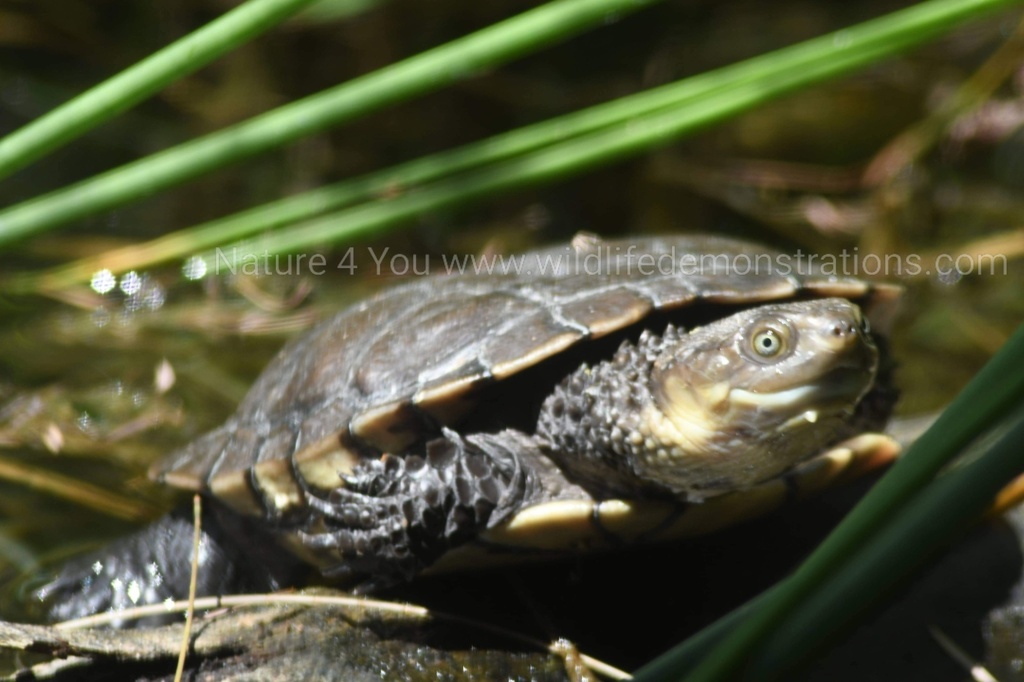
Western Swamp Turtle
Pseudemydura umbrina
The western swamp turtle or western swamp tortoise (Pseudemydura umbrina) is a critically endangered species of freshwater turtle endemic to a small portion of Western Australia. It is the only member of the genus Pseudemydura in the monotypic subfamily Pseudemydurinae.
It is the sister taxon to the subfamily Chelodininae. As a consequence of the greatly altered habitat in the area in which it occurs near Perth, Western Australia, it exists in small fragmented populations, making the species critically endangered.
From the article Western swamp turtle on Wikipedia (CC BY-SA), quoted section by section
Description
Adult males do not exceed a length of 155 mm or a weight of 550 g. Females are smaller, not growing beyond 135 mm in carapace length or a weight of 410 g. Hatchlings have a carapace length of 24–29 mm and weigh between 3.2 and 6.6 g. The colour of the western swamp turtle varies dependent on age and the environment where it is found. Typical colouration for hatchlings is grey above with bright cream and black below. The colour of adults varies with differing swamp conditions, and varies from medium yellow-brown in clay swamps to almost black with a maroon tinge in the black coffee-coloured water of sandy swamps. Plastron colour is variable, from yellow to brown or occasionally black; often there are black spots on a yellow background with black edges to the scutes. The legs are short and covered in scale-like scutes and the feet have well-developed claws. The short neck is covered with horny tubercles and on the top of the head is a large single scute. It is the smallest chelid found in Australia. The only other species of freshwater turtle occurring in the southwest of Western Australia is the southwestern snake-necked turtle (Chelodina oblonga). It has a neck equal to or longer than its shell, making the two species from south west Western Australia easily distinguishable.
Range & habitat
The western swamp turtle has been recorded only in scattered localities on the Swan Coastal Plain in Western Australia, from Perth Airport northwards to near Pearce Royal Australian Air Force Base in the Bullsbrook locality (roughly parallel with the Darling Scarp). Most of this area is now cleared and either urbanised, used for intensive agriculture or mined for clay for brick manufacture.
Wikipedia: “Distribution”
Where it lives
Recorded sightings
—
geo-referenced records in GBIF, from museums, herbaria and field observers.
Drag the globe to turn it. Dots are where records exist, not a range map; darker means more records.
In the stacks
Searching the stacks…
Every page naming Pseudemydura umbrina in the Biodiversity Heritage Library →
This page is assembled live from iNaturalist, GBIF, Wikipedia, the Source Library and the Internet Archive. It is not yet part of the hand-edited codex. iNaturalist taxon 39607.