- Fungi Including Lichens
- ›Basidiomycete Fungi
- ›Pucciniomycotina
- ›Pucciniomycetes
- ›rust fungi
- ›Uredinineae
- ›Pucciniaceae
- ›Puccinia
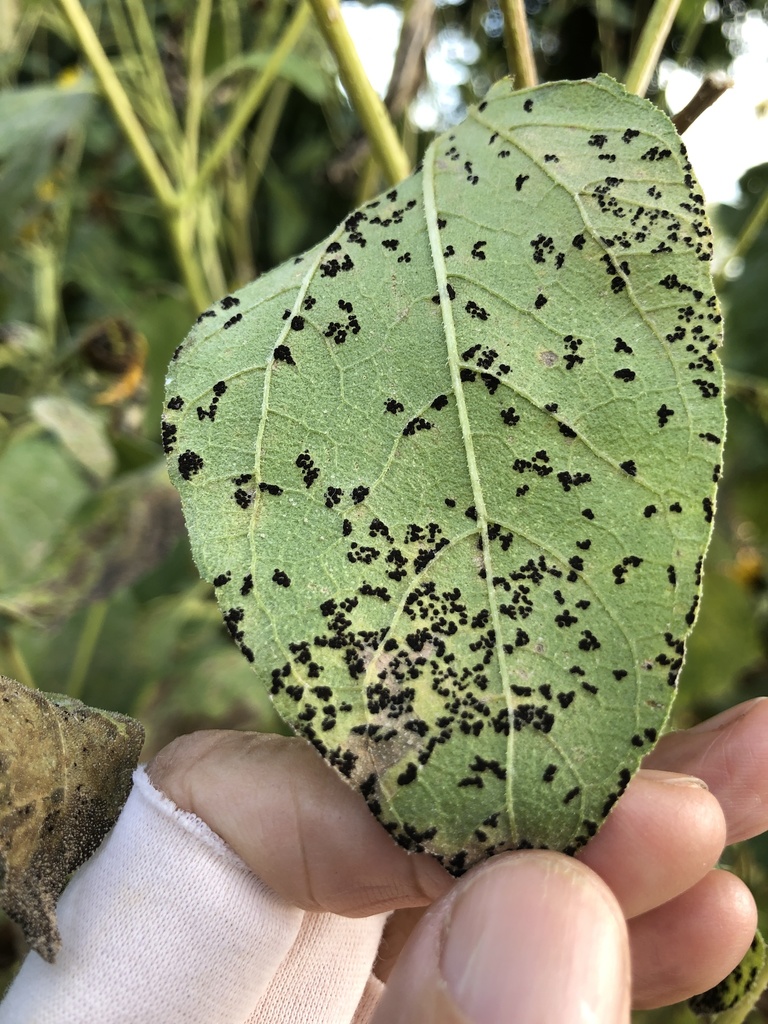
Sunflower Rust
Puccinia helianthi
Puccinia helianthi is a macrocyclic and autoecious fungal plant pathogen that causes rust on sunflower. It is also known as "common rust" and "red rust" of sunflower.
From the article Puccinia helianthi on Wikipedia (CC BY-SA), quoted section by section
What it does
P. helianthi produces five distinct spore stages during its life cycle. The uredinial stage is the repeating stage consisting of uredinia as red-brown, cinnamon-colored pustules containing thousands of urediniospores. During fall, these pustules turn black and begin producing overwintering teliospores in the telial stage. In early spring, the teliospores germinate to produce basidiospores, which disperse to infect sunflower seedlings. These infections elicit the pycnial and aecial spore stages, where flask-shaped pycnia is found embedded in the upper surfaces of leaf tissues, and aecia is seen directly below the pycnia on the dorsal side of leaves. Aeciospores that develop in the aecia reinfect sunflowers and reset the cycle by creating new uredinia.
Wikipedia: “Life cycle”
Where it lives
Recorded sightings
—
geo-referenced records in GBIF, from museums, herbaria and field observers.
Drag the globe to turn it. Dots are where records exist, not a range map; darker means more records.
In the stacks
Searching the stacks…
Every page naming Puccinia helianthi in the Biodiversity Heritage Library →
This page is assembled live from iNaturalist, GBIF, Wikipedia, the Source Library and the Internet Archive. It is not yet part of the hand-edited codex. iNaturalist taxon 383918.