- Fungi Including Lichens
- ›Basidiomycete Fungi
- ›Higher Basidiomycetes
- ›Mushrooms, Bracket Fungi, Puffballs, and Allies
- ›Agaricomycetidae
- ›Common Gilled Mushrooms and Allies
- ›Marasmiineae
- ›Physalacriaceae
- ›Oudemansiella
- ›Radicatae
- ›Oudemansiella radicata
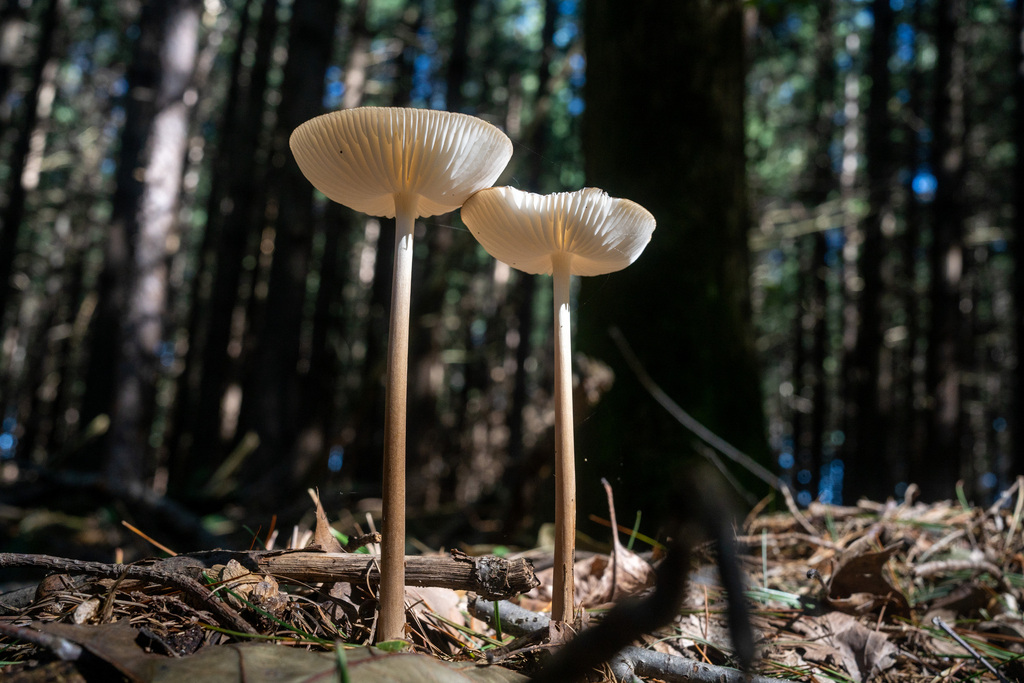
rooting shank
Oudemansiella radicata
Hymenopellis radicata, commonly known as the deep root mushroom, beech rooter, or the rooting shank, is a widespread agaric readily identified by its deeply rooted stalk (stipe).
From the article Hymenopellis radicata on Wikipedia (CC BY-SA), quoted section by section
Description
The cap is medium to large, flat, grayish or yellowish brown and streaked, with a central hump and between 2.5 and 12 centimetres (1 and 4+3⁄4 in) wide. The surface of the cap is sticky or slimy when moist, with the underside displaying wide white gills, or lamellae. The brittle stalk tapers at both ends and is nearly white above to brown below the soil. The stem grows into a long deeply rooting tap root until it touches a piece of wood. This may grow up to 25 cm in length in some specimens.
What it does
This species has been recorded as a favored food of adults of the pleasing fungus beetle Tritoma mimetica; remarkably, for the larval of this beetle it seems to be deadly. The related T.atriventris has also been recorded from this mushroom, but it does not seem to be a regular food source for that beetle species. The caps are reportedly edible by humans.
== References ==
Wikipedia: “Ecology and uses”
Where it lives
Recorded sightings
—
geo-referenced records in GBIF, from museums, herbaria and field observers.
Drag the globe to turn it. Dots are where records exist, not a range map; darker means more records.
In the stacks
Searching the stacks…
Every page naming Oudemansiella radicata in the Biodiversity Heritage Library →
This page is assembled live from iNaturalist, GBIF, Wikipedia, the Source Library and the Internet Archive. It is not yet part of the hand-edited codex. iNaturalist taxon 383374.