- Fungi Including Lichens
- ›Ascomycete Fungi
- ›Sac Fungi and Lichens
- ›Common Lichens
- ›Shield Lichens, Sunburst Lichens, Rosette Lichens, and Allies
- ›Sunburst Lichens and Allies
- ›Megalosporaceae
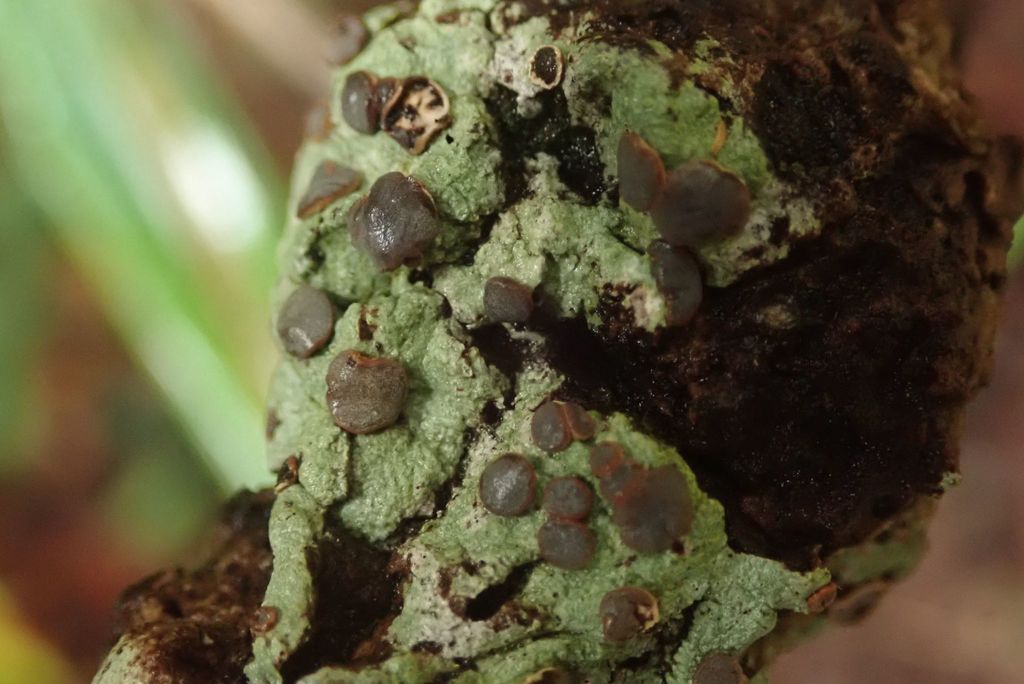
Megaloblastenia
Megaloblastenia is a genus of crustose lichen-forming fungi in the family Megalosporaceae, comprising three species. Proposed by Dutch lichenologist Harrie Sipman in 1983, the genus is characterised by its thick, ecorticate thallus ranging from pale whitish-grey to yellowish, and its disc-like fruiting bodies (apothecia) that can be biatorine or lecideine. Megaloblastenia lichens form a symbiotic relationship with Dictyochloropsis algae, produce hyaline, bicellular ascospores with polaribilocular structure, and contain chemical compounds such as zeorin, pannarin, or usnic acid. Found in Australasia and South America, these lichens typically grow as epiphytes on trees in moist forests within temperate to tropical oceanic climates.
2 branches of this genus, most-observed first
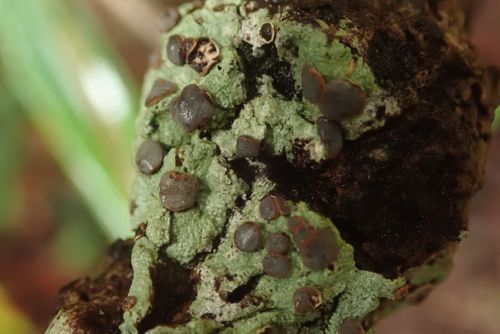
Megaloblastenia marginiflexa
speciesMegaloblastenia marginiflexa
Megaloblastenia flavidoatra
speciesMegaloblastenia flavidoatra
Where it lives
Recorded sightings
—
geo-referenced records in GBIF, from museums, herbaria and field observers.
Drag the globe to turn it. Dots are where records exist, not a range map; darker means more records.
In the stacks
Searching the stacks…
Every page naming Megaloblastenia in the Biodiversity Heritage Library →
This page is assembled live from iNaturalist, GBIF, Wikipedia, the Source Library and the Internet Archive. It is not yet part of the hand-edited codex. iNaturalist taxon 379115.