On eBird ↗
Mascarene Coot
Live sightings near you, the range map, bar charts of when it is seen, and Macaulay Library photos and recordings.
Mascarene Coot
Fulica newtonii
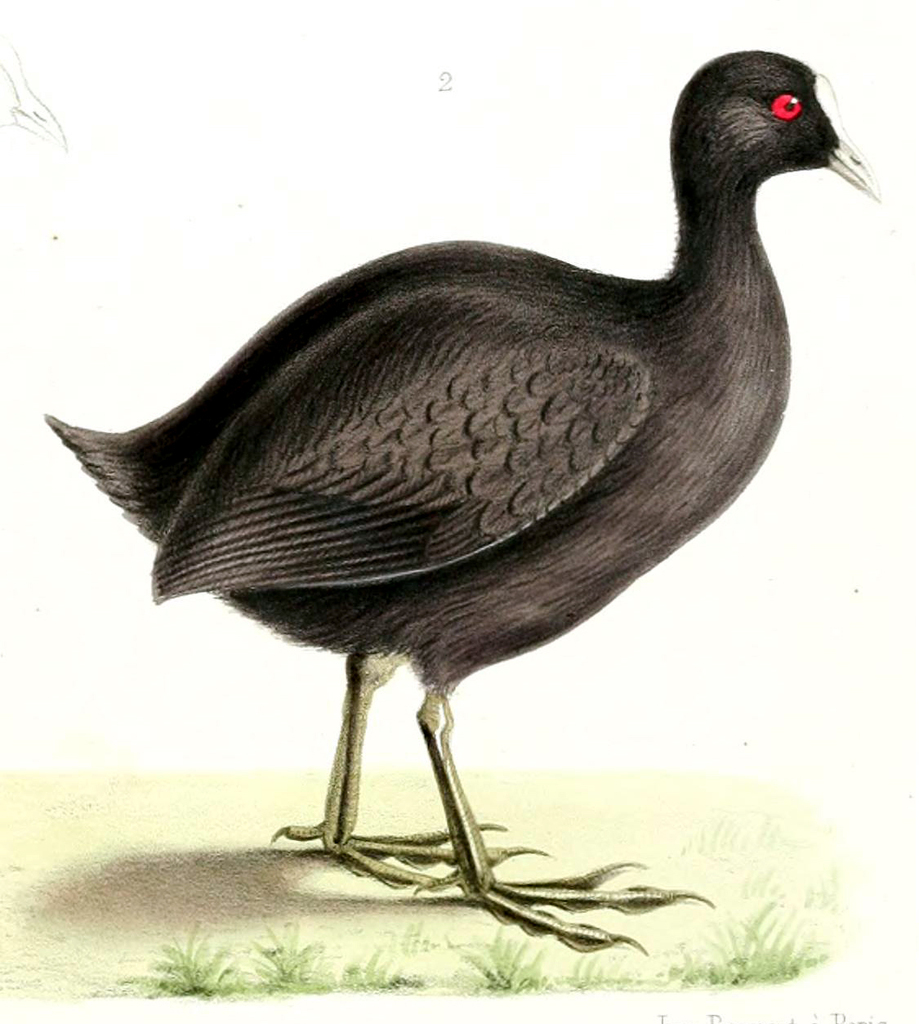
The Mascarene coot (Fulica newtonii) is an extinct species of coot that inhabited the Mascarene islands of Mauritius and Réunion. Long known from subfossil bones found in the Mare aux Songes swamp on the former island, but only assumed from descriptions to also have been present on the latter, remains have more recently been found on Réunion also. Early travellers' reports from Mauritius were, in reverse, generally assumed to refer to common moorhens, but it seems that this species only colonized the island after the extinction of the endemic coot.
From the article Mascarene coot on Wikipedia (CC BY-SA), quoted section by section
Description
The Mascarene coot was a large bird and while not flightless, it had reduced flying ability, so that if pursued, it would have even more preferred to escape by diving than it is already a general habit of the coots. As the bird had considerable stamina, it could have easily crossed the ocean between the islands, explaining why a single species occurred on both islands. The birds looked like oversized Eurasian coots, being about 45 cm long, but as they were more likely derived from the red-knobbed coot, it is not clear whether the distinguishing red knobs (which are easily overlooked) on top of the white frontal shield were not present or simply not reported by Dubois, who described the species in some detail in 1674 as "Waterhens which are as large as fowls. They are always black, and have a large white crest on the head."
Listen
Looking for field recordings…
Where it lives
Recorded sightings
—
geo-referenced records in GBIF, from museums, herbaria and field observers.
Drag the globe to turn it. Dots are where records exist, not a range map; darker means more records.
In the stacks
Searching the stacks…
Every page naming Fulica newtonii in the Biodiversity Heritage Library →
This page is assembled live from iNaturalist, GBIF, Wikipedia, the Source Library and the Internet Archive. It is not yet part of the hand-edited codex. iNaturalist taxon 372582.