- Animals
- ›Chordates
- ›Vertebrates
- ›Birds
- ›Pelicans, Herons, Ibises, and Allies
- ›Herons, Egrets, and Bitterns
- ›Typical Herons and Egrets
- ›Butorides
On eBird ↗
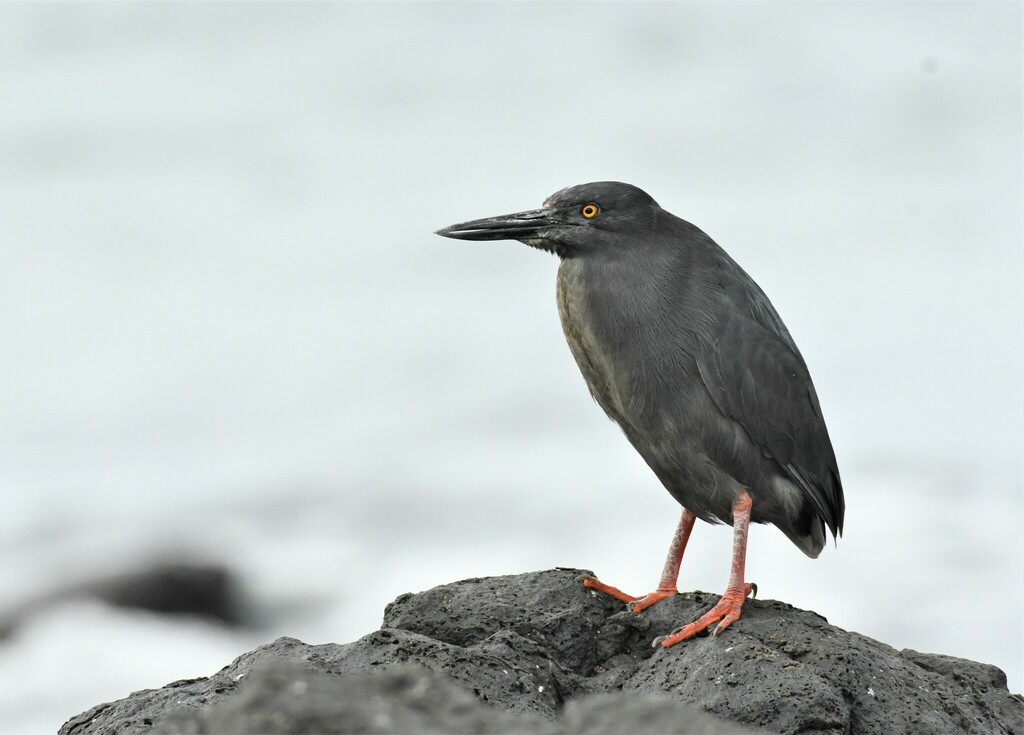
Lava Heron
Live sightings near you, the range map, bar charts of when it is seen, and Macaulay Library photos and recordings.
Lava Heron
Butorides sundevalli
The lava heron (Butorides sundevalli), also known as the Galápagos heron, is a species of heron endemic to the Galápagos Islands of Ecuador. It was considered by some authorities, including the American Ornithological Society and BirdLife International, to be a subspecies (or even just a colour morph) of the striated heron (B. striata), and was formerly lumped with this species and the green heron (B. virescens) as the green-backed heron. Recent research has shown (unexpectedly) that it is more closely related to the North American green heron, than it is to the geographically much closer South American striated heron, and its status as a Galápagos endemic species is now universally accepted.
From the article Lava heron on Wikipedia (CC BY-SA), quoted section by section
Description
The adult is slate-grey to black, which allows it to blend in with the hardened lava. The back feathers typically have a silvery sheen and it has a short crest on its head. When breeding, the heron has a black beak and bright orange legs, but these fade to grey after the breeding season.
Range & habitat
These highly territorial birds are found in intertidal zones and mangrove swamps on all of the islands of Galápagos Province.
Wikipedia: “Distribution and habitat”
What it does
The lava heron stalks small crabs and fish slowly before quickly spearing and eating them. They have also been known to eat the flies that gather near cacti and occasionally smaller birds.
Wikipedia: “Diet”
Listen
Looking for field recordings…
Where it lives
Recorded sightings
—
geo-referenced records in GBIF, from museums, herbaria and field observers.
Drag the globe to turn it. Dots are where records exist, not a range map; darker means more records.
In the stacks
Searching the stacks…
Every page naming Butorides sundevalli in the Biodiversity Heritage Library →
This page is assembled live from iNaturalist, GBIF, Wikipedia, the Source Library and the Internet Archive. It is not yet part of the hand-edited codex. iNaturalist taxon 363698.