- Animals
- ›Chordates
- ›Vertebrates
- ›Reptiles
- ›Snakes and Lizards
- ›Snakes
- ›Elapid Snakes
- ›Australian Elapids (inc. Sea Snakes)
- ›Rhinoplocephalus
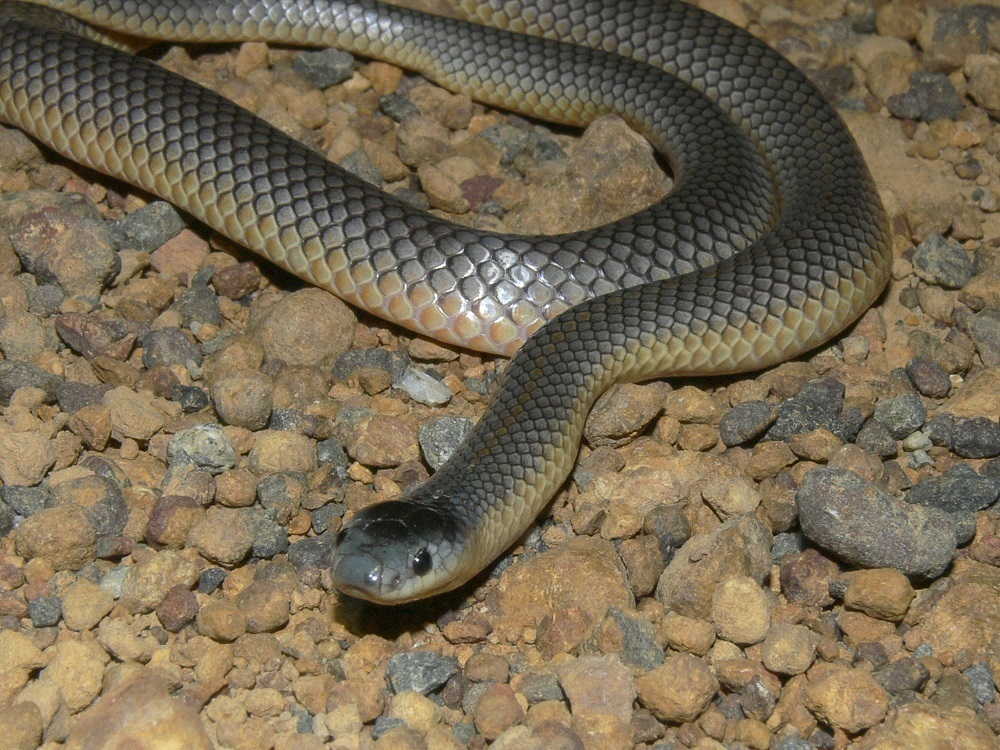
Square-nosed Snake
Rhinoplocephalus bicolor
Rhinoplocephalus is a genus of venomous snake in the family Elapidae. The genus is monotypic, containing the sole species Rhinoplocephalus bicolor, known commonly as the square-nosed snake, Müller's snake, or Muller's [sic] snake. The species is endemic to south-western Australia.
From the article Rhinoplocephalus on Wikipedia (CC BY-SA), quoted section by section
Description
The square-nosed snake is a small snake species, with male snout-to-vent length (SVL) averaging 34.6 cm (13.6 in) and female SVL averaging 32.8 cm (12.9 in). The dorsal surface of adult individuals is orange-brown, with orange-red sides fading to a pale cream colour on the ventral surface. Occasional animals can be found that are bright orange across the entire dorsal surface. There is also a strong ontogenetic shift in colour pattern, in which neonates are dorsally blue with a yellow lateral region.
Range & habitat
The square-nosed snake is found in the very far southern coastal areas of the Australian state of Western Australia, ranging from approximately Esperance in the east to somewhere west of Walpole.
Wikipedia: “Geographic distribution”
What it does
The square-nosed snake is a reptile specialist, feeding primarily on scincid lizards such as those in the genera Ctenotus, Hemiergis and Morethia, and rarely on frogs.
Wikipedia: “Diet”
Toxicity
The square-nosed snake is mildly venomous, with a typical bite not dangerous to humans.
Where it lives
Recorded sightings
—
geo-referenced records in GBIF, from museums, herbaria and field observers.
Drag the globe to turn it. Dots are where records exist, not a range map; darker means more records.
In the stacks
Searching the stacks…
Every page naming Rhinoplocephalus bicolor in the Biodiversity Heritage Library →
This page is assembled live from iNaturalist, GBIF, Wikipedia, the Source Library and the Internet Archive. It is not yet part of the hand-edited codex. iNaturalist taxon 35137.