- Fungi Including Lichens
- ›Ascomycete Fungi
- ›Sac Fungi and Lichens
- ›Common Lichens
- ›rocktripes, bloodspot lichens, and allies
- ›rocktripes, bloodspot lichens, and allies
- ›Rocktripes, Toadskin Lichens, and allies
- ›Umbilicaria
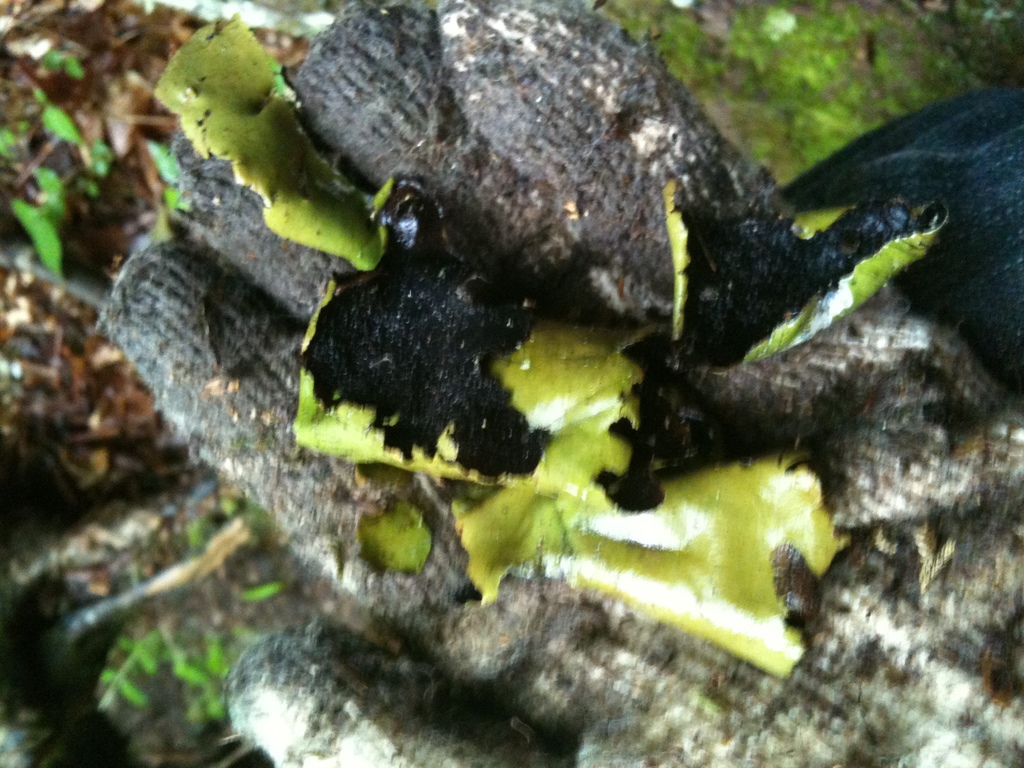
Umbilicaria esculenta
Umbilicaria esculenta is a lichen of the genus Umbilicaria that grows on rocks, also known as rock tripe. It can be found in East Asia including in China, Japan, and Korea. It is edible when properly prepared and has been used as a food source and medicine. It is called iwatake (kanji: 岩茸 or 石茸) in Japanese and seogi (hangul: 석이; hanja: 石耳; literally "stone ear" or "rock ear") or seogi beoseot (hangul: 석이버섯; literally "stone
From the article Umbilicaria esculenta on Wikipedia (CC BY-SA), quoted section by section
Description
Two different types of polysaccharides are known to be the structural components, both a heteroglycan from the fungus and a glucan from the alga. U. esculenta lichens have a thallus attached to the substrate with a central holdfast. The thallus is also heteromerous (parts that are different in quality and number) and fully corticated (has a cortex and bark). Many of the Umbilicaria species are characterized by a veined or rugose thalline surface.
Wikipedia: “Morphology”
What it does
Umbilicaria esculenta is a saxicolous lichen; it grows on rocks and is known widely as the "rock tripe". It is usually found on at high altitude in East Asia.
Wikipedia: “Ecology”
At the table
U. esculenta is considered a delicacy in China, Korea, and Japan where it is eaten in dishes, soups, or in salads. It has been used as starvation food by Native Americans and early settlers.
Wikipedia: “Human uses”
Where it lives
Recorded sightings
—
geo-referenced records in GBIF, from museums, herbaria and field observers.
Drag the globe to turn it. Dots are where records exist, not a range map; darker means more records.
In the stacks
Searching the stacks…
Every page naming Umbilicaria esculenta in the Biodiversity Heritage Library →
This page is assembled live from iNaturalist, GBIF, Wikipedia, the Source Library and the Internet Archive. It is not yet part of the hand-edited codex. iNaturalist taxon 337262.