On eBird ↗
Green Imperial-Pigeon
Live sightings near you, the range map, bar charts of when it is seen, and Macaulay Library photos and recordings.
Green Imperial Pigeon
Ducula aenea
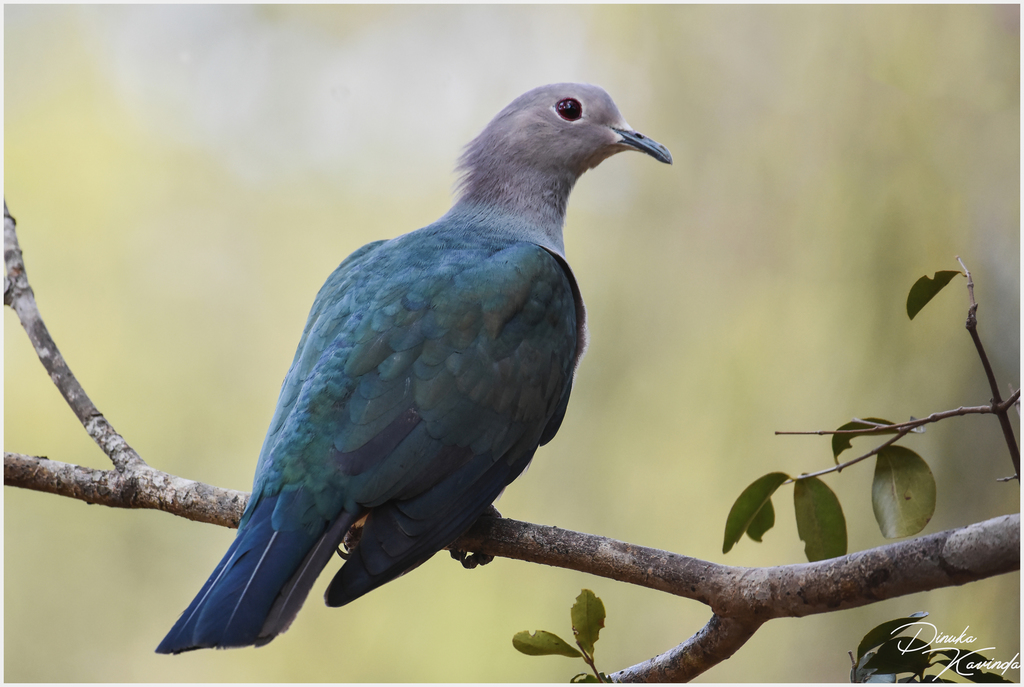
The green imperial pigeon (Ducula aenea) is a large forest pigeon. The large range extends from Nepal, southern India and Sri Lanka eastwards to southern China, Indonesia and the Philippines.
From the article Green imperial pigeon on Wikipedia (CC BY-SA), quoted section by section
Description
The green imperial pigeon is a large, plump pigeon, 45 centimetres (18 in) in length. Its back, wings and tail are metallic green. The head and underparts are white, apart from maroon undertail coverts. Sexes are similar. The bird's call is deep and resonant, and is often the first indication of the presence of this treetop species.
Range & habitat
This is a forest species which is a widespread resident breeding bird in tropical southern Asia from Nepal and India east to Indonesia. It has several subspecies, including the distinctive Celebes form, chestnut-naped imperial pigeon (Ducula aenea paulina).
Wikipedia: “Distribution and habitat”
What it does
This is an arboreal dove, feeding on plant material in the tree canopy. Its flight is fast and direct, with the regular beats and an occasional sharp flick of the wings which are characteristic of pigeons in general. It builds a stick nest in a tree and lays a single white egg. The birds are not very gregarious, but will form small flocks.
Wikipedia: “Behaviour and ecology”
Listen
Looking for field recordings…
Where it lives
Recorded sightings
—
geo-referenced records in GBIF, from museums, herbaria and field observers.
Drag the globe to turn it. Dots are where records exist, not a range map; darker means more records.
In the stacks
Searching the stacks…
Every page naming Ducula aenea in the Biodiversity Heritage Library →
This page is assembled live from iNaturalist, GBIF, Wikipedia, the Source Library and the Internet Archive. It is not yet part of the hand-edited codex. iNaturalist taxon 3211.