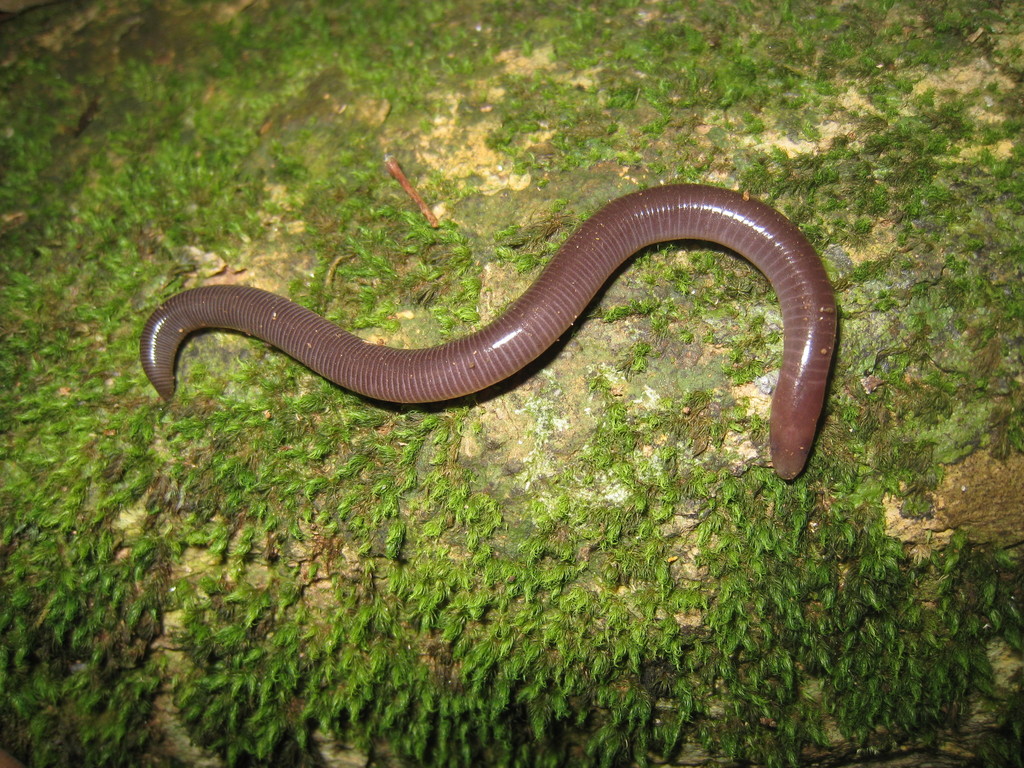
Chengalam Caecilian
Uraeotyphlus interruptus
Uraeotyphlus interruptus, also known as the Chengalam caecilian, is a species of caecilian in the family Ichthyophiidae. It is endemic to the Western Ghats in southern India and is only known from its type locality, Chengalam village in Kerala.
From the article Uraeotyphlus interruptus on Wikipedia (CC BY-SA), quoted section by section
Description
Uraeotyphlus interruptus is a medium-sized caecilian measuring 185 mm (7.3 in) in length. The body has 162 folds. The primary annuli cross the dorsum only on the posterior half and venter only in front of the vent. The collar region is slightly wider than the head; the two collars are completely fused dorsally but are distinct ventrally. The eyes are distinct. The ventral tentacle lies below the nostril. Colouration is slaty violet above, slightly lighter below. The body folds are marked by white lines that are more conspicuous on the posterior ventral one-third of the body.
Range & habitat
Uraeotyphlus interruptus is a subterranean (fossorial) species associated with loose soil. The type series was collected in a rubber plantation at an elevation of 400 m (1,300 ft) above sea level; presumably, the natural habitat of this species is moist evergreen forest. It is probably oviparous with terrestrial eggs and aquatic larvae living in streams. Specific threats to this species are unknown. However, it clearly is somewhat adaptable, and as such might not face significant threat from habitat change. It is not known to occur in any protected areas.
== References ==
Wikipedia: “Habitat and conservation”
Listen
Looking for field recordings…
Where it lives
Recorded sightings
—
geo-referenced records in GBIF, from museums, herbaria and field observers.
Drag the globe to turn it. Dots are where records exist, not a range map; darker means more records.
In the stacks
Searching the stacks…
Every page naming Uraeotyphlus interruptus in the Biodiversity Heritage Library →
This page is assembled live from iNaturalist, GBIF, Wikipedia, the Source Library and the Internet Archive. It is not yet part of the hand-edited codex. iNaturalist taxon 28222.