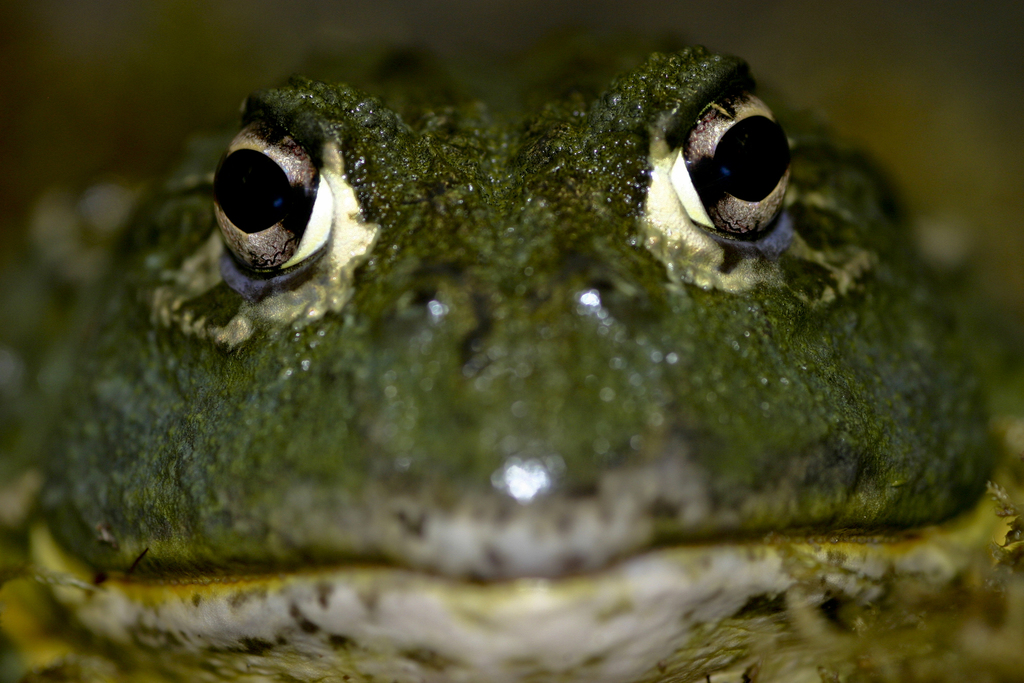
Pyxicephalus
Pyxicephalus (πυξίς, pyxis = "(round) box," κεφαλή, kephalē = "head") is a genus of true frogs from Sub-Saharan Africa, commonly referred to as African bull frogs or bull frogs. They are very large (P. adspersus) to large (remaining species) frogs, with females significantly smaller than males. They may take decades to reach their full size potential and they are some of the longest-living frogs, possibly able to reach ages as high as 45 years.
These bulky and voracious predators will eat any animal (including small vertebrates and conspecifics) they can fit in their large mouth that has two fang-like projections on the lower jaw, but they are themselves commonly eaten by humans, predatory birds, mammals and monitor lizards. They remain hidden—they are fossorial—for much of the year, but emerge to breed in temporary pools after rains. The tadpoles often are guarded by the male.
5 branches of this genus, most-observed first · about 5 known species
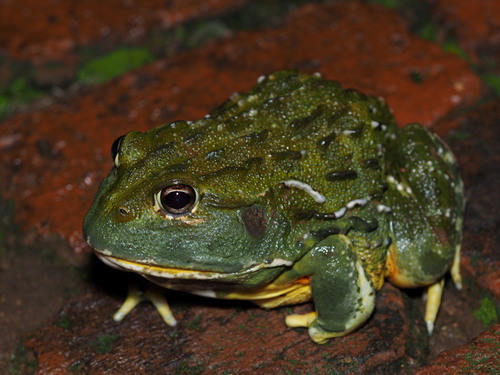
Giant African Bullfrog
speciesPyxicephalus adspersus
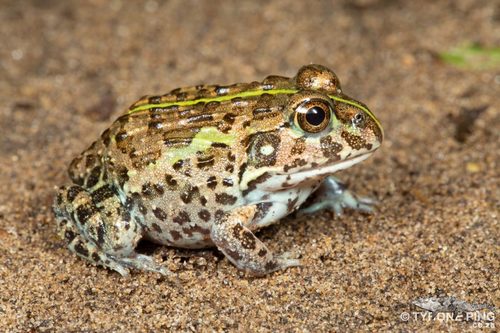
Edible bullfrog
speciesPyxicephalus edulis

Beytell's Bullfrog
speciesPyxicephalus beytelli

Pyxicephalus angusticeps
speciesPyxicephalus angusticeps
Calabresi's Bullfrog
speciesPyxicephalus obbianus
Where it lives
Recorded sightings
—
geo-referenced records in GBIF, from museums, herbaria and field observers.
Drag the globe to turn it. Dots are where records exist, not a range map; darker means more records.
In the stacks
Searching the stacks…
Every page naming Pyxicephalus in the Biodiversity Heritage Library →
This page is assembled live from iNaturalist, GBIF, Wikipedia, the Source Library and the Internet Archive. It is not yet part of the hand-edited codex. iNaturalist taxon 26192.