- Animals
- ›Chordates
- ›Vertebrates
- ›Amphibians
- ›Frogs and Toads
- ›Australian Ground Frogs
- ›Australian Ground Frogs
- ›Pseudophryne
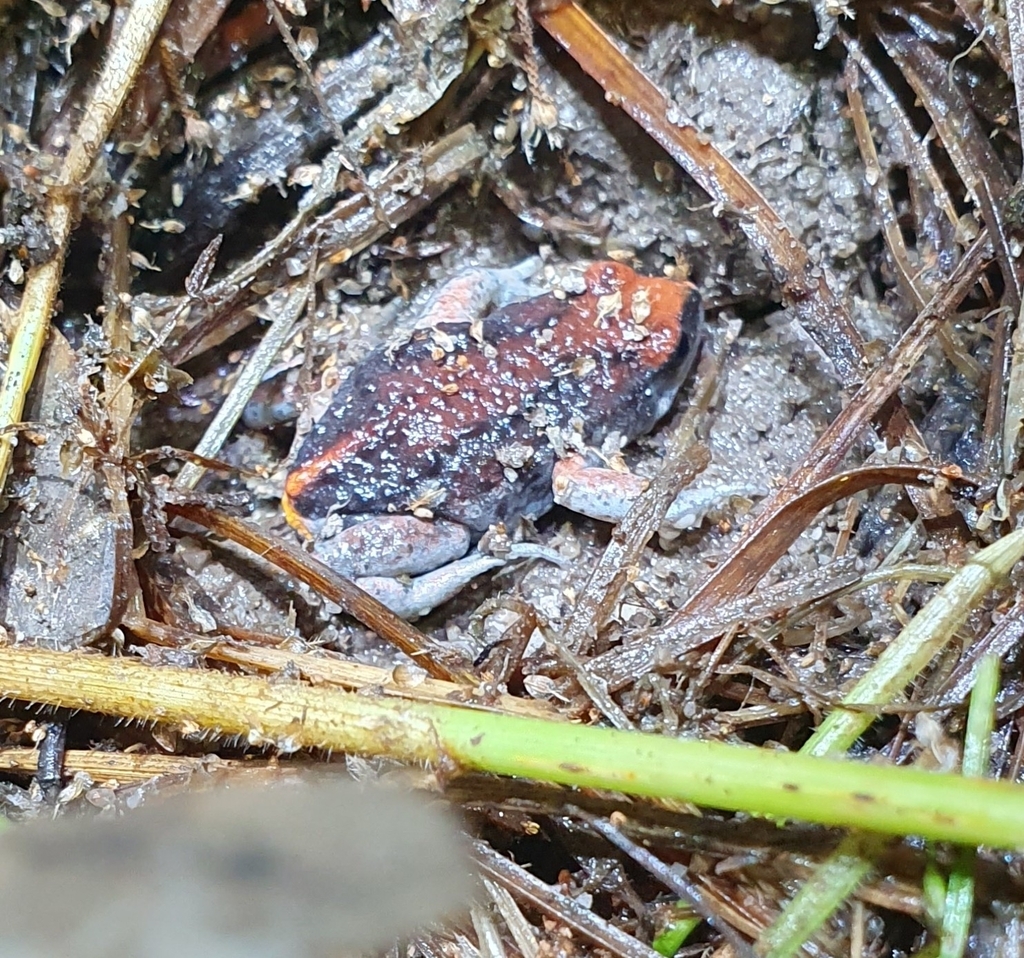
Magnificent Brood Frog
Pseudophryne covacevichae
The magnificent brood frog or magnificent broodfrog (Pseudophryne covacevichae) is a species of frog in the family Myobatrachidae. It is endemic to Queensland, Australia, and is known from near Ravenshoe in the southern Atherton Tableland and from Mount Spec in the Paluma Range. The specific name covacevichae honours Jeanette Covacevich, an Australian herpetologist.
From the article Magnificent brood frog on Wikipedia (CC BY-SA), quoted section by section
Description
Pseudophryne covacevichae measure 24–28 mm (0.9–1.1 in) in snout–vent length. The dorsum has bright rufous brown to yellow ground colour. There are diffuse, black paravertebral lines. The cloaca is surrounded by a large yellow patch that continues upwards as a thin, yellow vertebral line. The flanks are black, sometimes suffused with white or grey. The dorsal surface of the upper arm is bright yellow. The venter is marbled in black and white. The upper half of the iris is yellow to gold in adults.
Range & habitat
Pseudophryne covacevichae occurs around seepage areas in open eucalypt forests at elevations above 800 m (2,600 ft). Males call from seepage areas at the base of grass tussocks on wet summer and autumn nights, sometimes also during overcast days. The eggs are laid on moist soil in or near seepages. Males typically guard the eggs. After hatching, the tadpoles make their way down the seepage or are washed into first-order streams to continue their development in small pools. This species is threatened by habitat loss and degradation caused by activities such as grazing, logging, road works, clearing, and development. The discovery of P. covacevichae in the Paluma Range suggests that it is more widespread than previously thought.
== References ==
Wikipedia: “Habitat and conservation”
Listen
Looking for field recordings…
Where it lives
Recorded sightings
—
geo-referenced records in GBIF, from museums, herbaria and field observers.
Drag the globe to turn it. Dots are where records exist, not a range map; darker means more records.
In the stacks
Searching the stacks…
Every page naming Pseudophryne covacevichae in the Biodiversity Heritage Library →
This page is assembled live from iNaturalist, GBIF, Wikipedia, the Source Library and the Internet Archive. It is not yet part of the hand-edited codex. iNaturalist taxon 25252.