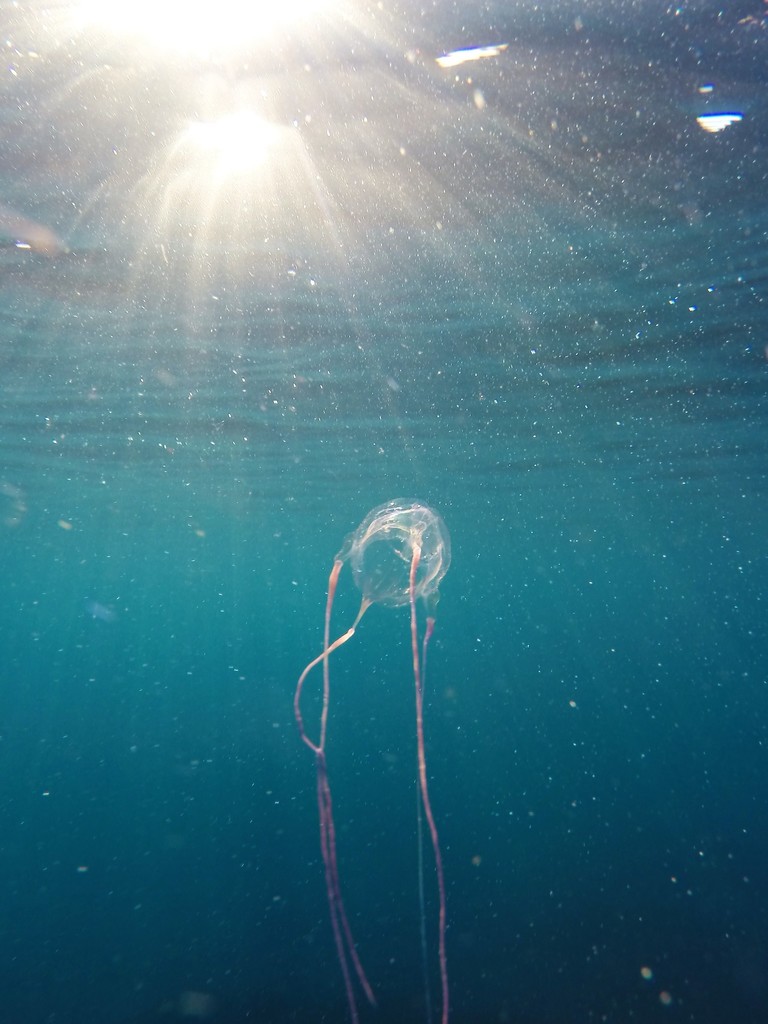
Carybdeidae
Carybdea is a genus of venomous box jellyfish within the family Carybdeidae that currently consists of a total of 8 species. This genus of jellyfish are often found in warm waters around the world in waters such as the Mediterranean Sea, the Pacific Ocean, and off the coast of Africa. Their sting can cause a range of effects depending on the species. These invertebrates will go through both sexual and asexual reproduction as they transform from a polyp to medusa. Carybdea have a box-shaped bell with four tentacles and eye-like sensory structures. There are distinct physical markings that differentiate many species within the genus. While Carybdea use their venom to act as predators, they are also preyed on by turtles and various fish. They feed on plankton, invertebrates, fish, and some crustaceans.
1 branches of this family, most-observed first
See this branch on the Wheel of Life →
Where it lives
Recorded sightings
—
geo-referenced records in GBIF, from museums, herbaria and field observers.
Drag the globe to turn it. Dots are where records exist, not a range map; darker means more records.
In the stacks
Searching the stacks…
Every page naming Carybdeidae in the Biodiversity Heritage Library →
This page is assembled live from iNaturalist, GBIF, Wikipedia, the Source Library and the Internet Archive. It is not yet part of the hand-edited codex. iNaturalist taxon 245629.